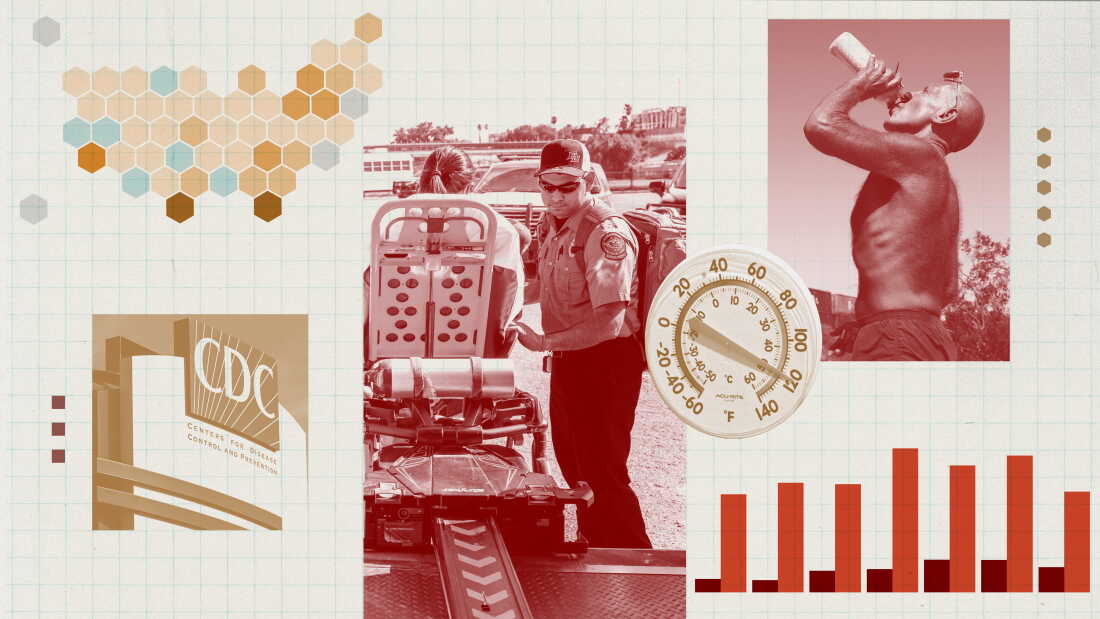
Heat is a significant cause of death in the United States, yet it is often underreported. Each year, thousands of Americans lose their lives to heat-related issues. This problem is intensifying due to climate change. But the official statistics do not accurately represent the true human cost.
Inconsistent Data Collection
The United States’ official count of heat-related deaths is incomplete. Death data is collected unevenly across the country. The Centers for Disease Control and Prevention (CDC) records such deaths through state reports, scoring only if heat is listed explicitly on death records. From 2004 to 2018, an average of around 700 heat-related deaths was reported annually. However, recent numbers suggest an average closer to 2,000, but this still underestimates the true scope.
Experts estimate about 9,000 deaths every year are influenced by heat, with some years exceeding 10,000.
Quinn Adams, a research scientist, highlights the necessity of recognizing the full scale of heat-related deaths for developing effective life-saving strategies.
Identifying the Problem
NPR and Boston University embarked on a two-year investigation to get a clearer picture of heat-related deaths. They developed a model examining data from almost every county in the nation. Their findings will soon be published in a scientific journal.
NPR’s approach also sought personal stories of individuals whose deaths were impacted by heat yet went unrecorded as such. This investigation unveils how heat can be overlooked during death assessments.
Magnitude of the Undercount
The scale of undercounting heat-related deaths is large. From 2018 to 2025, it’s estimated that heat affects around 9,000 deaths annually — almost five times the official average. Failure to track these deaths accurately hinders efforts to address the risks.
Dr. Sameed Khatana notes that heat often acts as a catalyst, turning manageable conditions like heart disease fatal by overstraining the heart as it tries to cool the body. The absence of visible signs of heat on death certificates contributes to the undercount.
Risks Across the Nation
Heat-related deaths occur nationwide, not only in traditionally hot states. While Florida and Texas show high numbers due to their populations, colder regions like Michigan and Massachusetts also face significant underreporting.
In Florida, approximately 1,900 heat-related deaths occur yearly. In Michigan, the deaths are estimated to be ten times higher than reported. Infrastructure, like air conditioning, plays a critical role in mitigating these risks.
Improving Counts
While some areas like Maricopa County in Arizona have developed advanced measures for identifying heat-related deaths, others lag. Los Angeles County acknowledges an undercount issue and is working to improve data accuracy. Doctor Nichole Quick emphasizes the need for better counting strategies.
Accurate assessments require time and coordinated efforts among local healthcare professionals to properly identify the role of heat in deaths.
Continuing Coverage
NPR will continue to explore why many heat-related deaths go unrecognized and how awareness can lead to fewer fatalities. The need for increased public and governmental awareness about the dangers of heat is clear and vital.
Credits and Methodology
This report was aided by Nova Institute for Health Media Fellowship and the Dennis A. Hunt Fund for Health Journalism. Nick McMillan contributed.
The investigative methodology involved analyzing mortality data from 530 counties and temperature data from global datasets to assess local climate impacts. By using comprehensive statistical methods, they estimated mortality rates attributable to excessive heat.
 Drought Drives Black Bears Closer to Human Activity
  Atlantic Ends September Without a Hurricane for First Time Since 1994
  Bobcat Sightings and Conservation Efforts in Illinois
  2026 El Niño: A Historical Comparison and Future Projections
  U.S. Records Warmest September in History
  Increased Funding Needed for Psychiatric Hospitals