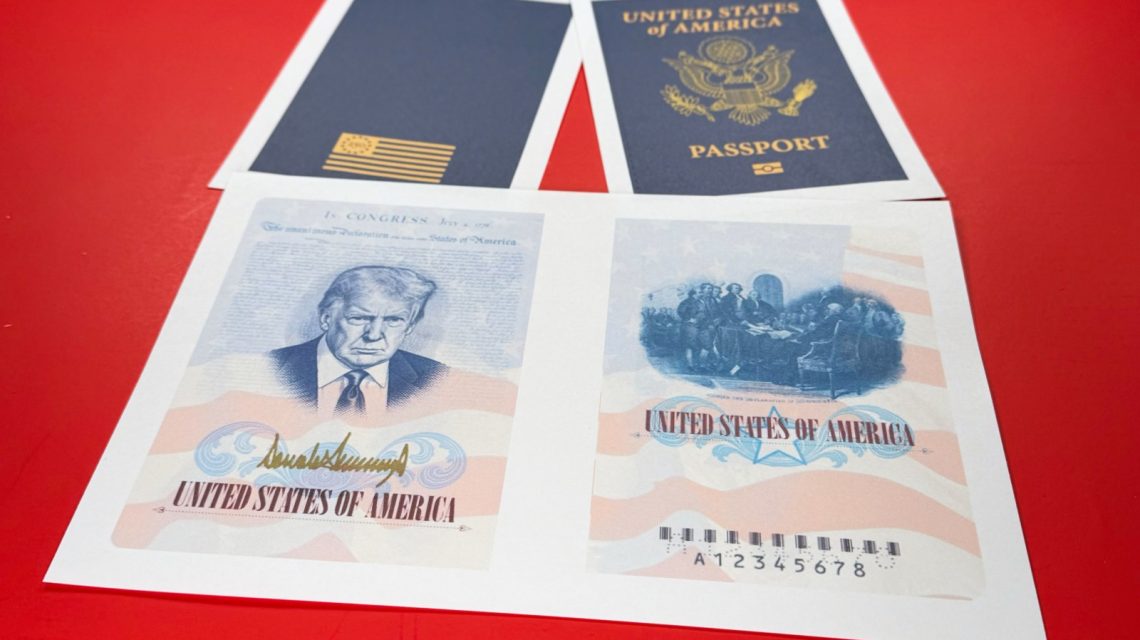
U.S. Passport Proposal Consideration
The Trump administration is contemplating a change to passport application requirements, which could necessitate parents to prove their U.S. citizenship or immigration status when applying for passports for their children. This proposal comes amidst President Trump’s ongoing initiatives to limit access to birthright citizenship.
If implemented, parents might have to provide documents like passports, birth certificates, or immigration affidavits to verify their citizenship or legal status. State Department spokesman Tommy Pigott emphasized on Tuesday that President Trump is committed to preserving the significance of American citizenship.
“President Trump has been unequivocal that this Administration will protect the meaning and value of American citizenship, full stop, and that includes making sure our passport adjudication process fully reflects that standard.” – Tommy Pigott
Pigott also stated that the department does not validate or pursue leaked documents.
Concerns About Citizen Restriction
The proposal has sparked debates about whether the passport process might be used to impose limits on children who are U.S. citizens by birth, under the Constitution. The 14th Amendment generally guarantees citizenship for individuals born in the United States under its jurisdiction. This potential policy contradicts a recent Supreme Court decision against Trump’s attempts to limit birthright citizenship.
Current Application Practices
Currently, parents applying for passports for their U.S.-born children must provide proof of the child’s U.S. citizenship, evidence of their relationship to the child, and photo identification. However, separate proof of their own citizenship or immigration status is generally not required.
Legal Expert Opinions
Legal experts are divided regarding the constitutional implications of this proposed requirement. Former Palm Beach County State Attorney Dave Aronberg raised concerns over the legal issues of using parental documentation to determine a child’s entitlement to citizenship or a passport.
“The Fourteenth Amendment says that people born in the United States and subject to its jurisdiction are citizens at birth, and the Supreme Court has interpreted that protection broadly for more than a century.” – Dave Aronberg
Aronberg anticipates immediate legal challenges if this policy is enacted, arguing that constitutional provisions cannot be altered by agency paperwork.
Neama Rahmani, former federal prosecutor, concurred, noting that while requiring documentation isn’t inherently unconstitutional, refusing a passport based on a parent’s immigration status presents significant legal disputes.
“Parents without status might not apply for passports due to arrest fears, even though their children are birthright citizens.” – Neama Rahmani
Executive Order on Birth Tourism
On August 6, 2026, Trump signed an executive order targeting “birth tourism”—a tactic where foreign nationals travel to the U.S. on visas to give birth. The order aims to prevent entry or visa acquisition for those suspected of this action. While the order defines birth tourism actions, it does not abolish birthright citizenship.
Visas can be revoked, and individuals barred from entering, with exceptions for humanitarian reasons.
Potential Outcomes and Reactions
This proposal is still under review by the State Department. Should it be adopted, implementation could occur administratively without Congressional approval, in line with Trump’s executive order on birth tourism. Legal challenges are anticipated as the administration’s broader policies on birthright citizenship face scrutiny.
 Trump’s 2024 Reelection and Evolving Voter Dynamics
  Defense Secretary Emerges as Key Player in the Trump Administration
  Hegseth’s Vision for the Military: Balancing Tradition and Innovation
  Significant Funding Boosts Ken Paxton’s Texas Senate Campaign Amid Tight Race
  U.S. States Extend Gas Tax Waivers Amid Rising Fuel Costs Due to Iran Conflict
  USCIS Raises Immigration Fees