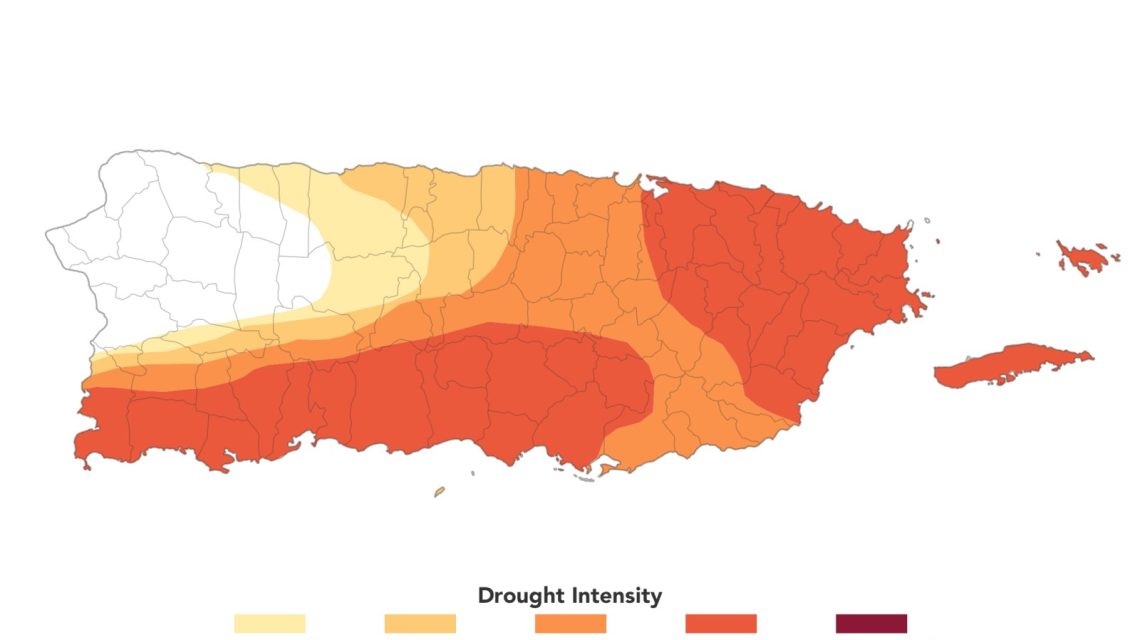
The recent release of a NASA map has brought attention to the severe drought conditions in Puerto Rico. The map, created by NASA Earth Observatory and published on September 2, reveals the extent of drought across the United States territory. This identification of drought conditions on the island is based on data from the United States Drought Monitor. This monitor is a collaborative effort involving the National Drought Mitigation Center, U.S. Department of Agriculture, NOAA, and NASA.
NASA has reported a significant shortfall in rainfall combined with high temperatures leading to exceptionally dry conditions. These have caused water shortages across the island. According to the report, 75.2 percent of Puerto Rico is currently experiencing drought, and just under half of the territory, about 41 percent, is classified as being in an extreme drought. Severe drought affects 21.3 percent of the area. More than 3 million residents are living under drought conditions, which is a critical situation.
Brandon Wright, a senior meteorologist at ICEYE, noted the rapid development of the drought. He labeled the current situation as one of the worst since the US Drought Monitor began observations in 1999.
Although the White House is monitoring this situation, FEMA has not received any assistance requests from Puerto Rican authorities as of early August.
Rapid Deterioration of Drought Conditions
According to Wright, Puerto Rico’s drought situation is among the fastest on record. He explained that three months earlier, only a third of the island was considered abnormally dry. Now, 40 percent is experiencing extreme drought. The dramatic change in conditions is noted as stark.
An analysis by Elena Maksimovich, a geoscientist, highlighted that the summer of 2026 was exceptionally dry, although not the driest on record. The period from June to August of 2026 was the second driest since 1950, based on ECMWF data. The driest summer remains 1994, marked by significant wildfire activity.
Effect of El Niño and Weather Trends
Wright explained that El Niño played a role in the drought acceleration. El Niño is known for suppressing thunderstorm activity and limiting Atlantic tropical seasons, affecting the wet season onset in Puerto Rico.
He mentioned the feedback loop where reduced thunderstorm activity leads to more heating and drying. Temperature records in San Juan showed May among the 15 warmest recorded months, while June, July, and August were notably warmer than usual.
Though Tropical Storm Dolly brought regional rainfall recently, it did little to alleviate the drought severity.
Future Climate Risks
Maksimovich projected that climate-related threats would intensify for Puerto Rico. Her analysis warned of increasing heatwave risks, along with exposure to droughts and wildfires.
The report emphasized the presence of hidden risks, including storms and heatwaves, with drought, wildfire, and landslide possibilities also noted. The flood risk, both inland and coastal, is not negligible and should be considered, especially for cities like Caguas, Arecibo, Bayamón, Carolina, and Fajardo.
Water rationing has been practiced in Puerto Rico since the 1990s, and Maksimovich argued for expanding water storage capacities. The report highlighted possible impacts on the island’s tourism, agriculture, and supply chains, especially for coffee and cacao.
 Atlantic Ends September Without a Hurricane for First Time Since 1994
  Bobcat Sightings and Conservation Efforts in Illinois
  2026 El Niño: A Historical Comparison and Future Projections
  U.S. Records Warmest September in History
  Swiss Glaciers Show Effects of Ice Loss Amid Global Warming
  Climate-Resistant Rock Glaciers: Hidden Water Resources