Introduction
After three years of negotiations, lawsuits, and appeals, the Illinois Supreme Court is set to hear arguments from attorneys representing the city of Chicago and the Fraternal Order of Police. This case will determine the handling of serious misconduct allegations involving Chicago Police Department officers and the public’s right to access these cases.
The Core Issue
The primary issue is whether officers accused of severe misconduct should have their cases decided by a third-party arbitrator, similar to other municipal employees, or stick to the current practice of using the Chicago Police Board. This practice has been in place since 1961. Hearings are planned for Thursday in Springfield. A ruling from the state’s high court might arrive before the end of the year, although the timeline for implementing any new discipline system remains unclear.
Concerns Over Accountability
The future leader of the CPD will manage hundreds of unresolved officer disciplinary cases. Police accountability advocates highlight the importance of open hearings by referring to past scandals, such as the 2014 Laquan McDonald shooting. Concerns have been raised that secrecy could foster impunity for officers.
Secrecy breeds impunity for police officers,
attorneys for police reform groups stated in their June amicus brief.
Advocates argue arbitration would negate efforts to mitigate police misconduct and conceal abuses from accountability measures established to protect Chicago communities.
Officer Employment Status
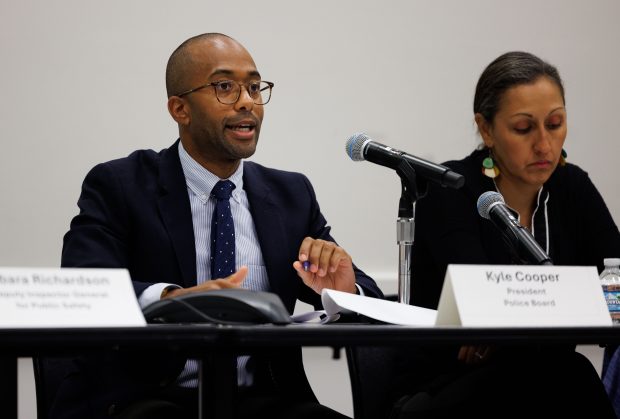
Another issue is whether officers facing termination should be paid during the adjudication of their cases. Delays have caused frustration among accused officers and alleged victims. Chicago Police Board President Kyle Cooper has emphasized the need for swift resolution of serious allegations.
Officers should not have to spend years with serious charges hanging over them,
Cooper stated.
Chicago residents should not have to wait years to learn whether serious allegations against a public servant have been proven.
Legal Proceedings
As of fall 2023, progress in adjudicating these cases stalled due to legal disputes between the city and the union. Briefs from the FOP suggest public attendance in grievance arbitration proceedings would represent a significant policy shift. City attorneys stress that public hearings are essential for maintaining trust between the police and the community.
Transparency is crucial in Chicago,
city attorneys wrote.
Public hearings build trust and cooperation between CPD and the people it serves.
FOP attorneys argue the case centers on workers’ rights rather than police misconduct.
Supreme Court Precedent
Craig Futterman, a law professor at the University of Chicago, pointed to a 2020 Illinois Supreme Court decision rejecting a previous FOP argument on misconduct record destruction. The court ruled that agreements against public policy are void, impacting current legal interpretations.
Negotiations and Arbitration
In summer 2023, the city’s collective bargaining agreement with the FOP was divided. An arbitrator ruled CPD officers could have their cases heard by a third party. However, Edwin Benn, the arbitrator, warned the council against undermining his decision, citing taxpayer costs.
Please don’t throw away potentially large sums of taxpayer money,
Benn said.
The city appealed, and Judge Michael T. Mullen ruled proceedings could be public. The FOP further appealed, leading appellate judges to agree with Mullen while ensuring paid status for officers under threat of termination.
Since then, officers retain the option for hearings before the Police Board, though only four out of 31 have chosen this path.
Ongoing Investigations
Investigators with the Civilian Office of Police Accountability and CPD’s bureau of internal affairs continue their work. More than 650 misconduct cases have been sustained since September 2023, with findings involving police shootings occupying a significant portion.
Despite paused resolutions in officer misconduct cases, CPD has moved to fire multiple officers, but these remain on hold due to the legal dispute.
Leadership Views on Transparency
The retired Superintendent Larry Snelling supported open and accessible proceedings. He emphasized that transparent processes help build public confidence and properly address misconduct.
If we need accountability, we need to do what we have to do to ensure we maintain a reputation of our hardworking officers,
Snelling remarked.
Snelling noted that familiarizing the community with the investigation process strengthens trust.
Overall, the decision from the Illinois Supreme Court will have significant implications for police accountability and transparency in Chicago.