
Tristan Buckmaster and Levent Alpöge have been investigating the Navier-Stokes equations at New York University. The equations describe fluid flow. Recently, OpenAI claimed their AI solved these complex equations. However, many mathematicians find the AI’s solution difficult to comprehend.
OpenAI announced its success with enthusiasm. They aim to empower scientific and technological advancement. Yet, some experts think the 166-page AI report lacks human readability. James Maynard from the University of Oxford noted the challenge of extracting understanding from it. Javier Gómez-Serrano at Brown University believes that with extensive revisions, the proof might eventually benefit the mathematical community.
The arrival of AI in mathematics has sparked progress. Large language models show potential in producing valid results. However, OpenAI’s announcement overshadowed the collaborative spirit between AI and human researchers. Maynard, a Fields Medal recipient, criticized the disparity between AI firms and mathematicians’ objectives.
“This episode could have shown AI and human collaboration power,” Maynard commented.
The Navier-Stokes problem is pivotal among mathematicians. It explains phenomena like fluid turbulence and aircraft lift. Buckmaster explains that deeper insights could create better fluid models. The Clay Mathematics Institute made it a $1 million Millennium Prize Problem in 2000.
Buckmaster and Alpöge, using AI tools, were narrowing their research focus. Then OpenAI entered, believing the problem solution was near. They utilized around 10,000 AI agents over 88 hours at a significant cost.
Buckmaster publicly stated that OpenAI proposed cooperation if Alpöge was removed from the project. OpenAI denies using their prompts or research. Despite this, the provision of rapid solutions drew criticism. Several noted the clarity issues in OpenAI’s paper. Gómez-Serrano said the paper doesn’t clarify significant or routine points.
This rush prompted Buckmaster to release preliminary results as well. He admitted, “It’s still not at the level I’m happy with.” This scenario underscores the complexity of combining human and AI capabilities in mathematical research.
OpenAI assessed the AI’s proof via Lean formalization, a tool that verifies mathematical proofs. The successful compilation of their Lean code lent credibility to their claim. Despite the current technical accuracy, mathematicians emphasize the value of human comprehension. Maynard states that achieving understanding is just as important as solving complex problems.
 Climate-Resistant Rock Glaciers: Hidden Water Resources
  California Voters to Decide on $7.5 Billion State Research Fund
 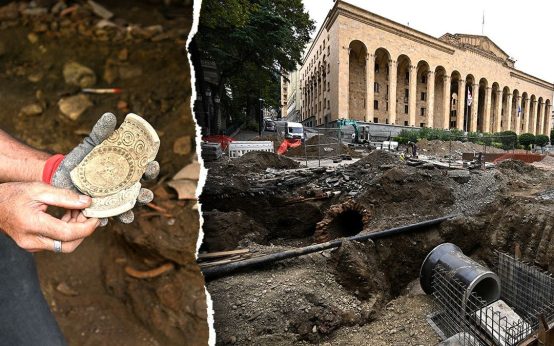 Ancient Pottery Unearthed During Roadworks in Tbilisi
  U.S. Space Academy Announcement
  The Need for New Strategies in Oregon’s Wildfire Management
 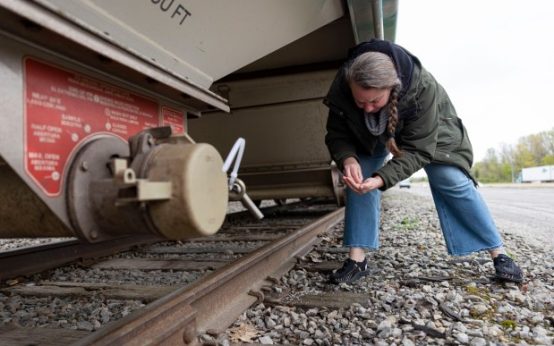 Plastic Pollution in the Great Lakes: A Growing Concern