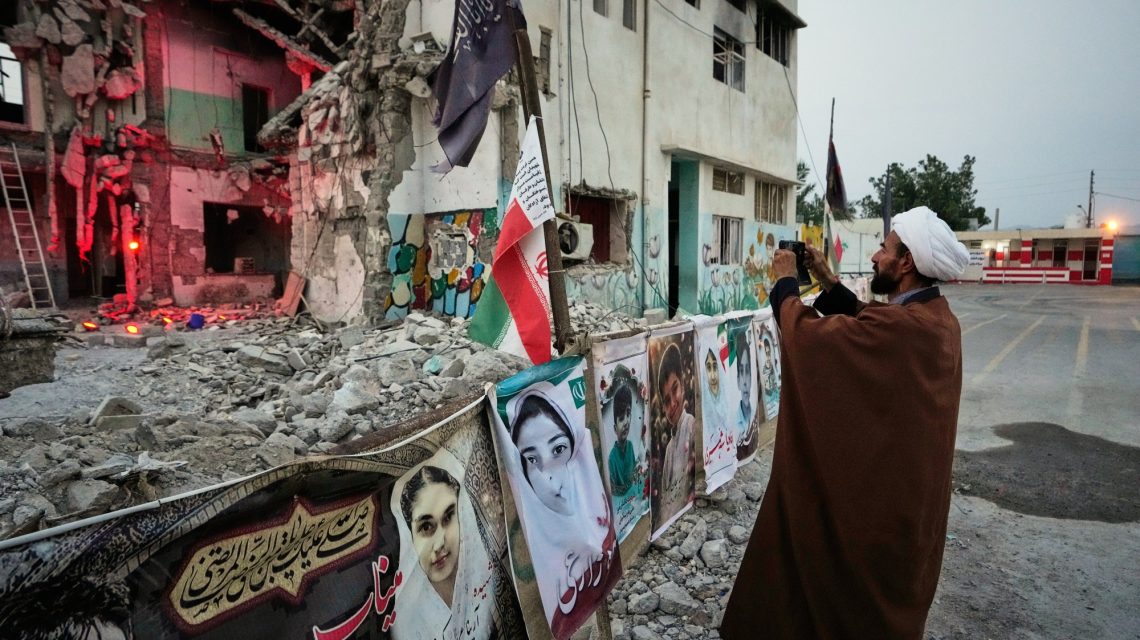
On February 28, 2026, a U.S. airstrike targeted the Shajareh Tayyebeh school in Minab, southern Iran, leading to widespread mourning. The attack claimed the lives of 157 individuals, including teachers and children, and has been deemed as a U.S. war crime by the U.N. Human Rights Council. Despite President Trump’s address at the United Nations General Assembly, where he expressed hostility toward Iran, the U.N. report found “reasonable grounds” to believe the bombing constitutes a war crime.
During the U.N. session, Trump dismissed the organization’s principles and international law, showcasing a preference for force over cooperation. Boasting about America’s power, he echoed the phrase “to the victor belong the spoils,” associated with the Gilded Age’s corrupt affiliations. The comments prompted U.N. Secretary-General Antonio Guterres to emphasize the choice between governance by law or force, cooperation or coercion.
The U.N.’s findings on the Minab school bombing include disturbing details. Satellite images showed children in the courtyard, and pre-strike photos depicted classrooms filled with educational materials. Eyewitness accounts revealed that two munitions hit the school, the first on the lower floor and the second on the upper floor where staff had moved the children to safety. Tragically, the second strike resulted in mass casualties, with 123 children, all aged below 13, among the dead.
The aftermath of the attack was documented in videos showing horrific scenes: a severed child’s arm, bloodied belongings, and dismembered bodies. The U.N. report concluded that the school was the intended target, not a result of collateral damage. The U.S. has not publicly acknowledged responsibility for the incident, with statements from Trump inferring blame on Tehran.
The International Criminal Court (ICC) holds a record of issuing indictments for war crimes, with individuals like Vladimir Putin previously indicted. There is concern that Trump and his administration might face similar charges for their actions in Iran, the Caribbean, and Venezuela. Behavior perceived as disregard for human dignity could potentially lead to international legal repercussions.
Bennett L. Gershman, a law professor at Pace University, emphasizes the serious nature of prosecutorial misconduct and the potential consequences for involved U.S. officials.
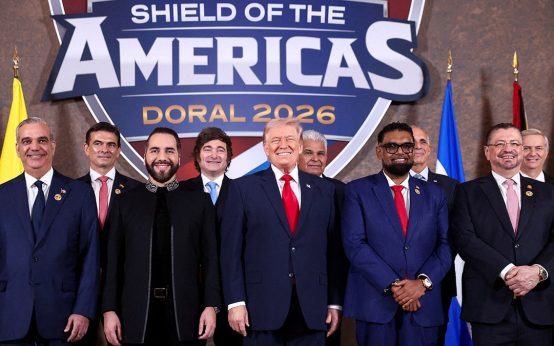 Bolivia Faces Security Test Amid Unrest
  Incident on FlyDubai Flight Raises Security Concerns
 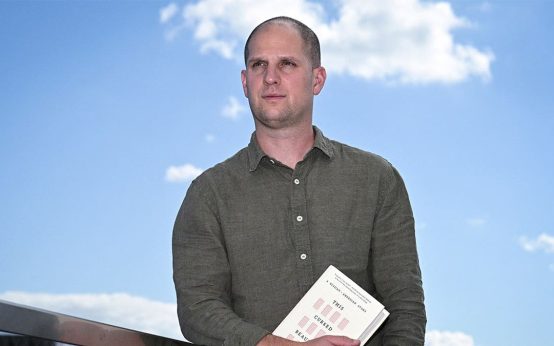 Journalist Gershkovich Discusses Wrongful Detention and Release in Russian Prisoner Swap
 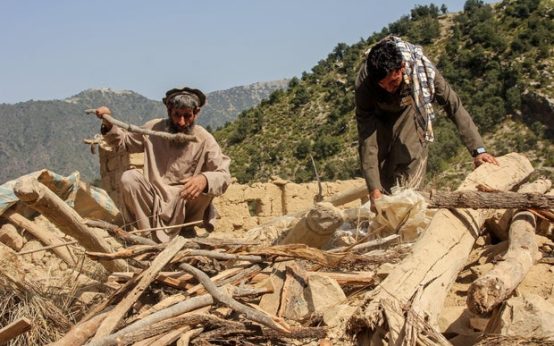 Pakistan Airstrikes in Afghanistan: Civilian Casualties Reported
  Ukraine Converts APCs to Explosive Devices in Donetsk Offensive
  Dutch Review Board’s Euthanasia Ruling and International Debate