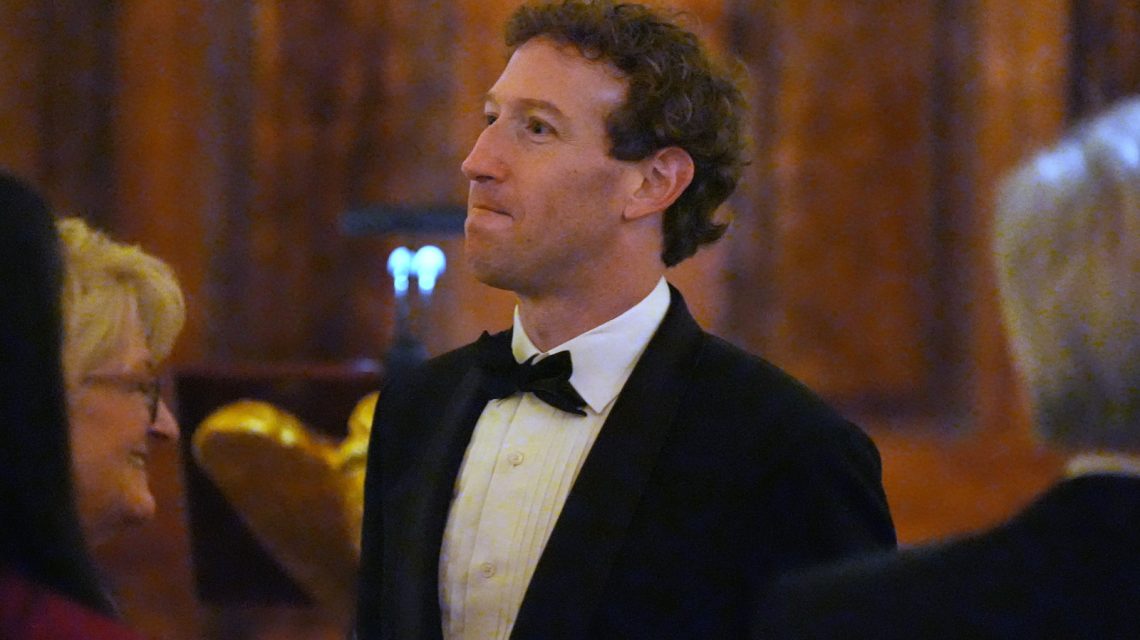
Meta CEO Mark Zuckerberg and former President Donald Trump are aligning their rhetoric around artificial intelligence, now referring to it as ‘superintelligence.’ This shift is seen as a response to warnings about the risks of developing potent AI systems.
Embracing Superintelligence
Zuckerberg announced a new business initiative and frequently used ‘superintelligence’ to describe potential gains for people and businesses. This came shortly after Trump urged the U.S. to adopt ‘super intelligence’ in place of ‘artificial intelligence’ in official documents.
“Tremendous things will be happening,” Trump posted on Truth Social, following a meeting with Chinese President Xi Jinping.
Images from the Associated Press show Zuckerberg at a state dinner with Trump and Xi, but his interactions with them remain unclear. Zuckerberg’s language choice aligns with Trump’s efforts to portray AI as a national strength.
Reactions and Warnings
Industry leaders are expressing concerns about rapidly advancing AI. Ex-employees of firms like OpenAI and Anthropic are worried about systems becoming uncontrollable or cyber threats. Notable figures like Sam Altman and Elon Musk have called for a slowdown, contrasting Trump’s dismissal of these concerns.
Trump argues that curtailing U.S. AI development could advantage China. He also mentioned creating an ‘AI Force’ akin to the Space Force but provided no specific plans. Zuckerberg’s announcement of the Meta Enterprise Platform aims to aid businesses in leveraging AI.
The platform will integrate Meta’s technology, offering resources like Muse agents and APIs. Appointed to lead this venture is Chirantan “CJ” Desai, former CEO of MongoDB, now part of Meta’s leadership team.
Market Adoption Challenges
Experts note Zuckerberg’s term adoption might influence industry acceptance. University of Chicago marketing professor Jean-Pierre Dubé states that the term ‘superintelligence’ has a distinct meaning, indicating an intellect surpassing human performance in various domains. Current discourse questions if AI is near human-level intelligence.
Analysis of AI Safety
Zuckerberg’s history with safety scrutiny adds layers to this development. Criticism echoes past social media challenges, raising concerns about prioritizing growth over societal risks. Supporters argue that learning from social media can guide safer AI development. Zuckerberg’s continued push might prompt further regulatory questions.
Calls for AI Control Measures
IGEL CTO John Walsh emphasizes the importance of controlling advanced AI, which can autonomously act within businesses. Safeguards like strong identity and controlled access are crucial. He stresses balancing innovation with safety, advocating collaboration on standards and oversight frameworks.
“Model safety and alignment remain important, but they cannot be the only line of defense,” said Walsh.
Walsh calls on leaders to work together beyond brands to deploy AI safely.
Future Challenges for Meta
Meta must now prove its AI tools can compete with existing industry players while addressing ongoing security and privacy concerns. Zuckerberg’s focus on ‘superintelligence’ positions Meta at the center of debates over rapid AI advancements versus regulatory controls.
 Trump’s 2024 Campaign Targets Young Men Through Cryptocurrency
  How Modern Windows Improve Home Insulation
  State Department Simplifies Passport Process with Online Applications
  Senate Democrats Block Data Center Bill Over Efficiency Concerns
  Future Cities: Ambitious Projects Aiming for Innovation and Sustainability
  High-Profile Hearing and AI Developments: Key Political Moves