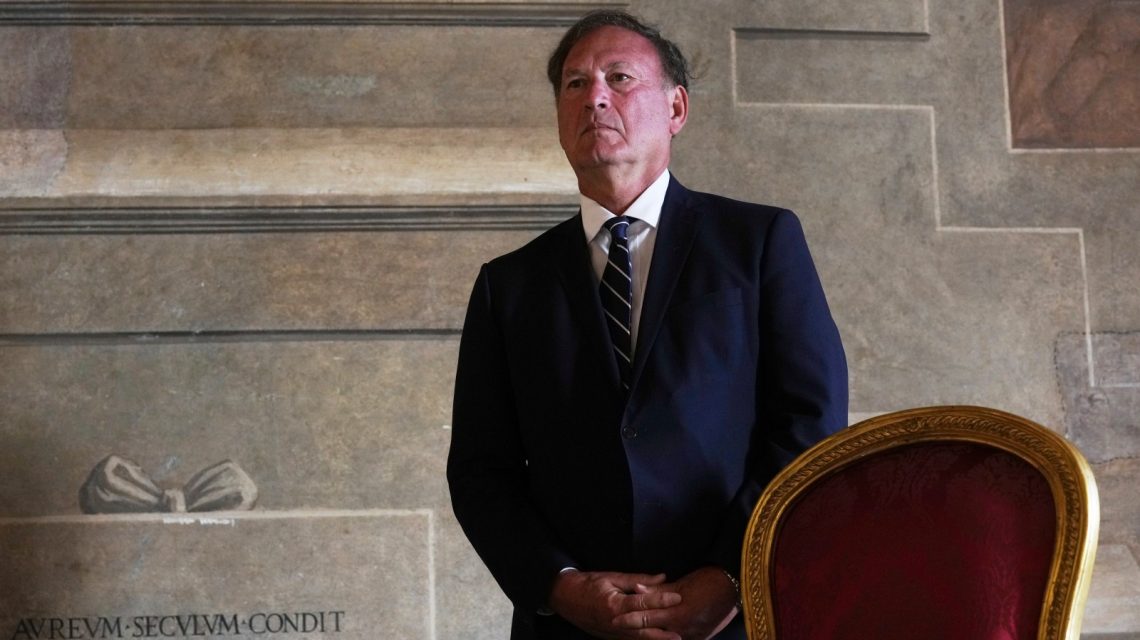
U.S. Supreme Court Justice Samuel Alito will not participate in a pivotal climate-change case set for argument soon. This decision marks a departure from the court’s prior stance that saw no grounds for his recusal. The case, known as Suncor Energy v. County Commissioners of Boulder County, is significant because it has implications for numerous lawsuits aimed at holding oil and gas companies accountable for climate-related damage.
NBC described the recusal as a “major U-turn,” noting that the court had previously stated Alito need not step aside despite his earlier recusal in related proceedings. Newsweek sought comment from the Supreme Court via email following the announcement.
This case stands out as one of the most consequential climate-related disputes reaching the Supreme Court in recent history. It could decide if state and local governments can pursue legal actions against fossil fuel companies in state courts, seeking recompense for climate-damage costs. According to Reuters, over two dozen states, cities, and local governments have lodged similar lawsuits. These actions demand compensation for tackling climate change.
The defense from oil companies posits that such claims should fall under federal jurisdiction rather than state legal theories. These companies assert that federal law preempts these state claims.
Alito’s decision introduces an ethical dimension to the debate over Supreme Court justice conduct. Environmental activists and oversight groups had challenged his involvement, citing financial interests he holds in the energy sector.
With Alito’s absence, the case will proceed with eight justices. This raises the potential for a deadlock, which would maintain the lower court’s judgement.
Details of the Case
The lawsuit filed by Boulder County, along with the City of Boulder and San Miguel County in Colorado, targets major energy firms like ExxonMobil and Suncor Energy. Local governments are pursuing financial recovery for damages attributed to climate change, including expenses tied to floods, droughts, wildfires, and severe weather events.
The plaintiffs assert that fossil fuel companies have long been aware of the environmental risks yet misled the public. They emphasize that they are not attempting to regulate emissions or control national energy policies. Instead, they argue for compensation for local damage based on state-law claims.
Conversely, oil companies claim that climate change is a global matter governed by federal law, not state tort law. They believe federal authority over interstate emissions and energy policies preempts claims by the local governments.
SCOTUSblog explains that the Supreme Court will not determine if fossil fuel companies are the cause of climate change. Instead, the justices will decide whether federal law supersedes the plaintiffs’ state-law claims. This decision could influence how similar climate-lawsuits evolve nationally.
Reasons for Alito’s Recusal
Justice Alito’s recusal follows scrutiny from ethics groups and climate advocates. According to Reuters, he once stepped aside during earlier proceedings due to his ownership of stock in ConocoPhillips, a company involved in the case. When the Supreme Court later agreed to consider a broader appeal, it initially indicated he had no financial conflicts with the parties.
Nonetheless, organizations like the Center for Climate Integrity and Consumer Watchdog advocated for his recusal, citing his financial investments in oil companies which might influence the industry’s legal risks. These groups suggested that such connections compromised the court’s impartiality.
Some environmental advocates questioned Alito’s involvement after his prior recusal from similar matters. The Center for Climate Integrity, supported by Consumer Watchdog’s analysis, argued that Alito’s investments in oil firms presented a conflict of interest. They stressed that stepping aside was necessary to uphold public trust in the court’s impartiality.
 Climate-Resistant Rock Glaciers: Hidden Water Resources
  Senators Reach Bipartisan Agreement on Permitting Reform
  Experts Warn of Critical Period for the Colorado River
  Future Cities: Ambitious Projects Aiming for Innovation and Sustainability
  Supreme Court Case Suncor vs. Boulder: Implications for Accountability in Climate Change
  Hawaii Faces Impact of Record El Niño Through Recent Hurricanes