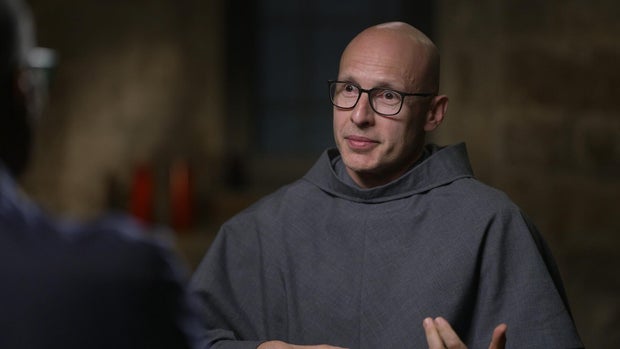
Sergio Fusetti has dedicated years to restoring the Basilica of Saint Francis of Assisi after two devastating earthquakes damaged it. Despite his efforts, the task of placing over 80,000 fragmented pieces remains unfinished. “This is impossible,” Fusetti remarked in Italian. “Only artificial intelligence can help us here.” Now, the restoration project integrates AI with the expertise of art historians and software engineers.
Earthquakes and Their Impact
The Basilica, located in Umbria’s hills in central Italy, holds significance as the burial site of Saint Francis, revered in Christianity. He lived a humble life, in contrast to his wealthy upbringing. Over the years, the site, adorned by artists from the medieval period such as Cimabue, Pietro Lorenzetti, Simone Martini, and Giotto, has faced more than 20 earthquakes.
In 1997, two consecutive earthquakes inflicted severe damage. Rubble killed four individuals and injured Fusetti. Friar Guiulio Cesareo, then a student at the church, recalls his fear as he witnessed the building shake. “I am always terrified,” he shared, emphasizing the emotional impact of those events.
Restoration Through Modern Technology
Although restorers have repaired much art, visible scars persist. Friars now collaborate with Haltadefinizione, a firm known for ultra-high-definition photography. Giovanni Borelli, their Chief Technology Officer, is spearheading the creation of the basilica’s digital twin using state-of-the-art equipment.
Their robust camera technology captures minute details beyond human sight, revealing intricate brushstrokes and textures. Borelli’s team employs cameras, drones, and lasers to compile an unprecedented high-resolution 3D blueprint of the basilica. This digital map will assist restorers in future emergencies. Completion is anticipated next year, and it will be accessible to the public.
Moreover, they are deploying AI to assist in reassembling missing fragments and addressing issues like cracks and discoloration in artworks. Borelli explained that AI can significantly reduce the time required for analysis compared to manual methods.
Preserving and Sharing History
Borelli aims to enhance accessibility to historical art. The technology utilized for the basilica has also been applied to map a Roman emperor’s thermal bath ruins. Advanced scanners identified forgotten rooms and passageways through hidden mosaics. Furthermore, virtual reality enables users to experience Italy’s rich history interactively.
Borelli, initially unfamiliar with the art world, questions the capability of digital representations in capturing physical art’s essence. He admits that virtual reality cannot replicate the emotional resonance of witnessing historical pieces firsthand but considers it a beneficial resource. “You can let your imagination run wild,” he said, noting the potential for exploration.
Friar Cesareo sees technological advances as a means to extend the basilica’s reach, sharing its beauty and spiritual significance more effectively. “Technology helps us to go farther away,” he stated, highlighting its role in connecting with a broader audience.
This effort reflects the growing intersection of tradition and modern technology, empowering the preservation and appreciation of cultural heritage.
 Australia Investigates FlyDubai Incident Amid Security Concerns
  U.S. Military Operations in the Strait of Hormuz: Analyzing Sustainability and Impact
 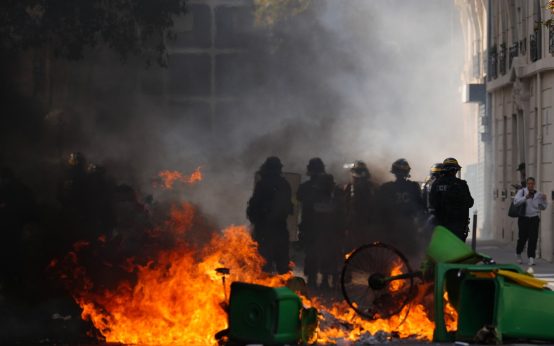 Escalating Student Protests in France: A Call for Educational Reform
  U.S. Monitors Potential Pneumonic Plague Case in Russia
 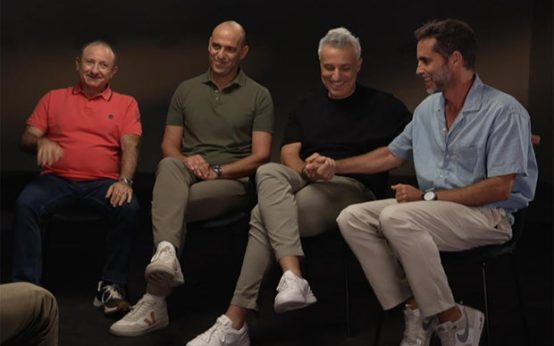 Heroic Passengers Prevent Catastrophe on Flight 1073
 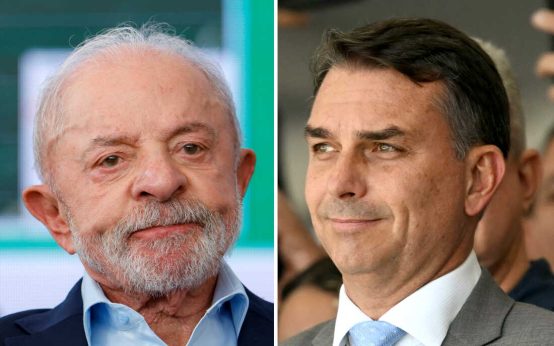 Brazil’s Presidential Race Heads to Runoff