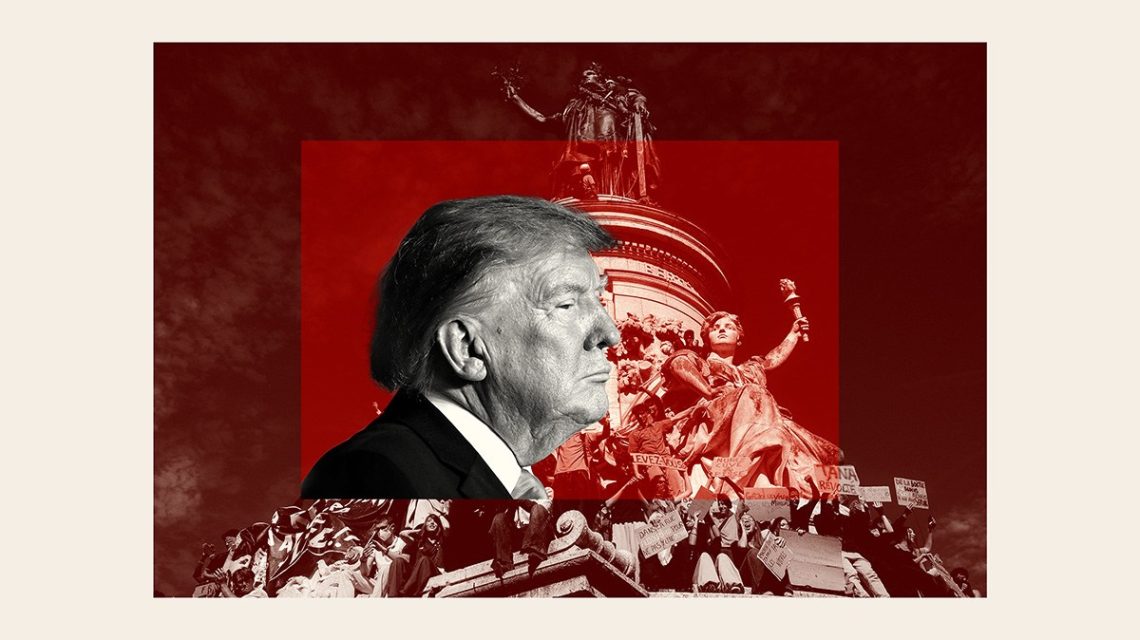
In a recent Truth Social post, Donald Trump offered commentary on the protests by French students against their school conditions. He attributed the unrest to Islam, claiming that it aims to dominate what was once a great country. This assertion aligns with Trump’s characteristic approach.
The students are protesting against issues like overcrowded classrooms and insufficient teaching staff. Reports indicate that over 250,000 people gathered to demand better education funding. Despite this, Trump’s post lacks evidence linking the protests to Islam, instead suggesting an alternative motive behind the demonstrations.
France often serves as a setting for debates on Islam, immigration, and national identity. Some concern over Islamist extremism and the integration of religious life into a secular republic is serious. However, Trump’s narrative simplifies these complex issues, blaming Islam for France’s troubles without making distinctions between different Muslim communities.
The education protest is utilized as a tool in this narrative. Complaints such as inadequate school resources are ordinary political issues and do not fit neatly into a grand cultural narrative. The storyline of Islam ‘taking over’ is more versatile, easily transplanted to American audiences without needing a deep dive into French educational policy.
France’s ongoing debate over its identity and citizenship accommodations contextualizes the villain Trump selects in his narrative. Yet, rather than engaging in this nuanced discussion, Trump casts the protests as a morality play featuring France as a fallen hero and Islam as the antagonist.
The post’s omission isn’t about raising questions about Islam; those are legitimate. France faces challenges with political Islam and extremism. That reality necessitates thorough, evidence-backed discussions, not broad claims based on a single event like a school protest. Framing the educational issues as evidence of cultural breakdown erases the students’ actual demands and assigns unwarranted blame.
This message primarily targets American audiences. It plays on fears by suggesting that allowing Muslims into a country leads to turmoil. In the contrast between students’ demands for teachers and Trump’s warning about Islam, a clear narrative angle emerges for his American followers.
 Understanding the Rising Support for White Nationalism Among Young White Men in the U.S.
  Shifting Odds in Senate Races Favor Democrats
 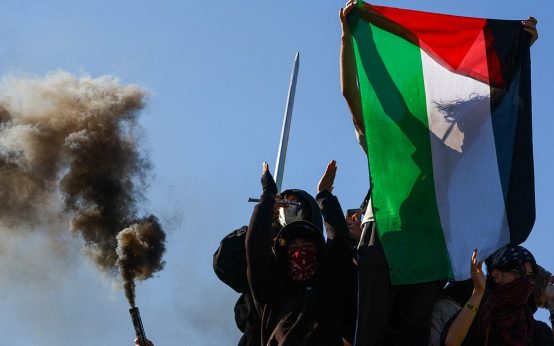 Escalating Riots in France: Trump and Waltz Highlight Immigration Concerns
 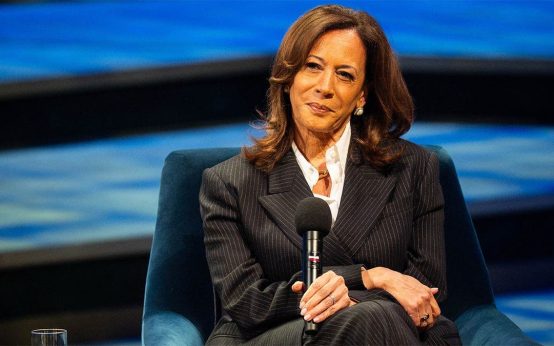 Kamala Harris Faces Questions on 2028 Presidential Bid
 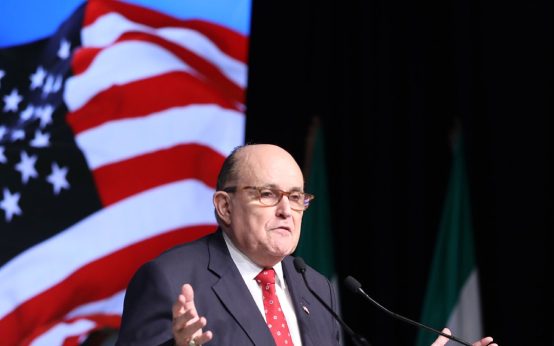 Rudy Giuliani’s Mafia Pursuit: Behind the Scenes of His RICO Cases
  Criticism Arises Over Biden-Era FBI Surveillance of Trump’s Inner Circle