
Republican Senator Susan Collins demanded an apology from her Democratic opponent, Troy Jackson, during Thursday night’s Senate debate. Jackson accused Collins of financially benefiting from the war in Iran. Collins, a five-term senator, responded, “That is absolutely outrageous, and you owe me an apology.” Jackson did not back down, saying Collins votes with Trump too often and alleged corporate influence on her decisions.
The debate was the second of the week in the race for Maine’s U.S. Senate seat. This followed their first encounter, where Jackson criticized Collins’ support for increased domestic energy production with the phrase “You can’t eat rock salt.”
Abortion Rights Ignite Debate
Abortion rights were among the night’s intense topics. Jackson criticized Collins for supporting Supreme Court Justice Brett Kavanaugh, suggesting his confirmation led to the overturning of Roe v. Wade. Collins countered by highlighting her role in writing federal abortion protection legislation. “Not only would I vote for it, I authored such a bill,” she stated.
Collins also turned the issue onto Jackson, mentioning his previous anti-abortion voting record. Jackson admitted, “Was I voting the wrong way? Yeah, and I’ve said that consistently.” Collins accused Jackson of planning to pack the Supreme Court if she had not voted for Kavanaugh.
Energy Costs Dominate Discussion
Rising energy costs were a focal point of the debate, crucial to Maine residents. Jackson blamed the Iran conflict for increased heating costs and criticized Collins for not leveraging her influence to end it. “We have to get out of Iran. Everything points to the Iran war that is driving these fuel prices in an insane direction,” he said.
Jackson proposed expanding eligibility for the Low Income Home Energy Assistance Program (LIHEAP) and called for further support for working families. Collins acknowledged the struggle of Mainers but emphasized her work on heating assistance, suggesting Congress expand both heating assistance and weatherization programs.
Collins accused Jackson of supporting policies that led to Maine’s high electricity rates. She stated, “It’s under Troy’s leadership that electric rates in Maine became the fourth highest in the nation.”
Trump’s Influence in Campaign
Jackson continually attempted to link Collins to President Donald Trump, stating the campaign was more about Trump and Collins than himself. He cited policies such as the “Big Beautiful Bill,” tariffs, the Iran war, and abortion rights as harmful to Mainers. He described Collins as “Powerful in town, but she’s weak every time that we need her to stand up and fight for us.”
Collins refuted this portrayal, asserting her independence across different administrations. “I have worked with five different presidents, supporting them when right and opposing when wrong,” she said.
Immigration Policy Dispute
A significant divide emerged over immigration enforcement and the role of Immigration and Customs Enforcement (ICE). The debate touched on the fatal shooting of Maine resident Johan Sebastian Guerrero. Jackson suggested ICE was unmanageable and advocated cutting its funding. “This agency is so rogue that I don’t know that it can be reformed,” he remarked.
Collins defended ICE’s role in deporting criminals and fighting crimes such as child exploitation and drug trafficking. She argued against eliminating the agency entirely. “We need to reform ICE further. There’s no doubt about that,” Collins stated. She also mentioned securing funds for body-worn cameras to ensure transparency in enforcement actions.
Debate Performances and Public Opinion
Observers noted Jackson held his own against Collins in the first debate. Former Republican state senator Phil Harriman commented that Jackson was visually composed, while Ethan Strimling emphasized the need for both candidates to improve their debate skills.
Recent polls indicate a tight race. A CBS News survey showed a dead-even split, with some voters undecided. Financial disclosures reveal contrasting backgrounds, with Collins possessing significant wealth and Jackson being portrayed as a working-class advocate.
The Maine Senate race remains critical, with the outcome influencing the political landscape. The state historically leans Democratic, but Collins’ longstanding moderate position makes the race competitive. Further debates are scheduled, with upcoming events on October 13 and October 15.
 Democrats and Republicans Clash Over Georgia Senate Seat
 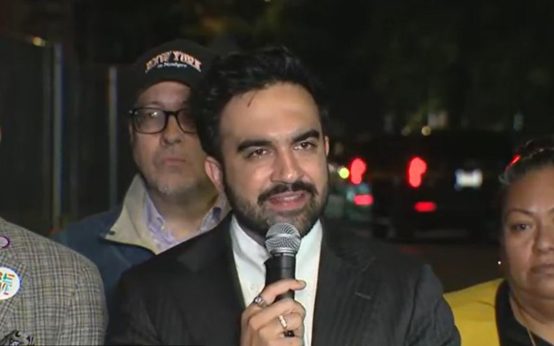 New York Mayor Calls for End to ICE Enforcement Following Bronx Shooting
 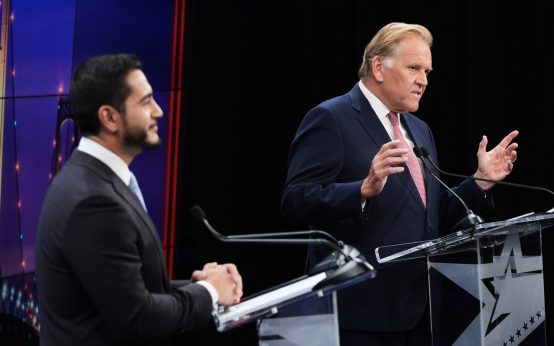 Michigan Senate Race: Rogers and El-Sayed Clash in First Debate
  Senator Ossoff Challenges Rep. Collins on Debate Stage
  Evaluating Political Candidates in Nebraska
  Conservative Strategies for College Students