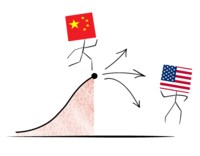
The United States and China are the world’s largest economies, intertwined as trading partners, economic competitors, and adversaries. Both countries have initiated efforts to reduce dependencies on one another, employing strategies such as decoupling, derisking, and rebalancing as highlighted by the Trump administration.
Trade Dynamics
Since 2018, the U.S. and China have engaged in a series of tariff exchanges. President Joe Biden continued the tariffs established by his predecessor, Donald Trump, who had instigated a global trade conflict with China as a primary focus. This led to Chinese President Xi Jinping restricting the exports of essential minerals, prompting Trump to reduce some tariffs in return for a temporary truce. Despite these tensions, U.S. exports to China have remained consistent. Analyzing data, can you predict how China’s export volume to the U.S. has fluctuated since 2018?
U.S. Treasury Securities
A substantial portion of U.S. public debt, approximately 31 percent of $9.2 trillion, is held by foreign investors through Treasury securities. China was one of the major holders, with ownership peaking in 2013 at over $1.2 trillion. Since then, China has aimed to diversify its investments. What is the current value of U.S. Treasury securities held by China today?
U.S. Business Operations
Despite geopolitical tensions, China remains a significant market for U.S. multinational enterprises. Companies are even exploring setting up factories in other nations like India. This week, several CEOs travel with Trump to Beijing. Although revenue from China has dropped due to tariffs, Intel and Nvidia still derive a substantial portion of their earnings from China, with Intel at about 25% and Nvidia nearly 10%. How has Apple’s sales percentage in the Greater China region shifted in recent years?
Chinese Students in the U.S.
Chinese views towards the U.S. have increasingly turned negative, perceiving America as a declining yet potent nation. Enrollment of Chinese students in U.S. higher education was at its peak in 2019, but has diminished post the COVID-19 pandemic. How has the number of Chinese students at U.S. institutions changed since the pandemic?
Tourist Visits
The peak period for short-term Chinese visitors to the U.S. was in 2015, with roughly 30% of visitor visas given to Chinese nationals. This interest has waned due to mutual tensions and was further sped up by the pandemic. Has the proportion of short-term visitor visas for Chinese nationals heightened or lessened since the pandemic?
 The Role of JD Vance in Addressing Working-Class Concerns
  Reviving Conventional Wisdom: Tracking Political Figures and Forces
  Aaron Sorkin’s New Film Sparks Debate on Free Speech and Tech Regulation
  Accountability Across Boundaries
 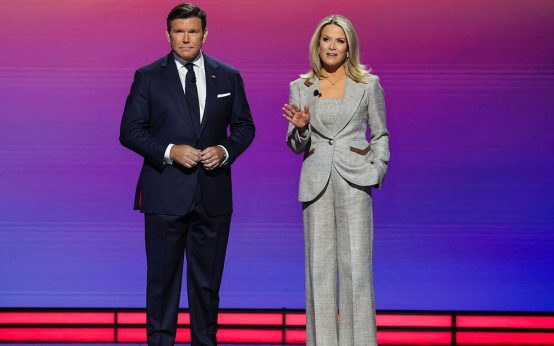 Reflecting on a Career at Fox News
 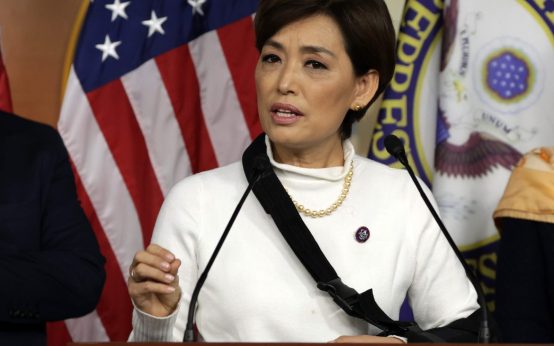 Accountability in Politics: A Call for Reform