
Early on Sunday, President Trump announced a supposed ceasefire between Russia and Ukraine through his Truth Social account, stating, “Effective immediately, there is an ENERGY CEASEFIRE in the War between Russia and Ukraine.” He emphasized that “both parties have agreed” and urged Moscow and Kyiv “not to break it.”
By midday, Ukrainian President Volodymyr Zelensky told Axios he was unaware of the ceasefire announcement, saying, “Please tell us when the ceasefire begins; we are ready and we will accept it.” Despite this, by the evening, Russia attacked Kharkiv’s Combined Heat and Power Plant No. 5 and a grocery store, killing three and injuring nearly two dozen others, including children.
The situation echoed the ancient Greek tragedy by Aeschylus, “The Persians,” in which Xerxes builds a bridge leading to his own downfall. On Monday, Russian Foreign Minister Sergey Lavrov dismissed Trump’s ceasefire claim, stating, “Zelensky has not ‘earned’ a respite in hostilities, and Russia will not be taken in by his promises.” This incident made Trump and his envoys, Steve Witkoff and Jared Kushner, appear foolish.
By Tuesday, Trump admitted there had been no ceasefire, saying, “They agreed because I said they agreed.” Since an incident in February 2025, where Trump rebuked Zelensky in the Oval Office alongside Vice President JD Vance, Putin has managed to manipulate Trump, delaying progress in Ukraine. During the August 2025 Alaska summit, Russia maintained its firm negotiating stance, and two months later, Trump was dissuaded from sending Tomahawk missiles to Ukraine. Trump acknowledged Putin might be playing him, yet he continued to engage with Russia’s plans, including supporting a controversial 28-Point Plan last November.
Unlike Xerxes, who built one bridge to defeat, Trump has repeatedly extended opportunities for Russia through Kirill Dmitriev, Putin’s envoy and head of Russia’s Sovereign Fund. Dmitriev aims to achieve diplomatically what Russia cannot on the battlefield: the downfall of Zelensky. Initially, Putin managed to influence Trump by reopening opportunities for ExxonMobil in Russia during the Anchorage Summit in August 2025. Dmitriev then suggested a Bering Strait tunnel project, involving Elon Musk’s Boring Company in a potential $8 billion deal, and offered partnerships in Arctic projects, enticing with rare earth minerals, gas, and oil.
In February 2026, Dmitriev introduced the “Dmitriev Package,” proposing $14 trillion in deals spanning energy, minerals, and infrastructure, with the condition of Trump pressuring Ukraine to cede territory in Donbas. Recently, Dmitriev proposed a new Nord Stream deal to Kushner and offered a U.S.-linked consortium to acquire Russian-owned Lukoil’s international holdings, valued at over $20 billion.
The U.S. conflict in Iran caused a diesel price spike, giving Russia leverage to further pressure Trump in the run-up to the November midterms. Trump agreed to lift sanctions and purchase 300,000 tons of Russian diesel, sparking bipartisan opposition. Twelve senators, including six Republicans, demanded termination of the deal. Meanwhile, Russia bombards Ukraine’s energy infrastructure ahead of winter, affecting 600,000 Ukrainians.
Trump’s continual concessions to Putin recall the ancient wisdom from “The Persians” by Aeschylus: “For presumptuous pride, when it has matured, bears as its fruit a crop of calamity, from which it reaps an abundant harvest of tears.” Mark Toth, a national security and foreign policy writer, co-authored this analysis with Col. (Ret.) Jonathan Sweet, a military intelligence expert and former leader of the US European Command Intelligence Engagement Division.
Copyright 2026 Nexstar Media Inc. All rights reserved. This material may not be published, broadcast, rewritten, or redistributed.
 Legal Experts Question Trump’s Raiding of Rep. Omar’s Home
  Vice President JD Vance Comments on DOJ Investigation Into Rep. Ilhan Omar
  Supreme Court’s Notable Decisions on Gun Rights and Asylum
 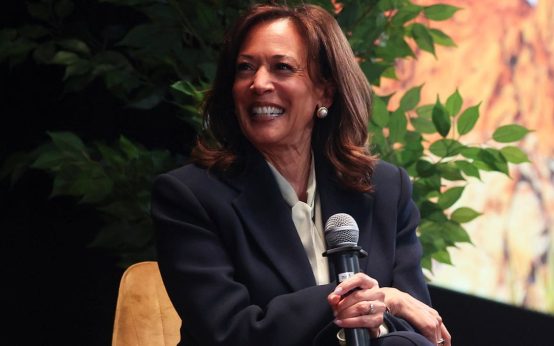 Former VP Kamala Harris Considers 2028 Presidential Run Amid Mixed Reviews
  Impact of Debates on the Midterm Elections
  Cronyism’s Impact on Free Markets and Capitalism