Pep Guardiola’s journey at Manchester City began with uncertainty. Just six months into his tenure, on January 2, 2017, Guardiola hinted at his eventual departure by stating, “the process of my goodbye has already started.” Initially, the club’s hierarchy viewed his stay as temporary, hoping to enjoy his presence for the duration of his three-year contract.
Unexpectedly, Guardiola remained for almost a decade. He led City to remarkable achievements, securing six Premier League titles, three FA Cups, and five League Cups. Moreover, in 2023, he added the Champions League, UEFA Super Cup, and Club World Cup to his accolades. As he prepares to leave, his only regret is Arsenal denying him a seventh Premier League title.
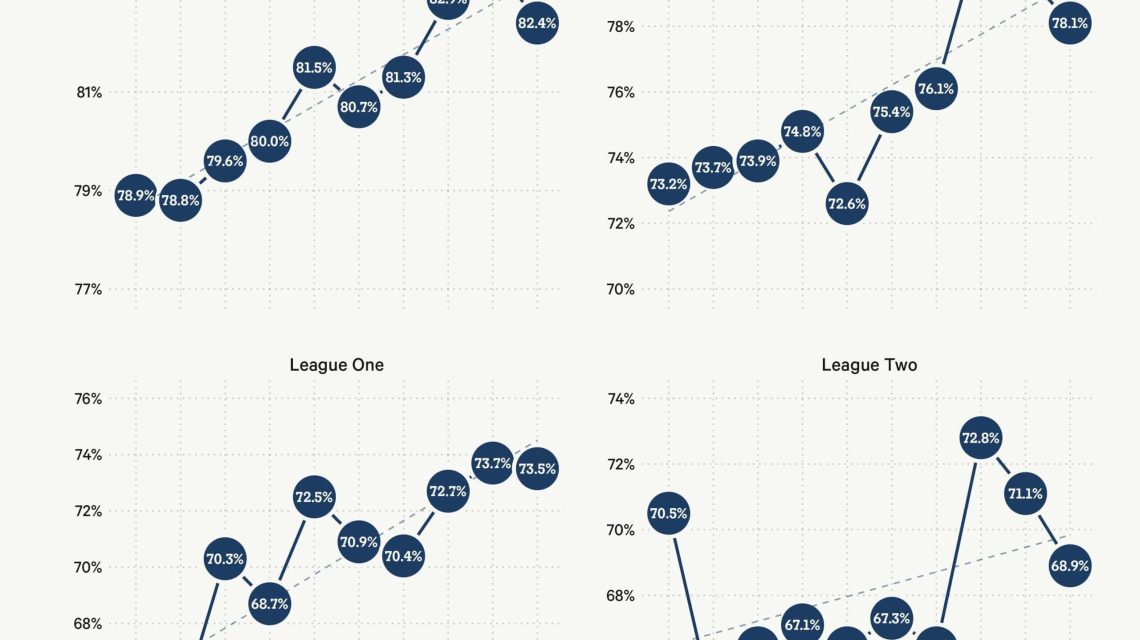
Guardiola’s impact extends beyond trophies. His dedication to possession-based football, considered alien to English football values upon his arrival, has influenced modern coaching from the Premier League to amateur leagues. However, recent trends show a shift from “Pep-ball,” with increased focus on set pieces and a dip in pass completion rates across leagues.
Guardiola also adapted his strategies by signing players like Erling Haaland and Gianluigi Donnarumma, prioritizing efficiency over build-up play. This season’s Premier League echoed his initial observations of English football, emphasizing set pieces and less elaborate play.
“Nine goals, eight from set pieces — corners, free kicks, throw-ins,” Guardiola remarked, reflecting on a match between Swansea and Crystal Palace.
Guardiola’s first season tested his philosophy, facing criticisms for his perceived naivety compared to contemporaries like Antonio Conte and Jose Mourinho. Despite finishing third, doubts about his approach persisted. Gary Neville and Jamie Carragher voiced concerns about City’s midfield’s physicality during a Sky Sports segment.
Questions about Guardiola’s style were addressed as City clinched back-to-back titles in subsequent seasons, amassing 100 and 98 points. They dominated with 64 wins in 76 games, significantly surpassing previous records.
City’s approach defied traditional Premier League logic, focusing on possession. Guardiola invested heavily in players like Ederson, Kyle Walker, Danilo, and Benjamin Mendy, totaling £240 million ($322m) in 2017. This spending attracted criticism, branding him a “chequebook manager.” However, City’s possession and technical prowess remained unrivaled.
Xavi Hernandez, Barcelona legend, anticipated Guardiola’s influence on English football, predicting a shift in mentality. English clubs were undergoing transformation, prioritizing skill-based coaching, mirrored by the approaches of Mauricio Pochettino, Jurgen Klopp, and Guardiola.
City captain Bernardo Silva praised Guardiola, stating, “in terms of offensive concepts, he is by far the best manager I’ve seen.” Yet, some fans label Guardiola’s style as stifling creativity. Detractors argue about excessive possession and sideways passing, using Jack Grealish’s struggles as an example.
Bernardo countered these claims, emphasizing City’s aggressive style and dynamic games when opponents challenged them.
Guardiola’s City, like his previous teams, earned a “boring” label due to their precision and dominance, often resulting in predictable victories. This perception reflects broader issues of competitive balance rather than coaching flaws.
Guardiola’s influence on modern coaching remains unparalleled. Former City staff like Enzo Maresca and Mikel Arteta, who led Arsenal to their first title in 22 years, reflect his impact. Current top coaches recognize Guardiola’s tactical and technical innovations, which transformed clubs worldwide.
Despite facing financial allegations, Guardiola’s legacy in Manchester transcends these controversies. The Premier League investigation into City’s conduct from 2009-2018 persists, but Guardiola and his players remain detached from potential wrongdoing.
In recent years, City’s form declined. Last season, they finished third, trailing Liverpool by 13 points. In Europe, their performance waned, experiencing early exits from the Champions League.
Guardiola admitted adapting to an evolving Premier League, characterized by rapid transitions. His team struggled against Bournemouth, ending title hopes this season.
The Premier League today resembles the one Guardiola joined, marked by cyclical tactical trends. While his “Pep-ball” era fades, Guardiola’s departure leaves a significant void at City. Rival clubs see new opportunities in a post-Guardiola landscape.
Guardiola’s successor, Enzo Maresca, might inject fresh ideas. Respected coaches like Klopp and Slot succeeded by revitalizing their teams. However, Guardiola’s legacy as a relentless winner sets a high standard.
Bernardo Silva highlighted Guardiola’s “hunger for more,” underscoring his management style that fostered continuous success. Despite speculation, Guardiola is ready to part ways. His influence on Manchester City and English football remains indelible, marking an era of transformation and innovation.
 The Quest for the Knuckleball Dream
  Historical Events in Chicago on October 1st
  Stephen A. Smith Discusses Houston Texans’ Critical Matchup Against Dallas Cowboys
  CC Sabathia Anticipates Yankees’ Game 1 Pitcher for ALDS After Beating Red Sox
  Atlanta Dream Progress to WNBA Semifinals
  Los Angeles Lakers Focus on Defense in Luka Doncic Era