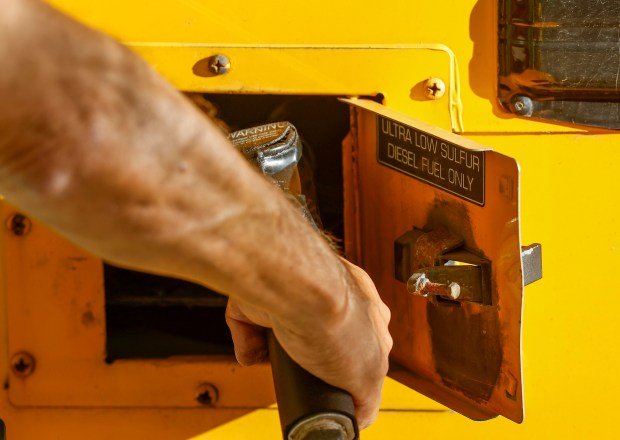
Suburban school districts, especially those managing their own buses, are struggling with high diesel prices this fall. Factors include conflicts in Iran and Ukraine, and a power outage at the ExxonMobil refinery in Joliet on September 13. These led to a record diesel price of $6.83 per gallon in Illinois on September 23, though it had decreased to $6.58 by Thursday, as reported by AAA.
Impact on Naperville Unit District 203
Naperville Unit District 203 faces significant cost challenges, using over 120 diesel buses for about 16,000 students. Lisa Xagas, assistant superintendent, noted that if diesel prices remain high, the district could spend an extra $300,000 on fuel in the 2026-27 school year. Although route optimization saved roughly 900 miles a day, the district must monitor diesel costs closely.
The district’s transportation budget is $15.6 million, about 4.2% of its $370 million total budget. Despite reserve funding that may cover near-term increases, a budget deficit of $3.9 million and declining enrollment make even a $300,000 increase worrisome. The district is awaiting electric buses ordered over a year ago but currently has no plans to buy more non-diesel buses.
Elgin Area School District U-46’s Situation
Elgin Area School District U-46, which spans 11 communities with over 33,000 students, also analyzes the potential long-term impact of high diesel prices on its fleet of 331 diesel buses. The district has set aside $2.6 million for fuel in 2027 but still lacks precise projections for potential budget impacts. Marcy Murphy, the transportation director, explores alternatives like electric and natural gas-powered buses.
Propane as a Viable Alternative
Palatine-Schaumburg Township High School District 211 successfully transitioned from diesel to propane starting in the 2018-19 school year, saving more than $5 per gallon in fuel costs. Propane’s reliability in cold weather and lower noise levels make it attractive, although electric buses were rejected due to high upfront costs.
According to Atlas Public Policy’s 2019 study, the cost of a new propane bus ranged from $110,000 to $115,000, while electric buses could cost between $300,000 and $440,000.
Other Districts’ Adjustments
St. Charles Community Unit District 303, serving nearly 12,000 students, also minimized diesel use by transitioning to gasoline-powered buses. Only 10% of their fleet remains diesel-powered. As diesel prices rise, the district limits long trips using diesel buses and may defer non-essential transportation expenses if necessary.
Environmental and Financial Considerations
Susan Mudd of the Environmental Law & Policy Center advocates for electric buses over diesel due to both financial and environmental benefits. Although propane is cleaner than diesel, it performs poorly on carbon monoxide emissions. Despite high initial costs, electric buses promise savings in the long term, potentially supported by government programs.
The Environmental Protection Agency’s Clean School Bus Program has helped fund lower-emission buses with $2.6 billion since 2021. Programs like ComEd’s Energy Affordability Program provide rebates for infrastructure, aiding districts in shifting to electric.
Funding Challenges and Future Outlook
Lack of state funding exacerbates Naperville 203’s financial issues. State law mandates an 80% reimbursement for fuel expenses, yet the district often receives far less. In 2026, the state under-reimbursed the district by $2.3 million, with a total shortfall exceeding $8.4 million over five years. Naperville 203 advocates for more state funding to cover rising fuel costs, although progress is minimal.
GasBuddy’s Patrick De Haan suggests diesel prices may continue to fall as operations resume at ExxonMobil’s Joliet plant. Prices have dropped over 25 cents since September 23, though substantial relief in the next six months depends on geopolitical developments involving the U.S., Ukraine, and Iran, as per De Haan.
 Severe Weather Risk and Atmospheric Conditions in Arizona and Southern California
 Evanston/Skokie School District 65 Faces Financial Challenges
 Michigan City Residents Protest Coal Plant Over Environmental Concerns
 Impact of 2010 Deepwater Horizon Spill on Gulf of Mexico Marine Life
 Dr. Vanessa Kerry’s Role in Building Global Health Resilience
 ACE Scholarships Supporting School Choice