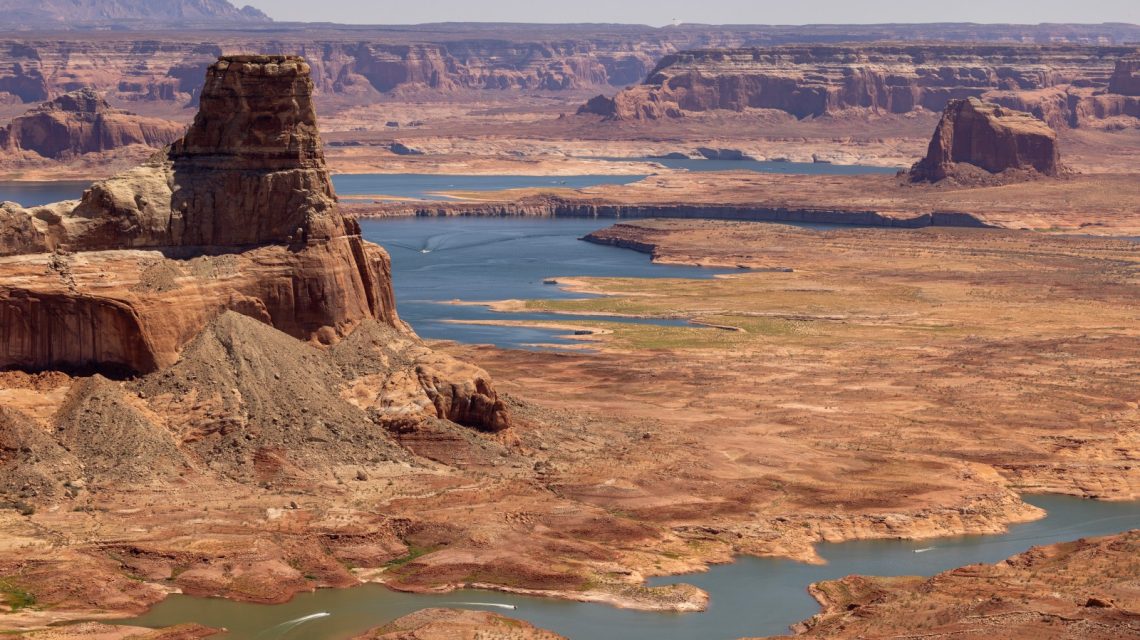
A proposal to prioritize Lake Mead over Lake Powell is gaining traction. Both reservoirs have reached record lows, and no agreement has been reached among the seven states that rely on the Colorado River’s resources.
Why the Colorado River Is Critical
America’s two largest reservoirs have hit unprecedented lows this year, due to an extended drought in the Colorado River Basin and a notably scarce snowpack during the winter of 2025-26. As of Wednesday, data from the Bureau of Reclamation shows Lakes Mead and Powell are each only 27 percent full.
The Colorado River’s dams and reservoirs provide water and power to millions in Arizona, California, Colorado, Nevada, New Mexico, Utah, and Wyoming. Experts warn that decreasing water levels threaten these essential supplies.
A recent U.S. Energy Information Administration report found Southwest hydropower generation fell to a record low this summer, correlating with the declining reservoir water levels. By the end of September, Powell was just 28 feet above the minimum power pool required for electricity generation at Glen Canyon Dam.
The ‘Fill Mead First’ Proposal
The ‘Fill Mead First’ proposal aims to make Lake Mead the primary storage reservoir and use Lake Powell only when Mead is full. This plan necessitates new tunnels to divert the Colorado River around Glen Canyon Dam, according to the Glen Canyon Institute. The nonprofit advocates for restoring Glen Canyon and a free-flowing Colorado River.
Eric Balken, executive director of the institute, stated that using Mead as the main storage facility for both the Upper and Lower Basin could help save Lake Mead. However, storage will continue to decline unless water usage is reduced to balance with the river’s actual supply. According to Balken, moving water from Powell to Mead would essentially double its storage, but without addressing the supply-demand gap, Mead remains at risk.
This method has been adopted by the Bureau of Reclamation in the summer’s new operating plans for both reservoirs, as highlighted by David Rosenberg, professor at Utah State University.
Possible Risks and Solutions
Rosenberg pointed out that both Lake Powell and Lake Mead are at low elevations. Prioritizing one reservoir risks the other. He suggested a strategy that defines catastrophic water levels for each reservoir and maintains buffer volumes to mitigate risks like lost water deliveries and hydropower.
Rosenberg emphasized that maintaining buffers ensures continuing benefits for hydropower, infrastructure, and water delivery capacity. In contrast, buffer water used by downstream users is a one-time consumption.
Environmental Concerns
The proposal could complicate environmental dynamics near Glen Canyon Dam. Jack Schmidt, from the Center for Colorado River Studies, noted that draining Powell might unpredictably impact ecosystems below the Glen Canyon Dam, including the Grand Canyon. Potential outcomes include increased river fluctuation, sediment, and turbidity.
Despite these concerns, Balken contends that the Southwest’s aridification already shifts ecosystems, hydropower, and communities throughout the Colorado River Basin. By consolidating remaining water in Mead, there may be new economic and environmental opportunities, potentially more favorable than maintaining two massive reservoirs near depletion.
 Lab Tests Show No Lead Contamination in Iowa Water After Detonation
 Snow Geese Migration: A Majestic Sight on Canadian Prairies
 Sharpie Marker Conceals Blade at Airport Screening
 EPA Monitors Lead Azide Detonation Effects in Iowa
 Two Earthquakes Hit Central California
 Exploring the World of Solitary Bees in Urban Environments