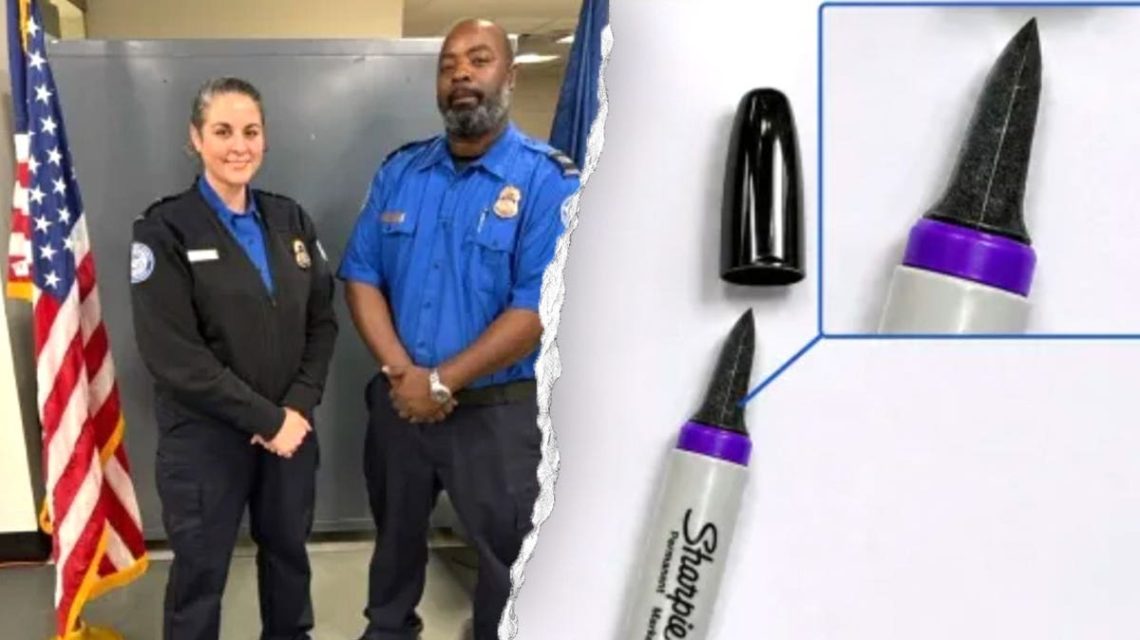
Transportation Security Administration (TSA) workers found an unusual weapon during a routine airport screening. At Virginia’s Richmond International Airport, a double-edged blade was concealed inside a Sharpie marker. This discovery occurred thanks to TSA officer Shelley Dall, who noticed something suspicious while operating an X-ray machine at a checkpoint.
Dall identified what appeared to be a metal piece with a sharp tip and alerted fellow TSA officer Benjamin Lewis for a bag search. Lewis initially thought the image resembled a metal spear or tool. He observed that the passenger’s behavior did not seem unusual.
Upon further inspection, Lewis noted a barely visible cap on the blade, which turned out to be from the Sharpie marker. When he removed the cap, a concealed double-edged blade was revealed. This incident is still under review, though the passenger was permitted to board the plane.
Lewis shared that this find was not surprising due to his experience with various concealed items. He emphasized the importance of TSA officers maintaining vigilance and respecting passengers and coworkers.
TSA officers are trained to stay alert and avoid complacency during airport screenings.
Keith Jeffries, a vice president of K2 Security Screening Group, noted that finding concealed blades is not uncommon at airport checkpoints. He advised travelers to pack their bags themselves and understand the contents thoroughly. Attempting to transport concealed weapons poses serious security concerns.
Recently, TSA officers have encountered other unusual items at screenings, such as live snakes hidden in a pillowcase in California and a claw-like weapon in Seattle. These discoveries underscore the importance of maintaining security vigilance at airports across the United States.
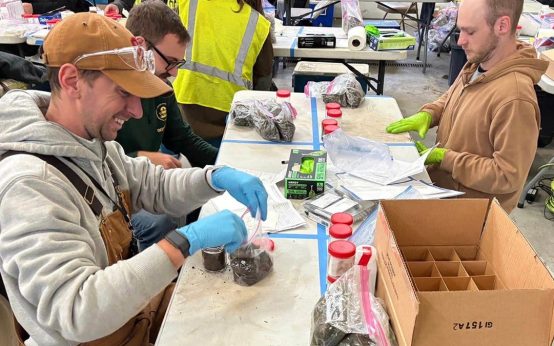 Lab Tests Show No Lead Contamination in Iowa Water After Detonation
 Life Changes After Moving from Chicago to Toronto
 Snow Geese Migration: A Majestic Sight on Canadian Prairies
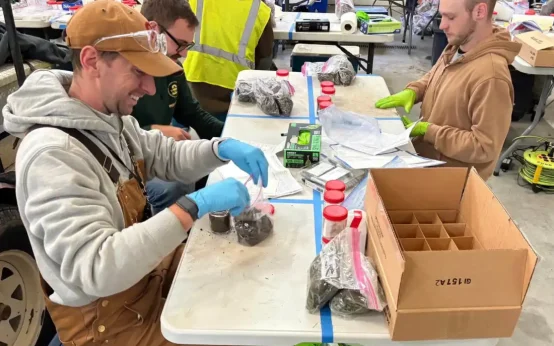 EPA Monitors Lead Azide Detonation Effects in Iowa
 Two Earthquakes Hit Central California
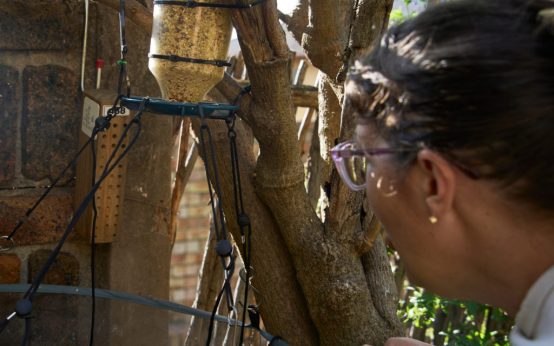 Exploring the World of Solitary Bees in Urban Environments