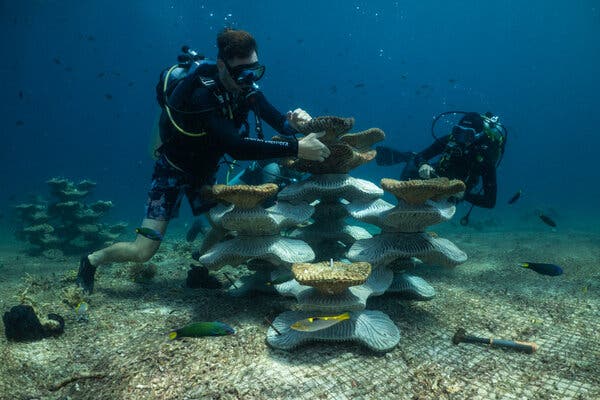
In the Coral Triangle of the Pacific Ocean, a conservation group undertakes a unique project to revive coral reefs. The Tropical Research and Conservation Center, led by managing director Robin Philippo, is installing artificial reef structures near Pom Pom Island in Malaysia.
The project involves transporting pieces of concrete to a site mere hundreds of feet from a small island in the Western Pacific Ocean. Each concrete piece, with a textured surface reminiscent of a white lotus leaf, weighs approximately 60 pounds. These pieces are methodically tossed overboard, followed by divers descending 20 feet to the seabed.
Using nuts, bolts, and steel rods, the divers assemble the concrete pieces into a cohesive structure. As the work progresses, curious damsel fish and green turtles congregate, observing the activity with interest. Within an hour, the artificial reef stands completed, measuring 3 feet tall and 10 feet wide.
The volunteers utilize concrete with molds printed via 3-D technology, aiding in the creation of the reef structures. These efforts aim to provide habitats and support marine life affected by bombings and climate change.
Volunteers involved in the project play a pivotal role in transporting and deploying the reef structures. They use tools like push carts and lift bags to move the molds efficiently. The initiative underscores the collaborative effort required in marine conservation.
 The Threat of Melting Glaciers: A Call to Action
 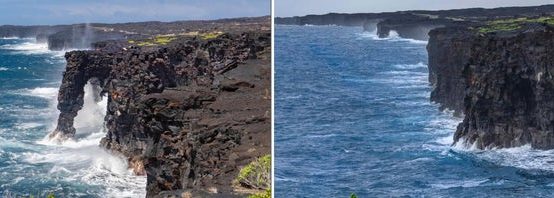 Collapse of Hawai’i’s Hōlei Sea Arch Amidst Storms
  Los Angeles Faces Uncommon Heatwave in October
  Drought Drives Black Bears Closer to Human Activity
  Atlantic Ends September Without a Hurricane for First Time Since 1994
 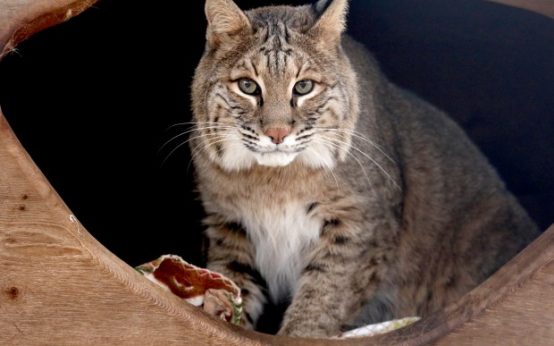 Bobcat Sightings and Conservation Efforts in Illinois