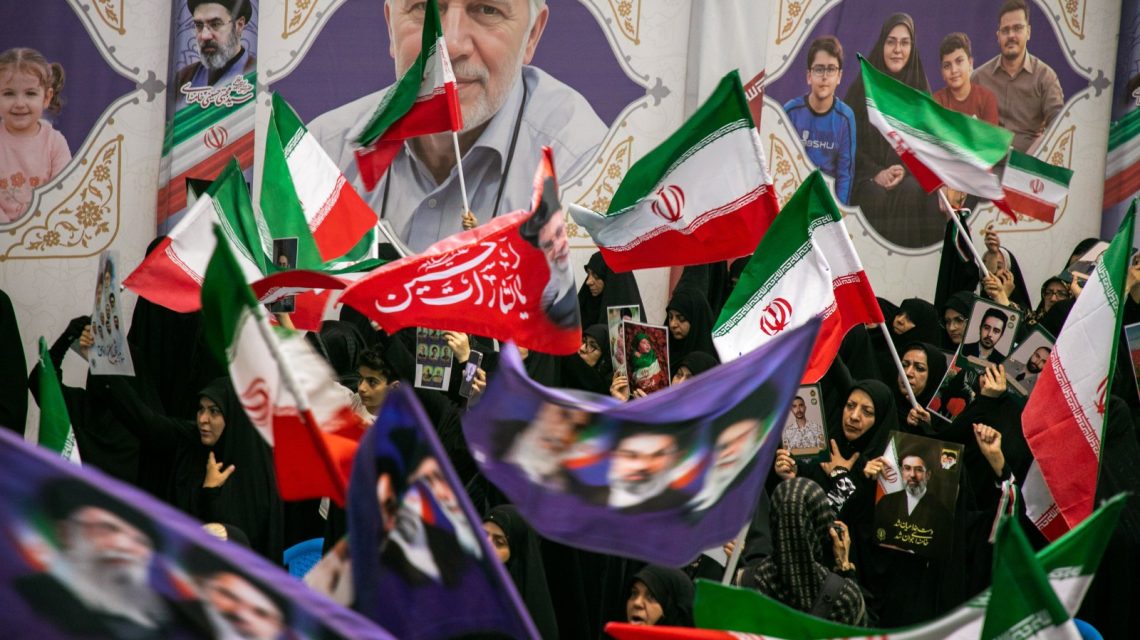
The recent suggestion by President Donald Trump that a deal with Tehran is close has been contradicted by Iranian officials who show defiance toward the U.S. There are mixed messages from both sides about the possibility of ending the conflict. While expectations were raised by Trump’s comments on Saturday, a U.S. official on Sunday told Axios that Iran’s leadership might need several days to approve any deal. This war began on February 28 and reached a temporary ceasefire on April 7.
The market has responded positively to the idea of reopening the Strait of Hormuz, which Iran is currently holding hostage. However, on Monday, an Iranian official declared that Iran would not give in to U.S. pressure, saying time was not on Trump’s side. The issue of Iran’s nuclear program remains unresolved, with both parties interpreting a memorandum of understanding (MOU) to end hostilities differently.
U.S. Perspective
Trump claimed on Saturday that a deal to end the conflict had been “largely negotiated.” Yet a senior U.S. official told Axios that an immediate agreement was unlikely, noting that figures like Supreme Leader Mojtaba Khamenei might delay approval. An unnamed senior U.S. official stated Washington is in a “very good place,” though the details remain under negotiation, leaving the agreement’s finalization still uncertain.
During a visit to India, U.S. Secretary of State Marco Rubio expressed optimism, saying negotiators nearly had a “pretty solid thing on the table” and a deal could be reached soon. The deal reportedly calls for a 60-day ceasefire extension, reopening the Strait of Hormuz, and further negotiations on Iran’s nuclear program.
Iran’s Position
Iranian officials have responded with defiance, though they haven’t entirely dismissed the deal. Ebrahim Rezaei, spokesperson for Iran’s National Security and Foreign Policy Commission, advised skepticism about Trump’s “bluff,” asserting time favors Iran. He challenged the U.S. to negotiate sincerely, instead of resorting to threats and pressure.
Citing an Iranian source, Reuters reported that the Supreme Leader had not approved the deal’s framework. While stopping Iran from acquiring a nuclear weapon is a priority for Trump, Iran’s President Masoud Pezeshkian has denied intentions to develop such a weapon. However, the Supreme Leader hasn’t commented on this lately.
Nuclear Program Disagreement
The focus of negotiations is on ending the conflict, not the nuclear issue, according to Iranian Foreign Ministry spokesman Esmaeil Baghaei. Trump insists Iran must forgo uranium enrichment, a critical material for nuclear bombs. Iranian officials, in turn, oppose new restrictions.
Despite Trump’s demand that Iran export its highly enriched uranium (HEU) as part of an agreement, Iranian media claim no such commitments have been made. Hossein Noushabadi, from Iran’s Foreign Ministry, dismissed rumors about a long-term suspension of uranium enrichment.
The nuclear issue, enrichment, and uranium stockpiles will be discussed during 60-day talks. Iran seeks the lifting of sanctions, the release of blocked assets, and a full U.S. military withdrawal from nearby areas in exchange for cooperation.
Strait of Hormuz Controversy
Trump stated any deal must include reopening the Strait of Hormuz but did not clearly address whether Iran would maintain permanent control over the waterway. Iran claims continued sovereignty, possibly involving toll charges. The peace agreement’s implementation would see the strait gradually reopen, along with an end to the U.S. naval blockade.
The U.S. launched the blockade on April 17, hindering Tehran’s oil shipments. Trump noted that the blockade will remain until a deal is solidified. However, Iran might be allowed to sell oil through sanctions waivers, with relief negotiated during a 60-day period.
The Institute for the Study of War (ISW) stated Tehran feels it has a stronger negotiating position than the U.S., aiming to reshape the regional order to its benefit. ISW noted Iran hasn’t publicly agreed to meaningful nuclear concessions in the draft MOU, believing discussions are deferred until military and economic pressures are relieved. Iranian officials demand any deal ends the conflict on all fronts, including Lebanon, where Israel fights Tehran-backed Hezbollah. Trump supports Israel’s position and has urged Israeli Prime Minister Benjamin Netanyahu to ease strikes.
 British Police Arrest Man Suspected of Terror Plot
  Activists Push for Nationwide Ban on Child Marriage in the U.S.
  Investigation into Alleged Incident at Cornell University
  Rising Drone Threats Highlight Vulnerabilities in Moldova’s Airspace Defense
  Bolivia Faces Security Test Amid Unrest
  Incident on FlyDubai Flight Raises Security Concerns