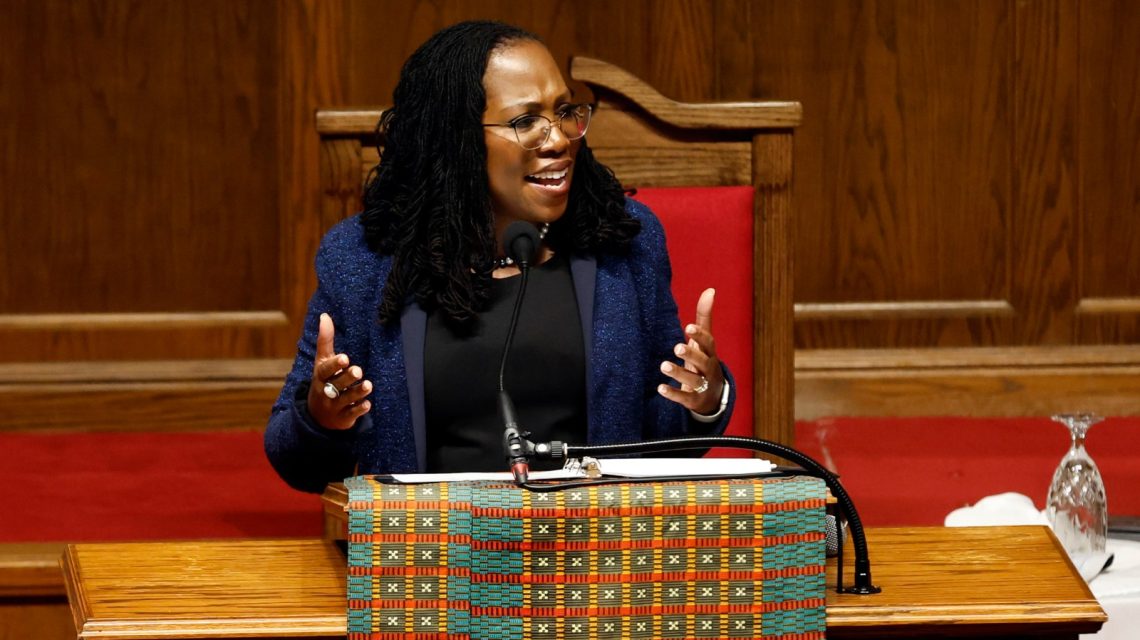
The Supreme Court has restricted federal prisoners’ ability to seek early release by challenging the validity of their convictions through the compassionate release statute. This decision provoked a strong dissent from Justice Ketanji Brown Jackson.
Majority Opinion
The court’s decision, led by Justice Amy Coney Barrett, determined that challenges to conviction legality must be addressed via the traditional habeas process under federal law, rather than through motions for sentence reductions based on ‘extraordinary and compelling reasons.’ This view prevents prisoners from bypassing the strict procedural limits that Congress imposes on post-conviction challenges.
Jackson was the sole dissenter, arguing that the majority’s interpretation improperly narrowed the statute by adding restrictions not present in the original text. She emphasized that the compassionate release law serves as a flexible ‘safety valve’ for addressing unjust sentences. Jackson warned that this ruling might preclude deserving claims.
The Case of Joe Fernandez
The case involved Joe Fernandez, who is serving a life sentence for a 2000 murder-for-hire in the Bronx, New York City. Sentenced in 2013, Fernandez has persistently challenged his incarceration. A trial judge had concerns about the credibility of key testimony and granted his release on compassionate grounds. However, the Supreme Court’s decision reversed this, underscoring a clear divide between legal challenges to convictions and sentence-reduction mechanisms typically reserved for situations like illness or age.
What the Majority Argued
The conservative majority, led by Barrett, maintained that federal prisoners could not use compassionate release motions to dispute the legitimacy of their convictions. They pointed out that such claims must go through the habeas process, structured by Congress for post-conviction challenges. The majority emphasized preserving the integrity of federal habeas law, noting that Section 2255 petitions have strict deadlines and limitations on repeat filings. Allowing conviction-related claims through compassionate release might lead to endless relitigation of settled criminal cases.
Different Views from Sotomayor and Kagan
Justices Sonia Sotomayor and Elena Kagan agreed with reversing the lower court’s decision on Fernandez but disagreed with the majority’s broader legal stance. In her concurring opinion, Sotomayor argued that the Court imposed an excessively broad limit not supported by the statute. She warned this could sharply reduce judicial discretion and block legitimate claims that might overlap with conviction arguments.
Sotomayor suggested a narrower test focusing on whether substantial new circumstances had arisen since sentencing. This would ensure that compassionate release addresses post-sentencing developments making continued imprisonment unjust, without relitigating past trial or appeal issues. Applying this framework to Fernandez’s case, she found the relief unwarranted, as no new evidence or significant changes were presented.
Concerns over Limitations
Justice Jackson expressed concern that the ruling might have far-reaching effects, particularly in cases involving potential innocence. She believes courts should maintain discretion to act in extreme cases where new evidence questions a defendant’s guilt. By closing this door, she argues, the majority undermines Congress’s tool meant to ensure just treatment and preserve the system’s capacity for mercy.
Reflecting on Fernandez’s situation, his compassionate release remains nullified, and he continues to serve his life sentence.
 Immigration Judge Allows Deportation of Wisconsin Mosque Leader Salah Sarsour
  Lindsay Clancy Faces Potential Retrial After Mistrial
  Tennessee Prepares for Rare Execution of Woman on Death Row
  Mistrial in Lindsay Clancy Case: Juror Speaks Out
  Utah Judge Orders Release of Man on Death Row After DNA Evidence Emerges
  Kurt Olsen Resigns from the Justice Department Amid Investigation