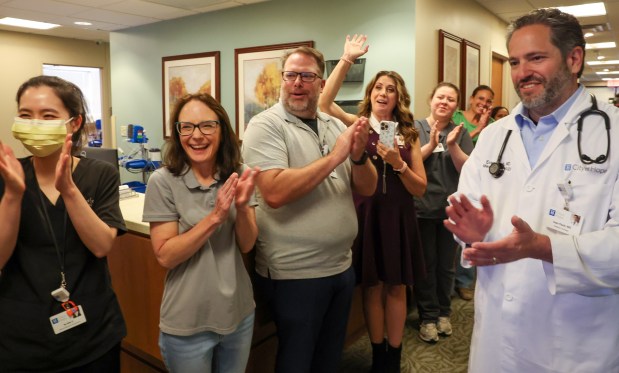
When Rachelle Gardner learned about a novel experimental drug for pancreatic cancer, she remained cautious. Her concerns were valid: Would she qualify for the treatment? Could her hospital administer it? Would she survive long enough to benefit? By late July, she had her answers. At City of Hope Cancer Center Chicago, Gardner took three light blue pills, sipping water for each. “To good health and getting rid of that cancer bug!” she said cheerfully.
Gardner, a 59-year-old Milwaukee educator who teaches visually impaired students, expressed that the drug offered her “a new sense of hope.” Gardner joins many patients in Illinois and nationwide who have recently begun the experimental treatment, considered a breakthrough. Although daraxonrasib does not cure pancreatic cancer — one of the most challenging cancers to treat — it improves survival time.
For those whose pancreatic cancer has spread beyond the initial organ, the prognosis is often grim, with only months left to live. However, a recent clinical trial showed that patients with metastatic pancreatic cancer, previously treated, survived a median of about 13 months compared to six months for those continuing with chemotherapy.
Dr. Evan Pisick, a medical oncologist at City of Hope Cancer Center Chicago, remarked on the significance of the drug. “This is honestly a game changer,” Pisick stated. “It’s the first targeted therapy for pancreatic cancer other than chemotherapy.” Although daraxonrasib hasn’t received FDA approval, the FDA permits Revolution Medicines to supply it under an expanded access program. Eligible patients, having tried other treatments, can receive the drug at no cost.
Physicians apply to Revolution for each patient. “It gives patients an advantage; they can’t wait around for long,” Pisick explained about the program. At City of Hope Cancer Center, Gardner is one of several patients receiving the drug. Other health systems in Illinois, such as Advocate Health Care, OSF HealthCare, Endeavor Health, and University of Chicago Medicine, are also participating.
“Unprecedented in pancreatic cancer,” said Dr. Ardaman Shergill about the drug’s ability to prolong patient lives. Shergill, from UChicago Medicine, highlighted that patients reported less pain, improved appetite, and more energy compared to chemotherapy.
Mary Louise McAdams, 84, diagnosed with pancreatic cancer in 2024, echoed these sentiments. After chemotherapy and radiation, side effects landed her in the hospital. Now on daraxonrasib through the program, she hopes for more time with her family.
Gardner’s cancer journey began in 2023. A rash led to her diagnosis. Initial treatments included chemotherapy and a Whipple procedure — a complex surgery removing parts of the pancreas and surrounding organs. For a while, her tests showed no disease until its return in 2025. Later, chemotherapy and radiation ceased to be effective.
Gardner was determined to beat the odds. The potential access to daraxonrasib at City of Hope Cancer Center gave her renewed hope. She emphasized her trust in clinical research and its life-extending potential.
Now, taking the medication daily, Gardner is optimistic about the future. She hopes for more time to enjoy road trips and try new dining spots with her fiance, continue teaching, and cherish moments with her family, including her little grandnieces and grandnephews.
“There’s hope out there,” she affirmed.
 Trump Administration Distributes ACA Refund Checks
  Higher Consumption of Ultra-Processed Foods Linked to Increased Health Risks
  Understanding Inflammation: Myths and Facts
  Calm Parenting: Strategies to Manage Stress
  Trump’s Executive Order to Combat Mosquitoes and Ticks in D.C.
  Overcoming Weight Loss Challenges: Brain Health and GLP-1 Medications