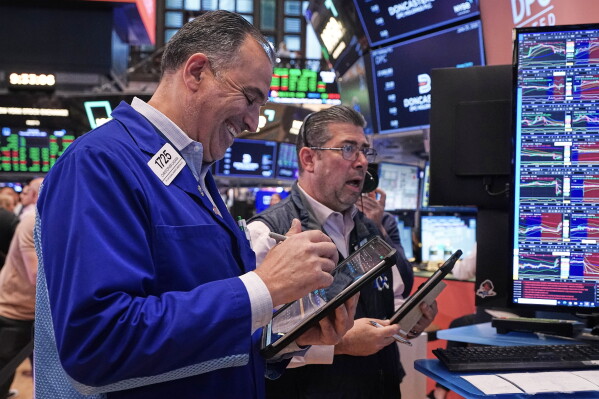
Computer chipmakers and other beneficiaries of the artificial intelligence surge faced declines on Thursday, impacting global stock markets. This trend overshadowed gains elsewhere on Wall Street, resulting in mixed U.S. stock indices. The S&P 500 decreased by 0.2%, following a near peak the previous month. The Dow Jones Industrial Average rose by 102 points or 0.2%, while the Nasdaq composite fell by 0.7% as of 11:45 a.m. Eastern time.
Despite the drop in AI-related stocks, the majority of Wall Street stocks climbed. Major companies exceeded analyst profit expectations for the latest quarter. For instance, Abbott’s stock leaped 11.1% after the company reported higher-than-expected profits and improved its annual earnings forecast. UnitedHealth Group’s stocks also increased, rising 3.5% through better-than-expected results.
Nvidia’s 2.5% drop had a substantial impact, as the company’s size makes it a significant component of the S&P 500. Other AI-related stocks also fell. Micron Technology dropped 5.7%, reducing its yearly gain below 200%. Sandisk declined by 10.6%, although it maintained a 500% year-to-date increase. Western Digital’s stock sank 9% but remained up by 170% for the year.
AI stock prices have faced pressure due to concerns over potential overvaluation and sustainability in profit and productivity promises.
Taiwan Semiconductor Manufacturing Co. delivered a stronger-than-expected profit. Its Taiwan shares rose by 1.2%, but U.S. shares fell by 2.2%. In South Korea, AI giants like Samsung Electronics and SK Hynix caused the Kospi index to drop by 6.4%, marking one of the world’s most volatile markets recently.
The Bank of Korea’s interest rate hike added to the strain in Seoul, marking its first rate increase since 2023. Higher rates can help control inflation but may slow economic growth and reduce investment prices. Concerns persist that central banks, including the Federal Reserve, might need to raise rates further to address high oil prices.
Oil prices, amidst geopolitical concerns involving Iran and the Strait of Hormuz, saw fluctuations. A barrel of Brent crude briefly surged past $86 before falling back to $84.75.
In the U.S. bond market, the 10-year Treasury yield increased to 4.57% from 4.55% after mixed economic reports. Although consumer spending appeared resilient after excluding gasoline sales, fewer unemployment claims indicated a solid job market. Mid-Atlantic manufacturing also surpassed expectations.
Europe and Asia saw sharp stock declines, with decreases of 1.8% in Shanghai and 2.8% in Tokyo. However, Hong Kong’s Hang Seng index rose by 1.3%, with Alibaba gaining after China approved its integration in the Apple Intelligence AI tool.
Contributions from AP Business Writers Chan Ho-him and Matt Ott are acknowledged.
 U.S. Stocks Recover Amid Oil Price Cooldown
  Navigating Interest Rate Hikes: Where Savers Should Stash Their Cash
  Kevin Warsh’s Approach to Inflation Control
  Nike Stock Plunges as Company is Dropped from S&P 100
  Nike Faces Criticism from Investor Over Activist Stance
  Maximizing Returns: The Benefits of a 3-Year $100,000 CD Account