The entertainment industry is increasingly relying on artificial intelligence (AI), even amid protests from performers and legal actions by studios. A survey by the Los Angeles Times of job postings in late June revealed that over 10% of positions in major studios were likely related to AI. Studios are actively recruiting talent to develop AI tools and protect intellectual property from unauthorized AI use.
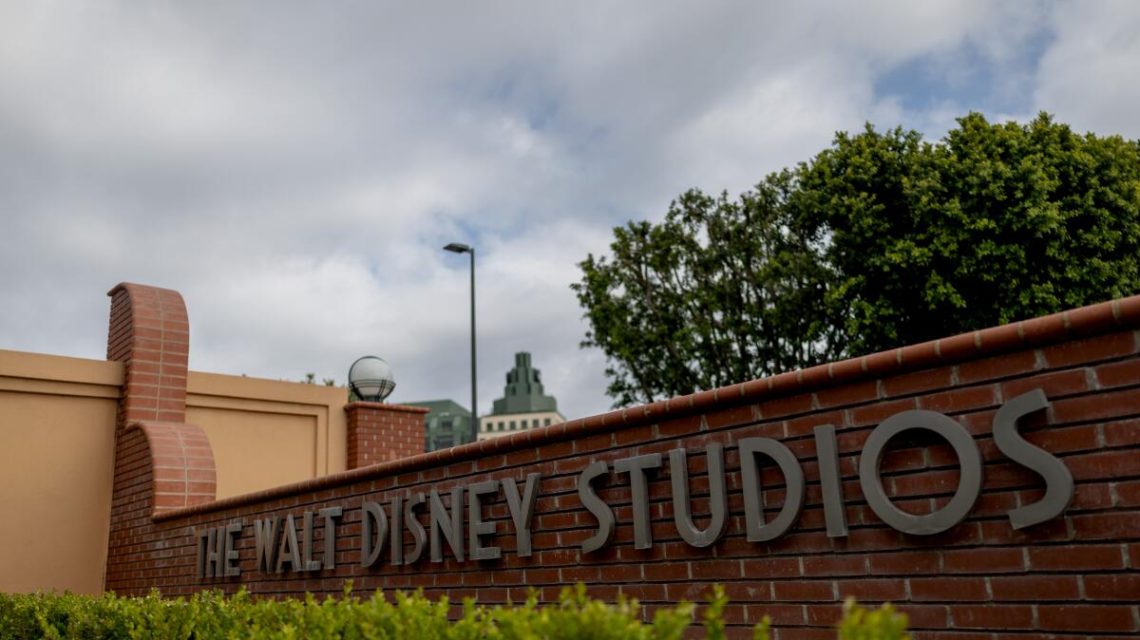
Many studios prefer not to publicly discuss their use of generative AI due to potential backlash from consumers and unions. The Walt Disney Studios and Amazon MGM Studios are among those seeking AI-related roles. Disney advertised for a production innovation technologist, while MGM sought a principal AI executive.
Bryn Mooser, CEO of Asteria, an AI film studio, noted that these job postings indicate AI adoption in the industry. Netflix recently opened a role titled “Manager, Generative Workflows” to integrate more AI into its productions. This role involves introducing AI into Netflix films released in the U.S. and Canada.
“Artificial intelligence means it’s much easier for us to make movies,” stated George Lucas, emphasizing AI’s impact on filmmaking innovation.
Some in Hollywood embrace AI openly, such as Ben Affleck, who founded a company focused on AI film technology and sold it to Netflix for $500 million. Affleck stressed the importance of keeping storytelling human, using AI to enhance technical aspects like lighting and shot generation, while preserving creative control.
The Times used technology to analyze job postings at studios like Disney, Universal, Paramount, Warner Bros., Sony, Netflix, and Amazon MGM. Out of approximately 250 job postings, 30 were related to AI. Disney, Netflix, and Amazon showed interest in AI for creative processes, whereas other studios utilized AI for marketing, distribution, and analytics.
Efforts are underway to develop AI models for visual effects, animation, sound, and dubbing. Studios are forming in-house teams to create custom generative AI models, while also utilizing third-party solutions. No jobs advertised aim to create AI scripts or actors.
Disney’s AI-related roles indicate an expansion in AI research and production capabilities, with positions focusing on computer graphics and the practical application of AI in film. Industrial Light & Magic is exploring emerging technologies for new production workflows, and Skywalker Sound is developing proprietary AI models for audio production.
Disney is also focused on content security to manage AI tools and protect intellectual property against piracy. The company has pursued lawsuits against AI companies and withdrew a $1 billion investment plan with OpenAI.
Netflix seeks to enhance its creative processes with AI, and its senior director of creative innovation, Girish Balakrishnan, cited AI’s role in creating scenes for films like “Brazil ’70” and “Glory.” Amazon is hiring for roles that facilitate AI adoption across production and LLM content classification.
While AI integration grows, resistance within the industry remains. The SAG-AFTRA actors’ union ratified a contract with protections against AI performers and supports legislation to safeguard individuals from unauthorized AI replicas. Studios meet semi-annually with the union to report AI activities. Studios assert they aren’t using AI to replace humans completely.
Despite challenges, there is mounting adoption of AI technology in Hollywood, with debates over its ethical, social, and legal implications continuing.
 Trump’s 2024 Campaign Targets Young Men Through Cryptocurrency
  How Modern Windows Improve Home Insulation
  Zoe Kazan’s Journey with ‘East of Eden’
  State Department Simplifies Passport Process with Online Applications
  Pete Davidson Criticizes NYC Mayor Zohran Mamdani Over BQE Construction
  Chris Hansen Criticizes Hollywood’s Portrayal in ‘Primetime’