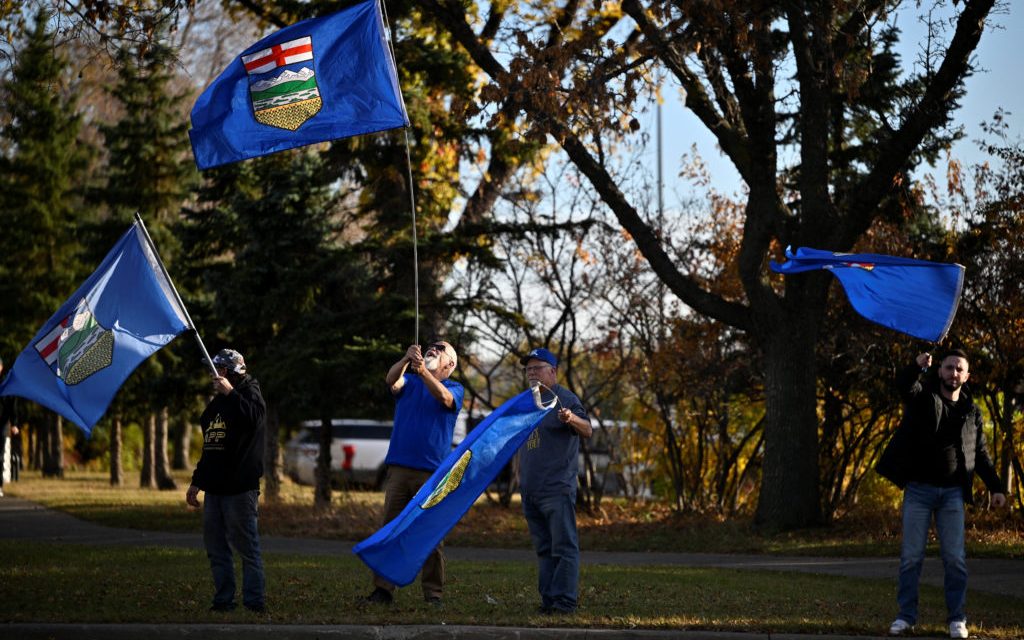
For many years, Alberta’s separatist movement remained on the fringes. Recently, voters in Canada’s oil-rich province will decide whether to initiate steps that could lead to a referendum on leaving the country in the future. On October 19, Alberta’s residents won’t cast votes to exit Canada. Instead, they will discuss if the province should start moving towards a potential future referendum on separation.
Alberta, home to the world’s fourth-largest proven oil reserves, has witnessed tensions with the federal government over energy policies and federal power. Liberal Prime Ministers Pierre Trudeau and his son Justin became unpopular in the province because of their energy policies. Justin Trudeau’s government introduced a national carbon tax and various climate initiatives, which Alberta leaders argue harmed its oil industry. Historically, separatist parties barely attracted 1% or 2% of votes, says former Alberta Premier Jason Kenney.
The COVID-19 pandemic and the Freedom Convoy, which disrupted areas in Ottawa and blocked significant Canada-U.S. border crossings, reignited separatist sentiments. Many people saw the convoy as an opportunity to support separatism. Jeff Rath, a leader within the independence movement, expressed that federal vaccine mandates banning unvaccinated Canadians from domestic flights was his breaking point. Rath recounted that COVID restrictions intensified separatism among many who were inspired by the convoy’s cause.
“People mobilized over anger towards globalization, vaccines, and pandemic restrictions,” Kenney told The Associated Press. “Social media helped isolated activists unite and organize.”
The movement became professionally structured, attracting funds and skilled campaigners. Kenney noted a crossover between separatist activists and people who align with Russian President Vladimir Putin or discuss conspiracy theories concerning Ukrainian President Volodymyr Zelenskyy. Despite this, Kenney clarifies that most voters seeking separation are primarily frustrated Albertans aiming to communicate their discontent to Ottawa.
Prime Minister Mark Carney has prioritized Alberta’s oil interests nationally, supporting plans to transport oil to the West Coast via pipeline. His business and energy perspectives, combined with his stance against U.S. policies, have helped him gain traction in conservative Alberta. Carney is considered a “formidable opponent” according to separatists, although they acknowledge an uphill battle since major political figures oppose separation. Rath would feel pleased achieving over 30% of the vote, despite it being insufficient for a majority.
Alberta’s separatists have reached out to the United States, with Jeff Rath affirming meetings with State Department officials. These discussions revolved around what an independent Alberta could offer the U.S., including a possible oil pipeline through the U.S. to the Pacific. The State Department indicated that the vote remains a decision for Alberta’s people.
“Engagements with foreign governments lacking democratic mandate can complicate situations,” stated Kenney.
The separatist movement may not dissipate soon. Even if about 10% to 20% of votes support separation, it would still surpass separatists’ historical vote shares. Should a low turnout push the number toward 30%, they might feel more determined. However, Kenney perceives it as a challenge to the conservative movement rather than to Canada.
Canada is facing national-unity challenges beyond Alberta. Quebec’s separatist Parti Quebecois returned to power after elections in early October, but support for independence is still around 30%. The Parti Quebecois leader has stated he won’t hold a referendum while Donald Trump remains U.S. president. Quebec has twice voted against independence, the last time narrowly in 1995.
 Trump’s Waiver of Russia Sanctions Faces Backlash From Lawmakers
  Trump Criticizes Zelensky Over New Strikes on Russian Oil Facilities
  Controversy Surrounds Katie Wiles’ Visit to Republika Srpska
 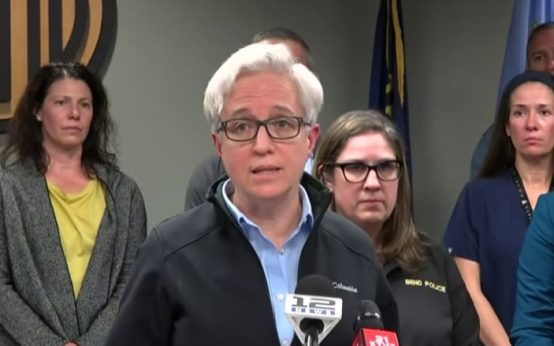 Bend, Oregon, School Shooting: What We Know
  Trump Expands US Military in Greenland with New Deal
  Life as a Baha’i in Iran: A Journey from Persecution to Entrepreneurship