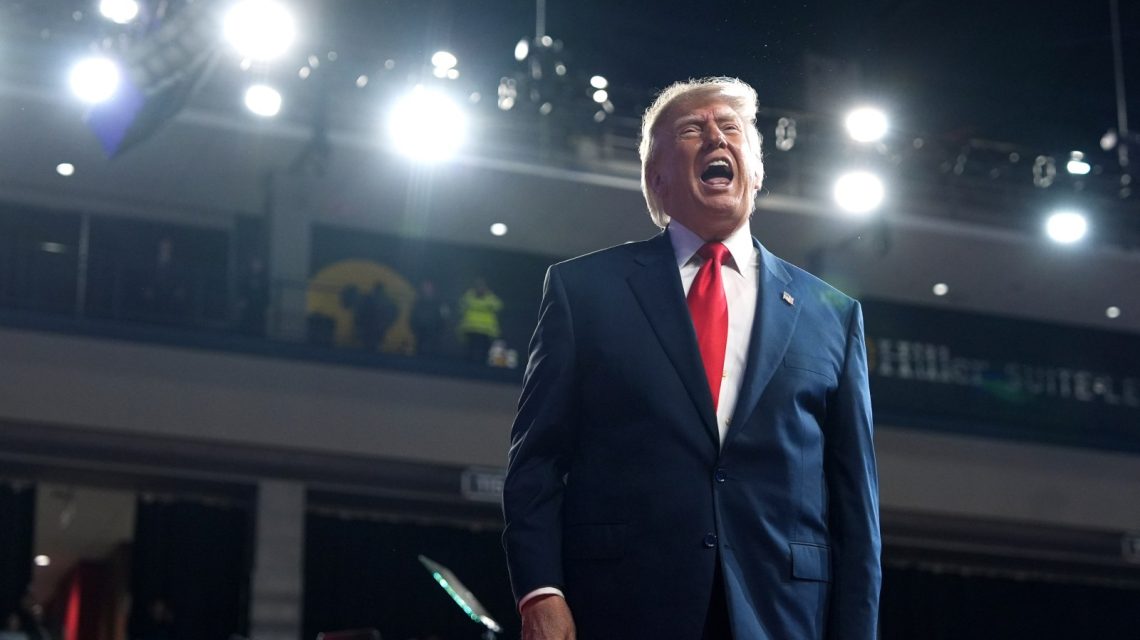
Trump’s Promise of $5,000 Checks
President Donald Trump has renewed a controversial promise to issue $5,000 checks to adult U.S. citizens. He argues that Republican control of Congress would ensure these payments, suggesting they lead to direct financial benefits for Americans. In a video shared on Trump’s X account, the president stated, “I’m going to give all adult citizens in the United States of America $5,000.” He criticized Democrat policies, claiming they would prevent such payments and increase taxes.
Trump warned of an “economic depression” if Democrats win, contrasting it with economic prosperity under Republican leadership. His remarks build on an earlier proposal linked to the outcome of November’s midterm elections. On October 3, Trump declared he would issue these payments if Republicans maintain control of Congress. However, there is no legislation in place to authorize these payments, and detailed eligibility rules remain unreleased.
Proposal Origins and Details
The proposal emerged during the Republican Party’s midterm convention in Dallas on September 9. It promises a $5,000 payment if Republicans maintain congressional control. While dubbed the “Trump Dividend,” specifics of eligibility are unclear. Trump indicated the funds would target every adult citizen, while Vice President JD Vance suggested high-income citizens might be excluded. Official income limits or guidelines have yet to be disclosed.
Congressional approval appears necessary for such payments, despite Trump’s assertion to CBS News that his administration does not require it. CNBC has pointed out the need for Congress to authorize expenditures of this magnitude.
Timeline of Public Announcements
September 9: Proposal announced at the Republican midterm convention in Dallas; a $5,000 payout contingent on Republican congressional control.
September 10: Representative Thomas Massie criticized the proposal, expressing concern over purchasing votes and potential inflation.
October 3: Trump renewed his promise in a social media update, emphasizing the need for Republican congressional retention.
October 12: In a new video, Trump reiterated the checks promise, alleging Democrats would raise taxes and trigger an economic depression.
Political and Economic Reactions
The proposal has faced criticism across party lines. Massie dismissed the 5K offer as an insult to voters, alerting to inflation risks. Representative David Schweikert opposed the plan due to potential interest rate impacts.
Democrats also criticized the concept, with Representative Robert Garcia declaring the “dividend is not happening.” Representative Jamie Raskin labeled the proposal a “political bribe,” underscoring congressional control over federal spending.
Economists have warned about the proposal’s high costs and inflation risks. Kent Smetters of Penn Wharton Budget Model calculated the total cost could reach $1.35 trillion if distributed broadly. Applying a hypothetical income limit, the cost remains substantial at $1.15 trillion.
Smetters estimated a potential addition to inflation of up to 0.5 percentage points within four quarters. Michael Strain from the American Enterprise Institute expressed concern about exacerbating inflation, while Marc Goldwein from the Committee for a Responsible Federal Budget cautioned against the financial impracticality of such giveaways.
Legal Debates and Campaign Implications
Questions have arisen over whether Trump’s pledge might breach vote-buying laws. Former prosecutor Glenn Kirschner flagged potential violations under federal law, citing 18 U.S.C. § 597.
Law professor Mohamed Arafa countered that Trump’s proposal is likely protected as political speech. He referenced the Supreme Court’s 1982 decision in Brown v. Hartlage, which involved First Amendment protections.
Trump connected the checks promise with his broader economic argument, predicting economic depression under Democrats. His claim lacked economic evidence but complicated Republican messaging on spending.
Future Outlook
The $5,000 checks remain a proposal pending congressional authorization. No payment schedule is in place, and Trump continues linking them to Republican congressional control. Critical questions remain about legislative approval, financing methods, and impacts on budgets and inflation.
Whether Trump’s proposal materializes as an official program depends on political developments in Congress and wider fiscal considerations. The debate over its feasibility and legality persists as midterms approach.
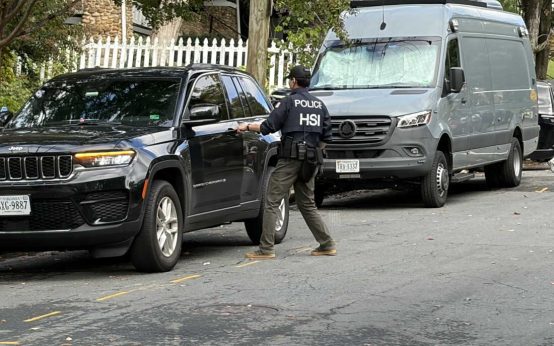 Federal Search at Rep. Ilhan Omar’s Home Sparks Controversy
  Costly Data Centers Expand Economic Divide in Ohio
  Supreme Court Reviews Semiautomatic Rifle Bans
  New York Police Department to Review Use-of-Force Policies Amid National Debate
 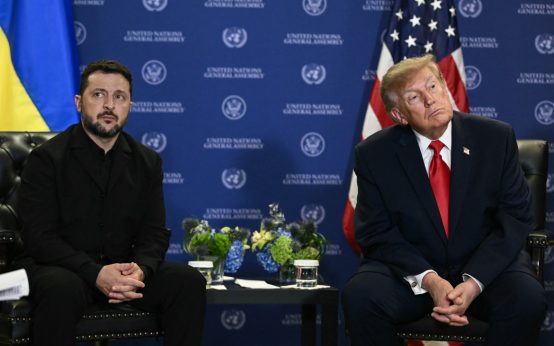 Trump’s Approach to Foreign Policy: Business-like or Blinded by Deals?
 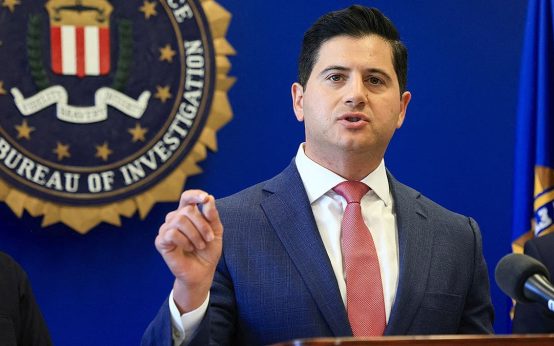 U.S. Concerns Over Chinese Espionage in America