Some of the world’s most renowned buildings stir strong feelings among various people. To many, they appear unsightly, while architects see them as daring expressions of design thinking, engineering, and urban identity. This spectrum of views is particularly evident in controversial museums and commanding civic structures, where public perception often diverges from professional admiration.
In the United States, architectural debates unfold within the context of a changing approach to building construction and renovation. According to the American Institute of Architects (AIA), nearly half of the country’s 125 million buildings are over 50 years old. Recent trends suggest an increasing emphasis on adapting existing structures rather than pursuing new builds.
Adaptive Reuse Trends
Adaptive reuse has gained traction, with almost 25,000 apartments converted from existing buildings in 2024, marking a 50% increase from the previous year, as reported by RentCafe. The AIA highlights that repurposing buildings can prevent 50 to 75% of the carbon emissions linked to new construction by conserving embodied carbon tied to materials and transportation.
Gordon Gill, architect of the world’s tallest building, stressed the significance of rejuvenating older buildings during an interview with Newsweek. He emphasized the need to refresh older structures, ensuring they remain relevant and enduring.
Below, we explore several U.S. buildings that provoke public disdain but are celebrated by architects.
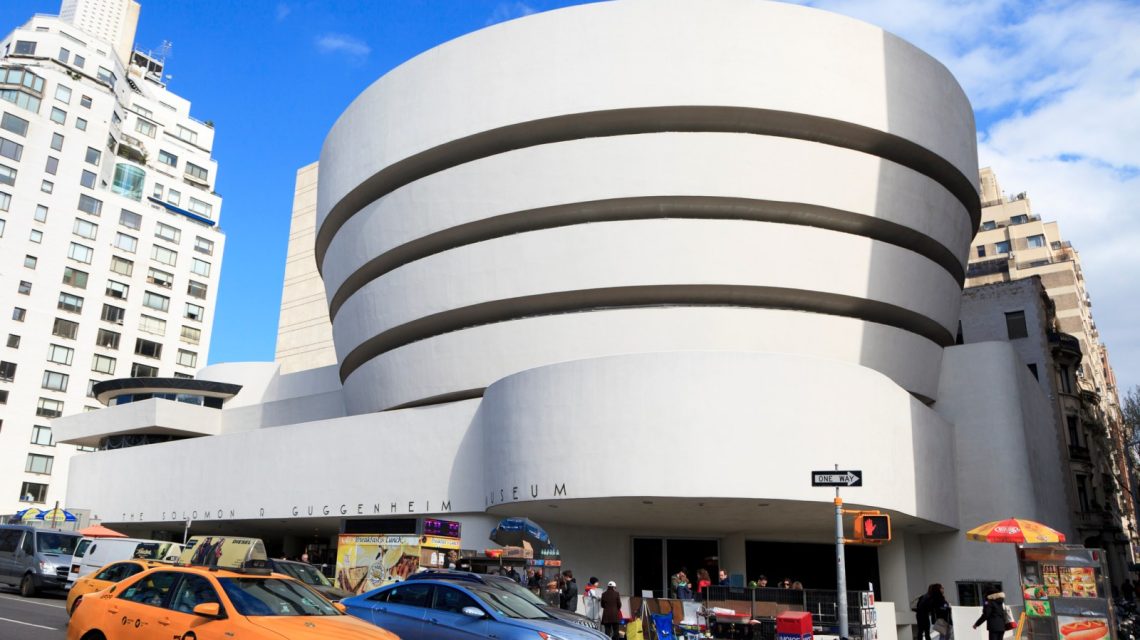
The Guggenheim Museum, New York City
Designed by Frank Lloyd Wright, the Guggenheim Museum is iconic but not universally loved. It contrasts sharply with neighboring Fifth Avenue structures, creating a divisive perception. Architect Monika Smith, principal and cultural+performing arts design leader at DLR Group, informed Newsweek that the museum’s design is controversial due to its contrast and curved walls, which challenge curators and artists.
Smith lauded its radical shift in museum design, explaining that it reimagined the visitor experience by replacing traditional gallery layouts with a continuous journey shaped by circulation and natural light. She regards the Guggenheim as a memorable experience, sculptural object, and unique city landmark.
Marin County Civic Center, California
The Marin County Civic Center in San Rafael, another of Frank Lloyd Wright’s creations, divides opinion. Architect and engineer Charles Bloszies described it as a well-known and somewhat polarizing building. While he appreciates its distinctive design and public function, he pointed out that others view it differently—once being referred to by an acquaintance as the “Martian Embassy.”
Despite differing opinions, Bloszies emphasized its architectural significance, underscoring its representation of Frank Lloyd Wright’s Prairie School architecture amidst northern California’s rolling hills.
Boston City Hall, Massachusetts
Architect Miles Smith from Graphisoft shared with Newsweek that Boston City Hall is beloved by the design community but not by the general public. It is a brutalist structure with a rich history, facing repeated demolition attempts often blocked by architects.
Architect Marc Gordon from Spacesmith in New York noted that the divide reflects broader attitudes toward brutalism, generally disliked due to exposed concrete and stark forms. Nonetheless, the style’s honest material expression and simple monumental geometric form earn appreciation from architects.
Norfolk Scope Arena, Virginia
The Norfolk Scope Arena is another structure that locals often criticize but architects champion. Mel Price from Work Program Architects admired the building’s concrete dome with 24 flying buttresses, considered iconic despite regional disdain.
Price praised its late-modernist structural expressionism and design by Pier Luigi Nervi. Thom White, also from Work Program Architects, highlighted its majestic nature and its role as an architectural gem in Norfolk’s skyline.
Though the aging infrastructure lacks modern amenities, White argued renovations could preserve its unique landmark status.
Woodhull Hospital, New York City
Woodhull Hospital in Brooklyn exemplifies contested architecture. Marc Gordon noted its generally negative reception due to its dystopian appearance. Despite this, he admired its monumental size, geometric forms, and industrial aesthetic, viewing the building as a bold expression of design.
If you have an architecture or design-related story to share, contact us at [email protected] for a chance to be featured by Newsweek.
 Readers React to Miss Manners Column
  Troy Swanson: Award-Winning Librarian Transforming Academic Libraries
  Lisdoonvarna Matchmaking Festival: A Unique Tradition
  Midwest Underground Railroad Network Gains National Recognition
  Art Collective Critiques Administration with Mall Installation
  American Hagwon: A Tale of Family and the Korean Diaspora