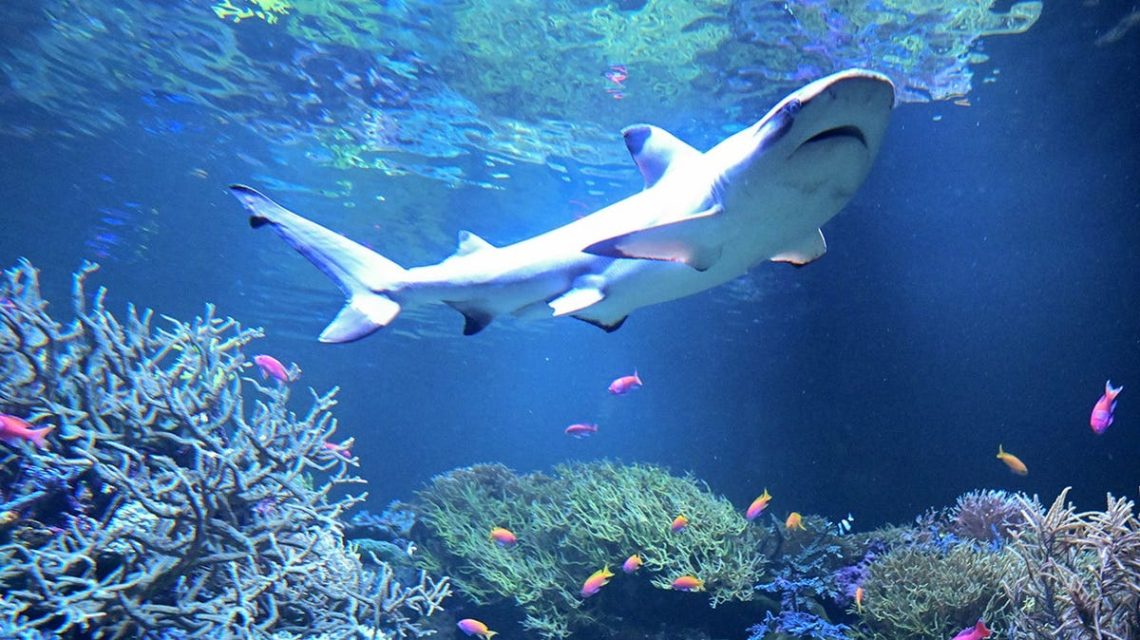
Researchers have observed changes in the migration patterns of blacktip sharks along the East Coast. These sharks are moving further north during the summer months, attributed to increasing ocean temperatures.
Shifting Migration Patterns
Scientists at Florida Atlantic University report that rising sea temperatures allow blacktip sharks to extend their range northward before they migrate south for winter. Their studies, spanning over a decade, utilize aerial surveys and satellite tracking to monitor these patterns. The data indicates many sharks now reach Long Island, New York, by late summer.
Impact of Warming Waters
Dr. Stephen Kajiura, a leading researcher at Florida Atlantic University, has studied blacktip sharks for 15 years. He explained the sharks’ preference for waters with temperatures similar to the comfort of air-conditioned rooms, around 72 degrees Fahrenheit. As a result, their presence is now noted further north along the coast.
Interactions with Humans
Blacktip sharks are frequently found near shorelines, often in proximity to surfers and swimmers. This increase in shark presence closer to shore raises the probability of encounters, although these remain rare.
Influence of Beach Nourishment
In addition to climate change, beach nourishment projects also affect shark migration. A study from the Journal of Coastal Research suggests that these projects create murky waters, which may challenge the sharks’ hunting abilities and alter their behavior. Researchers noticed that blacktip sharks stay within 50 meters of the shoreline, areas often impacted by increased turbidity from such projects.
“The distribution of blacktip sharks closely aligns with turbidity events,” Dr. Kajiura noted, highlighting the need for further study on the environmental impacts of coastal protection efforts.
Reassurance About Shark Encounters
Despite shifting patterns, Dr. Kajiura reassures the public that shark encounters are exceedingly rare. “The possibilities of a negative shark encounter are incredibly small,” he stated. He encourages people not to let fear prevent them from enjoying Florida’s beaches.
 Ancient Pottery Unearthed During Roadworks in Tbilisi
  U.S. Space Academy Announcement
  The Need for New Strategies in Oregon’s Wildfire Management
  Plastic Pollution in the Great Lakes: A Growing Concern
  Virginia Tech Researchers Study Black Bear Hibernation
  Understanding the Impact of a ‘Super’ El Niño