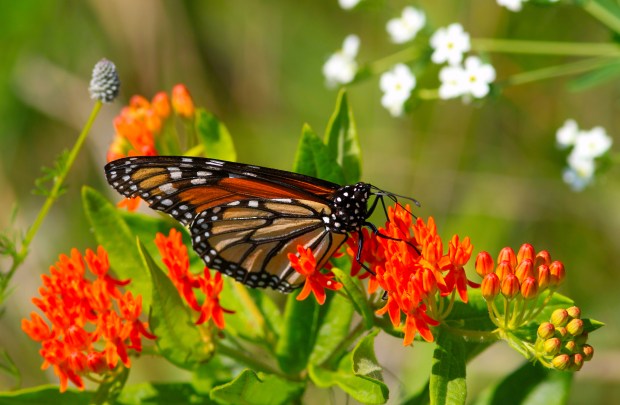
In November, the vivid orange flowers of the butterfly milkweed have faded. Remaining are white, parachute-like wisps that dangle from the dry, brittle seed pods. Within these wisps lie tiny, oval-shaped brown seeds, full of potential for spring. Remarkably, 4,000 of these seeds weigh less than an ounce. Their power lies in their potential to sprout when conditions are right, bringing forth another generation of brilliant flowers. Monarch butterflies and native bees are drawn to these blooms during the growing season.
Throughout summer and fall, microscopic processes occur within the flowers. These involve pollination, where pollen grains move from the male to the female parts of the plant. As a result, seeds begin to form, often encased in protective pods. The next step is seed dispersal, which is currently underway.
In my yard, American goldfinches help spread the seeds of gray-headed coneflowers. They perch atop the flower heads, eating seeds either by cracking them open or swallowing them whole. In doing so, they may drop seeds into the soil or transport them elsewhere through their droppings. Recently, I gathered some seeds from a coneflower and scattered them in sunlit areas of my yard, hoping they survive winter and germinate. The seed head emits a soft, minty aroma, more pleasant than commercial perfumes.
Butterfly milkweed blooms in the summer, attracting monarchs. Various environmental factors, including humans, wind, water, and animals, assist in seed dispersal. For instance, jewelweed seeds burst into the air when touched by people or animals. As their pods mature, tension builds within, ready to spring open at a touch. This results in seeds being cast several feet away. Jewelweeds have earned the nickname “touch-me-not,” sharing a family with impatiens commonly planted in gardens.
Milkweed seeds are particularly intriguing. Over the summer, the butterfly milkweed produces pale green seed pods about three inches long. These pods contain everything necessary for next year’s flowers. As the pods brown, they split open, releasing numerous seeds. Each seed is attached to silky white strands, functioning like parachutes to carry seeds to new locations. When I release these soft parachutes into the air, they naturally drift, taking the seeds to their prospective homes.
After reaching the soil, these seeds remain dormant through winter. The natural processes of freezing and thawing help soften their coatings, preparing them for growth. When spring arrives, rainfall causes the seeds to swell, dissolve the protective coating, and release stored nutrients. This nutrition fosters cellular growth within the seed, leading to what specialists call radical emergence. A minuscule root penetrates the seed coat, stretching into the ground before breaking through the soil surface, where the plant’s first leaves become visible.
Amid winter’s chill, envisioning this quiet transformation occurring below ground is heartwarming. Understanding the lifecycle of these plants reminds us of the continuous cycle of nature.
Sheryl DeVore has contributed as both a reporter and editor for the Chicago Tribune. She has authored multiple books about nature and co-authors “Birds of the Midwest” with Steven D. Bailey, set to release in April 2027. She welcomes story ideas at [email protected].
 Record Low Hydropower Output in the Southwest
 Data Centers Face Challenges in Vernon, Los Angeles
 Rams Captured Relaxing in Residential Area
 Global Climate Finance and the Developing World: A Turning Point
 Hidden Plastics in Everyday Items
 The Final Journey of the SS United States