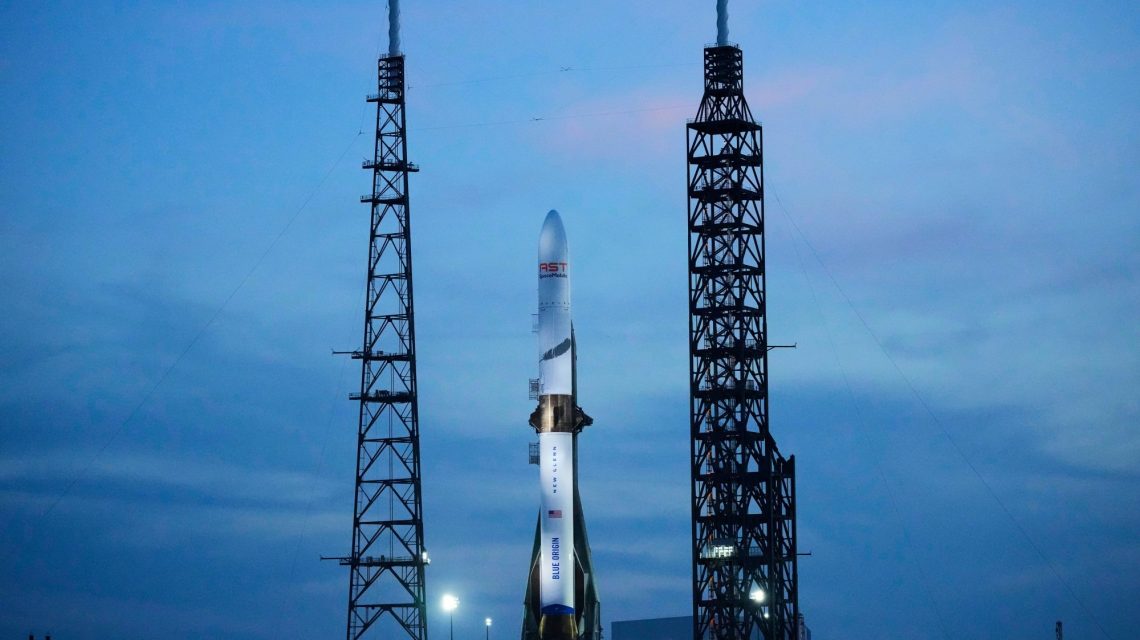
A Blue Origin rocket, part of Jeff Bezos’ space enterprise, exploded during a test at Cape Canaveral, Fla., Thursday night. The event shook nearby homes and temporarily lit up the sky with an orange hue.
The New Glenn rocket was undergoing an engine-firing test ahead of a scheduled satellite launch when the incident occurred. Officials from Cape Canaveral Space Force Station reported no injuries.
“It’s too early to know the root cause but we’re already working to find it,” Bezos said. “Very rough day, but we’ll rebuild whatever needs rebuilding and get back to flying. It’s worth it.”
The New Glenn rocket faced issues earlier this year when it left a satellite in the wrong orbit due to engine problems. This latest explosion marks another setback for Blue Origin, which plans to use the rocket for lunar missions for NASA.
The company intended for the rocket to launch a prototype lunar lander soon. Earlier this week, Blue Origin secured a contract for launching moon buggies as part of NASA’s Artemis program.
“Spaceflight is unforgiving, and developing new heavy-lift launch capability is extraordinarily difficult,” commented NASA Administrator Jared Isaacman. He assured updates on any potential effects on the Artemis program.
Residents near Cape Canaveral and Cocoa Beach took to social media after feeling the blast, which occurred around 9 p.m. Images of an orange fireball soon spread online.
The New Glenn rocket was meant to carry internet satellites for the Amazon Leo constellation next week. Despite the setback, officials confirmed that the explosion posed no risks like fumes or hazards.
Space Force clarified that upcoming launches by other companies should proceed unaffected. Another batch of Amazon Leo satellites is scheduled for launch by an Atlas V rocket shortly.
SpaceX’s CEO Elon Musk, familiar with rocket challenges, expressed his support by offering condolences to Blue Origin.
Standing at 321 feet, New Glenn is named after astronaut John Glenn, the first American to orbit Earth. Launched first in 2025, it surpasses the size and power of Blue Origin’s New Shepard rockets used for tourist spaceflights.
 SpaceX Successfully Launches Starship Flight 14 into Orbit
  Pentagon Confirms US Possession of Space Weapons Amid Rising Tensions
  Countering Fear: A Pilot’s Approach to Calm Nervous Flyers
  Challenges in Establishing a Unique Identity for the United States Space Force
  NASA Launches Major Space Telescope for Cosmic Exploration
  NASA’s Roman Space Telescope Embarks on Mission to Unravel Cosmic Mysteries