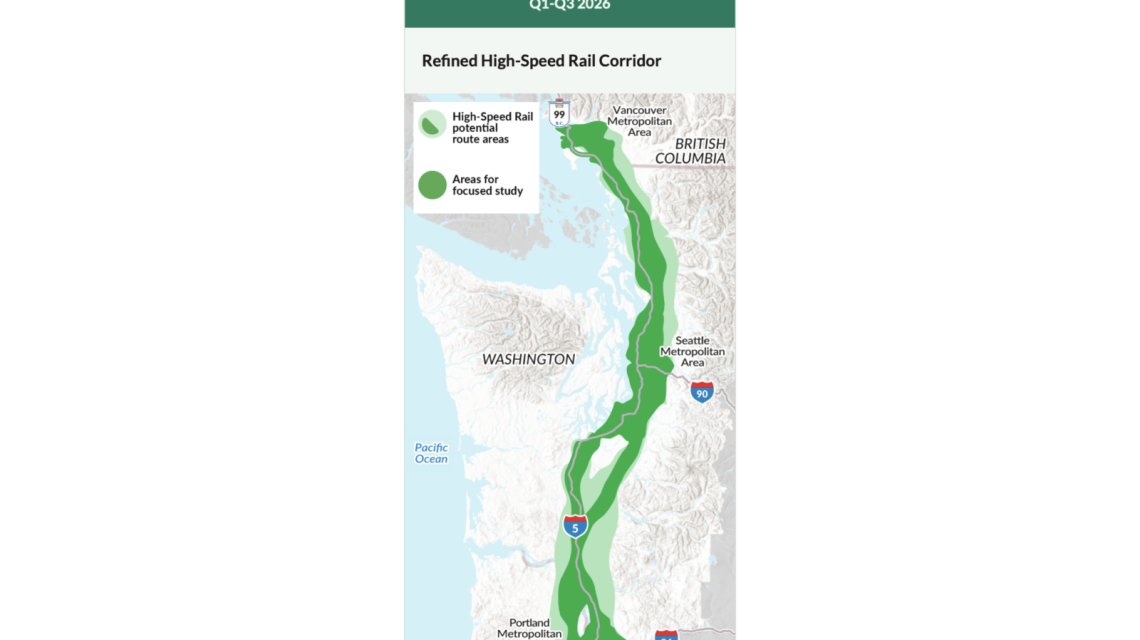
A comprehensive plan has been unveiled for a potential high-speed railway that aims to connect three major metropolitan areas in the Pacific Northwest. This includes cities across two U.S. states and extends into Canada.
The proposed Cascadia High-Speed Rail system would link Portland, Oregon; Seattle, Washington; and Vancouver, British Columbia. The Washington State Department of Transportation (WSDOT) has released a conceptual map showcasing the corridor from Portland to Vancouver, traversing the broader Cascadia region.
The project is in its early phases, and specific routes or stations have yet to be determined. WSDOT is currently seeking input from the public, including residents and businesses. An online survey is available, open until November 13, allowing individuals to provide feedback that will help guide future transportation planning.
Understanding the Cascadia High-Speed Rail Plan
The high-speed rail initiative aims to enhance connectivity between the growing primary cities of the Pacific Northwest.
Connecting the metropolitan areas of Portland, Seattle, and Vancouver, B.C., the plan envisions a high-speed north-south route crossing the U.S.-Canada border. WSDOT collaborates with the Oregon Department of Transportation, Oregon Metro, and British Columbia’s Ministry of Transportation and Transit on this project.
This proposal is part of WSDOT’s broader endeavor for regional integration, including improvements to Interstate 5 and exploring how various transportation modes, such as highways, railways, airports, and public transit, can operate cohesively.
The Federal Railroad Administration granted WSDOT $49.7 million in December 2024 to develop a Service Development Plan, with additional state funding of $5.5 million. Completion for this phase is anticipated by 2028.
Potential Train Stops
While the intended connections are between Portland, Seattle, and Vancouver, specific station locations are yet to be finalized.
WSDOT’s Service Development Plan will explore potential routes, service options, and frequency of train operations. Governance and financing will also be assessed. However, this plan, set for completion in 2028, will not establish a preferred route or select station sites.
Potential stops shown on the conceptual map should not be considered confirmed.
Reasons for Proposal
A significant factor driving the proposal is the anticipated growth in the Pacific Northwest region.
WSDOT projects the Cascadia megaregion will gain 3.4 million residents by 2050, spurred by growth in sectors such as technology, aerospace, health care, and logistics. Current transportation systems are expected to face increased pressure.
WSDOT estimates 80% of I-5 in Washington could be under medium or high congestion by 2050, a rise from 59% today. Meanwhile, truck trips might increase by 50 to 67% by the same year. Portland estimates severe I-5 congestion will reach 78% by 2045, a significant jump from 2019 levels.
No single transportation method will suffice for future demand. A coordinated approach across highways, rail, transit, aviation, and other transport modes is required.
Learning from California’s Experience
The Cascadia high-speed rail project is still far from the construction phase, and challenges similar to California’s high-speed rail project highlight potential complexities and costs.
In California, high-speed rail construction in the Central Valley has proceeded for years, but the broader vision connecting San Francisco with Los Angeles/Anaheim remains incomplete. The California High-Speed Rail Authority’s 2026 strategy focuses on a Merced-to-Bakersfield segment first, with plans to expand later.
The project is vast. By July 31, 2026, $8.10 billion had been spent on the Central Valley construction packages, with 66 structures completed and 90 miles of guideway finished. California has adjusted station designs and service plans to manage costs and advance the project.
For Cascadia, construction is not imminent. WSDOT’s current focus is assessing the viability of high-speed rail, exploring possible routes and service configurations, and gathering public input on future transportation needs.
WSDOT’s comments are currently sought by Newsweek. This article was created using Martyn, Newsweek’s AI assistant.
 Social Media Lawsuits Surge as Platforms Face Billions in Payouts
 Remote Work Maintains Social Connectivity Despite Challenges
 Early Research: Social Media Bans Ineffective
 Texas Woman Files Suit Against Torchy’s Tacos After Alleged Cow Tooth Discovery
 American Airlines Flight Encounters Brake Issue at Chicago O’Hare
 SpaceX Achieves Profit in Third Quarter, CEO Foresees Significant Growth