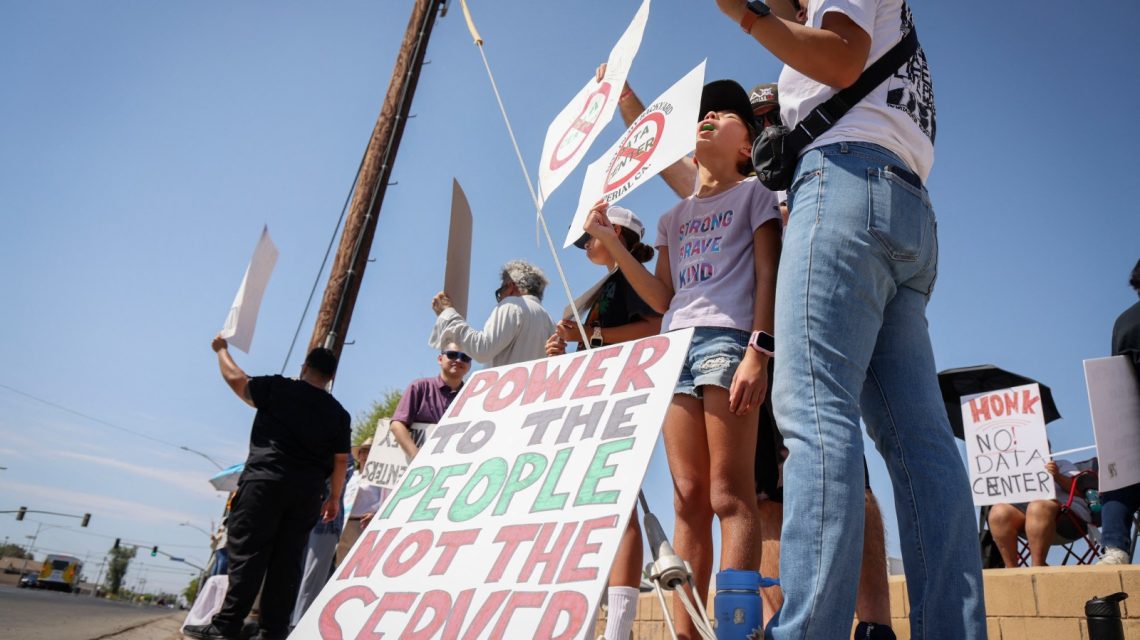
President Donald Trump has criticized Americans who oppose the establishment of data centers, labeling their actions as detrimental to economic progress. Concurrently, his administration is pushing forward a proposal through the Environmental Protection Agency (EPA) that aims to reduce public involvement in the permitting process for data centers. This proposal would allow states the option to forgo public notification and commentary before issuing air pollution permits for both data centers and other industrial facilities.
A significant change in this plan would permit developers to begin construction on data centers prior to securing approval for relevant permits. Critics of the proposal contend that it would undermine community involvement in local projects, denying residents crucial oversight over developments that may occur in their neighborhoods. States could still offer public commenting opportunities, but they would no longer be required to do so.
Impact of EPA’s Proposal
If the proposal is implemented, data centers could receive quicker approvals for their operations. Many facilities, especially AI data centers, necessitate permits for equipment like backup diesel generators and gas turbines, which trigger air-permitting requirements. Developers frequently express concerns that public hearings and comments delay their projects.
The proposal would shift responsibility to state authorities, potentially resulting in a varied system where states have differing degrees of public-comment policies. Some states might maintain comprehensive public-hearing procedures, while others might reduce opportunities for community input. Fast-growing data-center hubs, such as Virginia, Texas, Georgia, Arizona, and parts of the Midwest, could see construction expedited, despite opposition from local communities.
Criticism from Advocacy Groups
Nearly 200 advocacy groups and several states have opposed the EPA’s plan, arguing that it curtails community engagement in industrial development. Keri Powell, a senior attorney at the Southern Environmental Law Center, stressed the importance of public commentary in decision-making processes. Mike Koerber, former EPA air quality deputy director, criticized the proposal as it removes longstanding federal requirements for public notice.
Democratic attorneys general from 14 states, alongside officials from the District of Columbia and major cities like New York and Chicago, expressed their disagreement with the proposal, emphasizing the significance of public oversight even for what EPA categorizes as minor sources of pollution.
EPA’s Response to Criticism
The EPA argues that its proposal simply gives states the flexibility to design their own permitting processes for minor pollution sources, including data centers and various small businesses. EPA spokesperson Carolyn Holran explained that the decision allows state and local agencies to decide the extent and timing of public participation opportunities, aiming to streamline the permitting process and bolster economic growth without altering emission standards or environmental protections.
Political Implications
Growing resistance to data centers in the U.S., fueled by concerns over energy consumption, environmental impact, and land use, could influence voter sentiment during the midterm elections. This opposition might support candidates who stand against specific data center projects. Despite Trump’s endorsement of such facilities, his administration could face backlash if communities feel sidelined.
Environmental groups have submitted comments against the proposal, with some former EPA officials warning that it may weaken transparency efforts. Legal challenges could follow if the rule is finalized, leaving the future impact of the proposal uncertain.
 The Trump Team’s Challenge to the Military Leadership
  Maryland First State to Restrict Electronic Pricing in Grocery Stores
  Activists Push for Nationwide Ban on Child Marriage in the U.S.
  Democratic Hopes and Historical Warnings in 2026 Senate Race
  Republicans Face Challenges Amidst Cost of Living Concerns
  A Different Kind of Fall for Congress This Year