In the ongoing competition between the U.S. and China in artificial intelligence development, hardware and computing power have become focal points. Chinese companies like Huawei are starting to dominate the AI chip sector in their local markets, surpassing global leaders such as Nvidia.
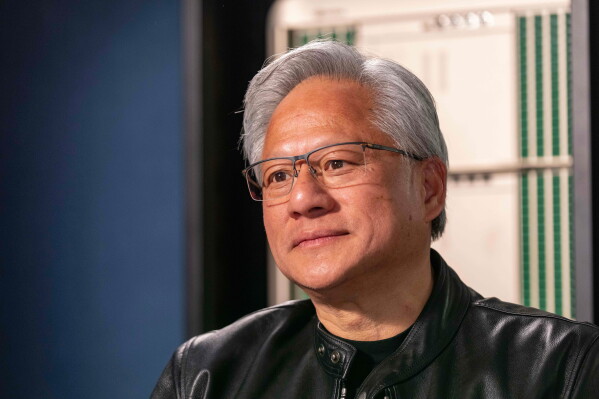
Jensen Huang, CEO of Nvidia, visited Beijing during a summit between U.S. President Donald Trump and Chinese leader Xi Jinping. Although recognized by many in China, Huang has faced difficulties in selling Nvidia’s advanced chips due to U.S. export restrictions grounded in national security concerns. These restrictions initially halted sales of Nvidia’s H200 AI chips in China.
By the time Trump approved their sale, China had pivoted towards using domestically manufactured chips led by Huawei. Huang admits that U.S. companies have lost their foothold in China’s advanced AI chip market, where Chinese brands now dominate.
“We need to ensure national security while simultaneously fostering our technology industry and maximizing exports,” Huang stated.
Rise of Chinese Chipmakers
Since the U.S. barred Huawei and later China from accessing advanced chips and machinery, Chinese companies have prioritized self-sufficiency. Huawei has become a significant player in China’s AI chip market, driven by a pursuit of enhancing chip performance and cost-efficiency.
According to Bernstein, a research and brokerage firm, Nvidia had a 40% market share in China’s AI market by 2025, almost on par with Huawei. However, predictions indicate Nvidia’s share might plummet to around 8% this year, with Huawei’s likely expanding to 50%.
Huawei’s Ascend 950 series is considered comparable to Nvidia’s H200 by industry analysts. Despite export controls, Huawei is deploying powerful AI clusters, relying on domestic semiconductors.
Importance of Nvidia for Chinese AI
The global semiconductor network means no single country can wholly produce advanced AI chips alone. China’s demand for AI chips surpasses local supply; smuggling attempts highlight the desire for Nvidia’s technology.
To product the H20 chips for China, Nvidia modified their design to comply with U.S. restrictions. However, sales in China have dwindled, with uncertain prospects for H200 chip imports.
Nvidia’s global sales are rising as worldwide AI demand increases, projecting roughly $91 billion revenue for May-July, an increase over the previous quarter.
Huawei’s Global Ambitions
While Huawei’s chip manufacturing capabilities improve, they’re insufficient to meet domestic needs. However, as China enhances its capacity, Huawei’s chips might capture market interests in regions such as Southeast Asia.
China’s technological self-sufficiency strategy likely remains unchanged regardless of Nvidia’s sales efforts in China.
 Trump’s 2024 Campaign Targets Young Men Through Cryptocurrency
  How Modern Windows Improve Home Insulation
  State Department Simplifies Passport Process with Online Applications
  Senate Democrats Block Data Center Bill Over Efficiency Concerns
  Future Cities: Ambitious Projects Aiming for Innovation and Sustainability
  High-Profile Hearing and AI Developments: Key Political Moves