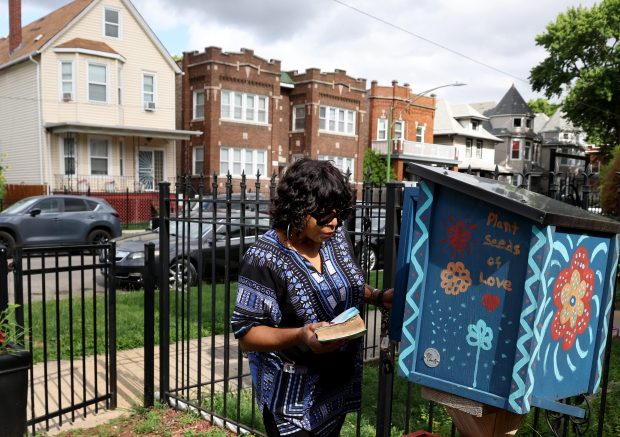
Chicago’s Austin community often appears in statistics about crime and poverty. These figures are real, but there is another side to Austin, embodied by residents who cultivate community gardens from vacant lots and spend weekends creating opportunities for others. One of these leaders is Rev. Dollie Sherman, who has worked for decades to build community, one block at a time.
For nearly 50 years, Sherman has lived on Chicago’s West Side. Her efforts began with summer cookouts and school supply drives, eventually forming the Vessels Unto Honor block club. This grassroots organization has focused on beautification, youth engagement, and resident support for over a decade. “The block club has helped turn our block into a community,” Sherman said. “We’re not just waiting for somebody else to come along; we’re building it ourselves.”
Sherman’s leadership reflects a growing trend in Chicago, where residents and neighborhood organizations address challenges government hasn’t solved. This past Memorial Day weekend, the 600 block of Lorel Avenue hosted the Center for Poverty Solutions’ first community job fair. Employers connected residents with employment opportunities, which many might not have otherwise encountered.
The impact was apparent: more than a dozen attendees received job offers that day, and 50 others secured interviews for full-time jobs. The event emphasized a crucial message about poverty and public safety: people thrive with meaningful opportunities to contribute and provide for themselves. Vocation matters.
Sherman believes youth engagement prevents crime and vandalism. “If we get our youth busy with something, I think it helps us avoid a lot of crime and vandalism,” she said. Employment gives stability, purpose, and dignity. Over 97% of full-time employed Chicagoans live above the poverty line, as do 80% of part-time workers. Conversely, only 68% of those not working live above the poverty line.
Sherman has helped many young people, facing homelessness and limited job opportunities, find a path through work. “A lot of these youth are homeless. They’re staying with a friend, sleeping on their couch,” Sherman said. “But they’ll come here, and they’ll go back with something in their pocket after work. They can feel good about themselves.”
No single job fair can solve decades of poverty or eliminate violence, but every person connected to a career opportunity represents progress toward self-sufficiency. Each young person choosing employment over the streets is a victory, significantly reducing their chances of turning to crime. Leaders like Sherman strengthen the foundation for safer communities.
Sherman’s work highlights a crucial lesson: reducing poverty and improving public safety are interconnected. Creating pathways to work and self-sufficiency restores hope, transforming neighborhoods block by block. Hope remains a powerful force for change.
Eddie Kornegay, Ph.D., serves as executive director of the Center for Poverty Solutions, an initiative by the Illinois Policy Institute. Submit a letter, no longer than 400 words, to the editor or email [email protected].
 Freddy’s American Adventure: From Soccer to College Football
  The Quest for the Knuckleball Dream
  Navigating Grief After a Sibling’s Overdose
  Tragedy and Immigration: The Impact on a Family
  The Journey of a Fox News Correspondent: From Infectious Diseases to On-Air Reporting and Beyond
  Midwest Underground Railroad Network Gains National Recognition