Significant erosion has hit the Southern California coastline. Oceanographer Kim McCoy is particularly worried about nuclear waste stored at San Onofre, near San Clemente. The risk factors include rising sea levels, storm waves, and El Niño, which McCoy believes could compromise the canisters protecting the waste. These canisters are set only 100 feet from the protective San Onofre seawall.
Most experts maintain that the threat to the nuclear waste storage system from erosion is minimal in the immediate future. Southern California Edison, the plant’s owner, has committed to relocating the waste higher if models show sea-level rise and erosion becoming problematic. Recent waves, driven by Hurricane Marie, have intensified discussions about the long-term safety of spent nuclear fuel.
James Day, a UC San Diego geology professor, emphasized the need to plan for the long term. The waste remains hazardous for generations. Though San Onofre’s facility seems active from a distance, it is undergoing demolition. Since its closure in 2013 due to faulty steam generators, most rubble has been removed, but 3.6 million pounds of high-level waste remains.
Day noted, “San Onofre is on relatively young, seismically active ground. This makes it unsuitable for long-term storage of nuclear waste.”
The site’s vulnerability to tsunamis and ocean air corrosion of steel canisters was also highlighted. Edison inspects the canisters and monitors for signs of degradation, asserting the system’s safety for decades. Manuel Camargo, a principal manager at Edison, reassured that a maximum credible tsunami or earthquake would not overwhelm the infrastructure. According to state data, the seawall remains viable until at least 2050.
Despite having robust protective measures, there remains a consensus that moving the waste is ideal, as the status quo incurs high costs. Since 1982, Edison customers have funded a permanent storage solution, thwarted by the cancelled Yucca Mountain project. Legal actions against the federal government continue as storage expenses escalate.
The Department of Energy’s new initiative involves creating campuses in multiple states for waste storage, with funding for nuclear cycle development. This approach addresses waste at multiple sites and anticipates new reactor needs. California and other states ban new nuclear projects without permanent storage. Some leaders are exploring adjustments for modular reactors, like the prospective installation at the Port of Long Beach.
There’s ongoing interest in exploring state partnerships for waste storage, with commitments from five states in talks. Yet, opposition from community groups signifies potential obstacles, with many expressing concerns over becoming nuclear waste sites. In contrast, countries like Finland and Sweden are advancing permanent geological storage solutions.
Camargo and lawmakers remain hopeful for a U.S. solution akin to Finland’s within 10 to 15 years. Failing this, by 2103, Edison may need to renew the canisters as their 100-year lifespan ends.
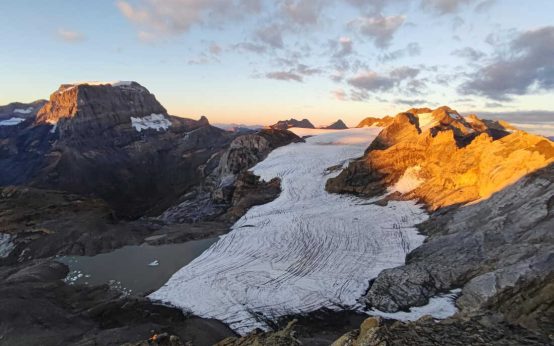 Swiss Glaciers Show Effects of Ice Loss Amid Global Warming
  Climate-Resistant Rock Glaciers: Hidden Water Resources
  California Voters to Decide on $7.5 Billion State Research Fund
  Senators Reach Bipartisan Agreement on Permitting Reform
  Experts Warn of Critical Period for the Colorado River
  Future Cities: Ambitious Projects Aiming for Innovation and Sustainability