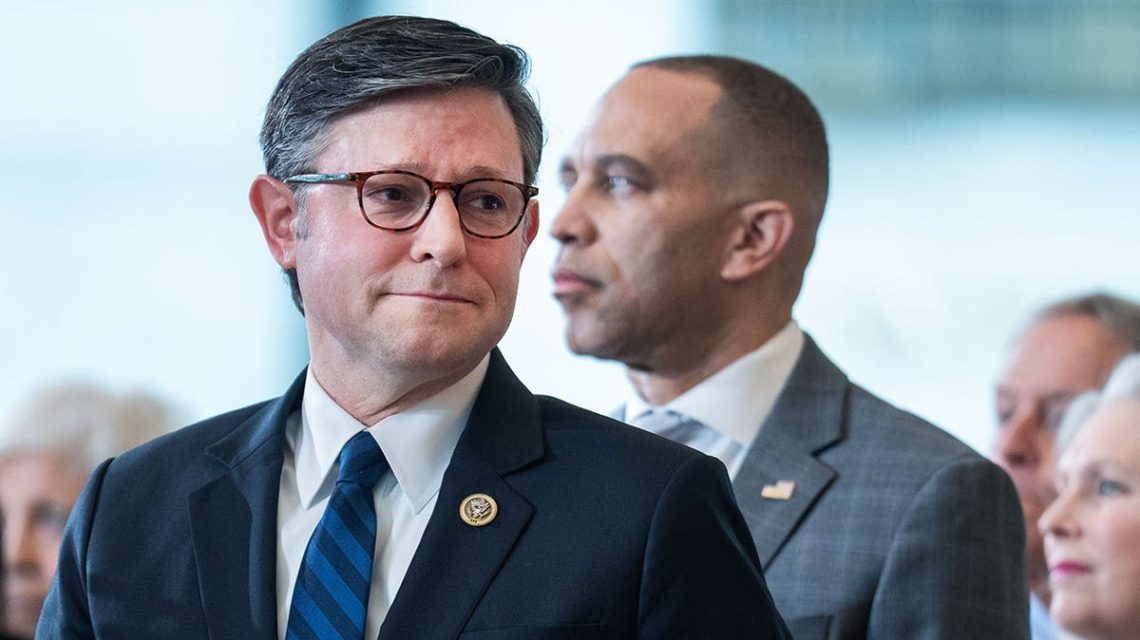
Congressional Republicans are focused on advancing key parts of the Safeguarding American Voter Eligibility (SAVE) America Act before the year ends. This election integrity bill, strongly supported by President Donald Trump and opposed by Democrats, faces challenges in Congress. Senate Majority Leader John Thune, R-S.D., hesitates to bring it to a vote due to its probable failure.
Getting the SAVE America Act through the Senate requires at least some Democrat support to reach the 60-vote threshold needed to overcome a filibuster. Democrats criticize the legislation, viewing it as a threat to the credibility of U.S. elections and potentially as voter suppression.
Budget Reconciliation as a Strategy
House Speaker Mike Johnson, R-La., is pushing to implement the bill’s mandates through budget reconciliation. This procedure allows the majority party to enact significant fiscal policy changes without minority input by sidestepping the Senate filibuster. Rep. Bryan Steil, R-Wis., leads the effort to ensure this part of the bill is executed.
Steil stated, “I’d rather pass the SAVE America Act. But recognizing that the Senate might not get that done with the 60-vote threshold, let’s leverage the parliamentary procedure, bring that threshold down to 50, and get some really commonsense reforms done.”
Reconciliation Process Explained
The budget reconciliation process involves multiple steps. Both the House and Senate must first pass budget frameworks with instructions for their committees. These policies involve specific spending or funding cuts. The committees submit their sections back to budget committees to compile a comprehensive bill. Both chambers must approve matching bills before they reach the President’s desk.
Steil’s committee aims to incorporate two elements from the original SAVE America Act: proof of citizenship for voter registration and a nationwide photo ID requirement to vote. He noted, “The House can go as fast as the Senate. And so the frustration is the Senate’s not moving as fast as we would like.”
Senate Challenges and Filtration
The reconciliation process faces an additional hurdle with the Senate parliamentarian’s review. Rules require removal of provisions not affecting the federal budget, taxes, or national debt. Steil believes parts of the SAVE America Act can pass by connecting them to state funding through the Help America Vote Act (HAVA) of 2002, enabling funds for post-election audits and photo ID measures.
The Trump administration backs this effort. Earlier this year, Office of Management and Budget Director Russell Vought told Republicans the reconciliation process was the best option for passing election reforms.
Budget Differences and Forward Movement
The House passed a $95 billion budget bill over the summer, focusing on military replenishment and election security. However, the Senate budget framework, proposed by Chairman Ron Johnson, R-Wis., calls for up to $150 billion.
Discussing these differences, Speaker Mike Johnson emphasized the importance of swift action due to high stakes and limited time before the upcoming elections. He noted, “We passed the SAVE America Act four times in the House. This is the last best effort to get it through the Senate.”
Steil remains hopeful for a resolution, stating, “I think, broadly, we’re aligned. Everyone recognizes the importance of ensuring our military has the resources needed to defend our country and protecting our elections.”
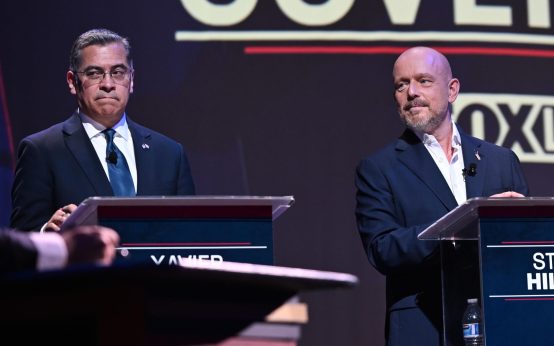 Becerra and Hilton Clash in California Gubernatorial Debate
  California Voters to Decide on $7.5 Billion State Research Fund
 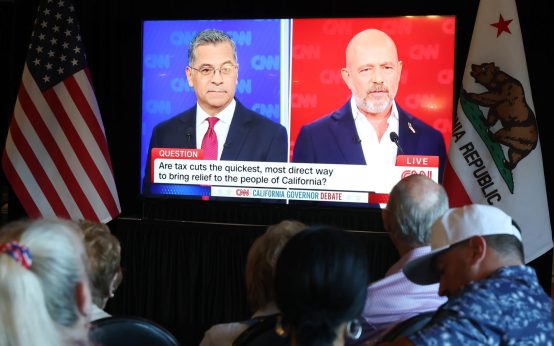 Highlights from the California Gubernatorial Debate: Becerra vs. Hilton
  Becerra vs. Hilton: The Debate and Key Issues in the California Governor Race
  Senate Confirms New Labor Secretary
  Hegseth’s Ambitious Military Initiatives to Reshape Warfare