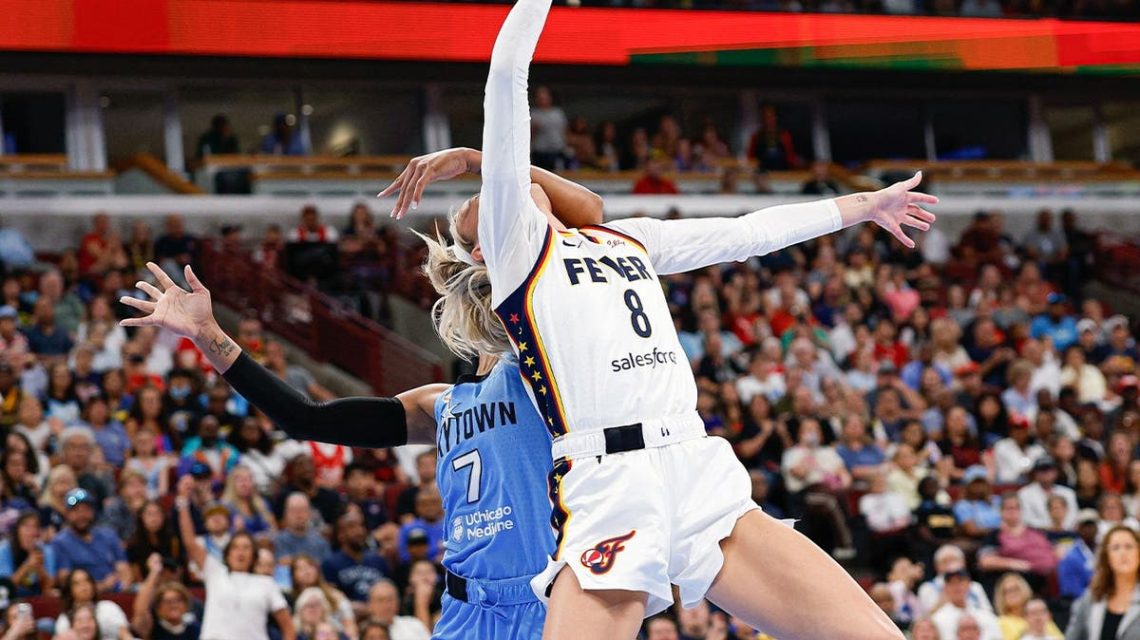
The WNBA often finds itself in the spotlight for various reasons. Recently, attention on the league has been tied to incidents such as DiJonai Carrington’s controversial foul on Indiana Fever’s Sophie Cunningham.
During a game, Carrington fouled Cunningham, resulting in Cunningham suffering a bloody mouth. The foul was upgraded to a flagrant 2, leading to Carrington’s immediate ejection. The incident drew significant attention, compounded by Carrington’s social media activity afterwards.
Following the game, Carrington posted “White privilege” and tagged the Indiana Fever. Many interpreted this as Carrington suggesting that the severity of her punishment was influenced by Cunningham’s race. This sparked debate and backlash online.
The WNBA has not publicly commented on Carrington’s post. However, Carrington addressed the post by discussing her academic background, emphasizing her understanding of the term “white privilege.” She stated, “I’ve never once claimed that the assessment of the foul was White privilege (that was your assumption).” She challenged critics to engage in critical thinking, citing her education at a top university to support her assessment of the term.
Despite her comments, Carrington hasn’t clarified what she meant by “White privilege” in this context. Meanwhile, sports analyst Jemele Hill responded on social media, stating it was “pretty clear” to her that Carrington wasn’t referring to the foul.
Hill’s remarks fueled further curiosity and confusion, as she did not specify Carrington’s intended meaning. When pressed for clarification, Hill reiterated her understanding without providing detail. The lack of explicit explanation continues to leave many questioning the underlying message of Carrington’s post.
The situation raises questions about racial dynamics within the WNBA. However, statistics on technical fouls in the league challenge the notion that race plays a significant role. Players of diverse backgrounds, such as Caitlin Clark and Angel Reese, lead in technical fouls, suggesting disciplinary actions are not racially biased.
The incident with Carrington and the subsequent public discourse illustrate the complexities and potential misunderstandings around race and sports. Until further clarification is provided, the true intent behind Carrington’s remarks remains elusive.
 Nick Saban’s Comments on ESPN Spark Debate Over College Sports Regulations
  Freddy’s American Adventure: From Soccer to College Football
 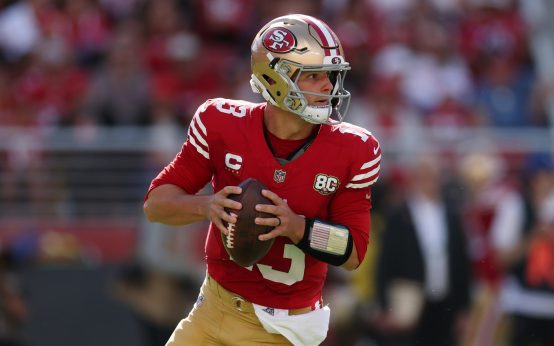 Brock Purdy’s Impressive Start in the 2026 NFL Season
  The Value of Retaining Miles McBride for the Knicks
  Penguins Make History with Dominant Season Opener
  Sonny Gray Expresses Frustration After Game Against Yankees