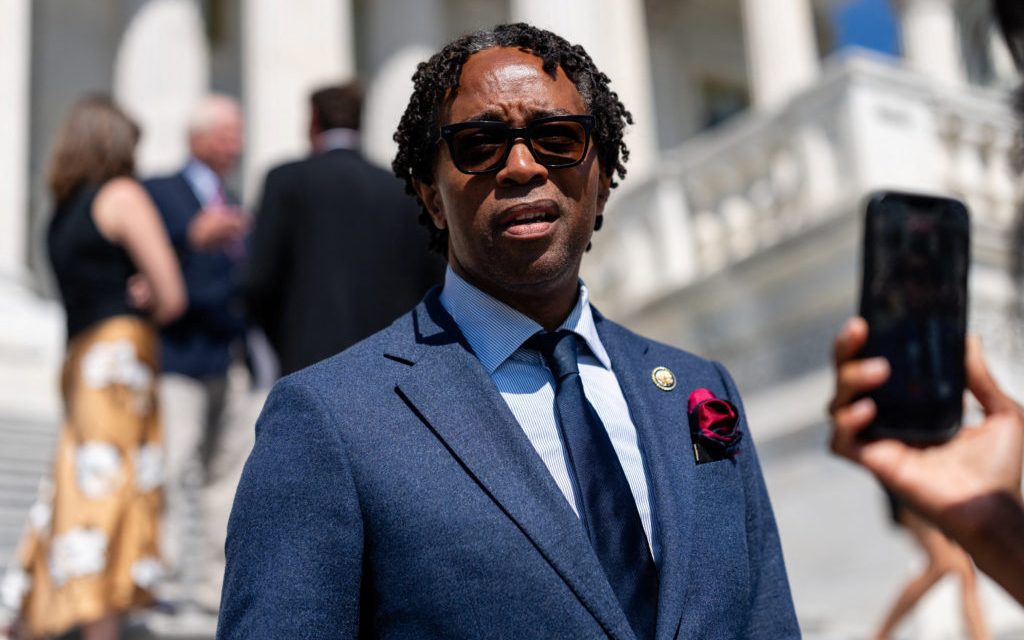
Gripping a microphone outside the courthouse where the infamous Dred Scott case over slavery was argued in 1847, former Rep. Cori Bush portrayed her ouster from Congress as a historic setback to be countered. Addressing the crowd, Bush called for a return to the past’s struggles, saying,
Send back that descendant, send her back to the place that enslaved people built.
The crowd echoed her call, chanting send her back.
A progressive voice who began her political journey as a Black Lives Matter organizer in Ferguson, Bush served two terms before losing a primary challenge to Wesley Bell, a moderate local prosecutor. Bell and Bush are now locked in a vigorous rematch, casting a spotlight on evolving Democratic politics. This involves dissatisfaction with party leadership, rising skepticism of the U.S. alliance with Israel, and the growing influence of democratic socialists.
Both candidates, rooted in the civil rights movement that emerged following the police shooting of Michael Brown in 2014, represent divergent paths. The race explores whether the electorate prefers Bell, a pragmatist, or Bush, who blends legislating with activism. Bush’s loss to Bell two years ago was narrow, by less than six points, which she attributes to American Israel Public Affairs Committee’s financial influence.
Her criticisms of the war in Gaza and Democratic leaders resonate more broadly within the party now. Bush claims moral authority in the rematch, articulating that opposition to her represents fear of the advocacy she brings.
While Bush addressed her supporters in the park, Bell engaged senior citizens at a historic Black church, dismissing Bush’s criticisms by asserting his effectiveness as a lawmaker. His rally with former House Speaker Nancy Pelosi underscores establishment support. Bell stated,
The choices are clear. I wake up every day working for St. Louis, and the folks in St. Louis know that I’m going to wake up working for them.
The rematch is both personal and significant at the national level. Early voting for the Aug. 4 primary began recently, and the candidates have exchanged claims of misconduct. Bush targets Bell over a lawsuit from protesters alleging assault at his town hall, alongside issues of employment discrimination in his office. Bell counters by highlighting a past Justice Department investigation into Bush’s campaign spending.
Bell emphasizes his legislative roles that support military funding for Israel, advocating for allied cooperation and American transparency. The role of money influences voter sentiment, as evidenced by divided preferences within local families due to AIPAC’s financial involvement.
Both candidates emerged from the Black Lives Matter movement, shifting from protesters to politicians. Bell’s tenure includes a city council role in Ferguson and serving as a prosecuting attorney. Bush transitioned from activism to a House seat, advocating for change within the political arena.
The primary reflects a district with a robust activist history, where residents’ votes hinge on candidates’ management of issues, including recovery fund allocation for a recent tornado impact. Concerns about monetary influence in the race are widespread among the electorate.
 Upcoming Congressional Elections: Key Districts to Watch
  President Trump’s Pre-Midterm Interview on Key Issues
  Trump’s 2024 Reelection and Evolving Voter Dynamics
  Defense Secretary Emerges as Key Player in the Trump Administration
  Hegseth’s Vision for the Military: Balancing Tradition and Innovation
  Significant Funding Boosts Ken Paxton’s Texas Senate Campaign Amid Tight Race