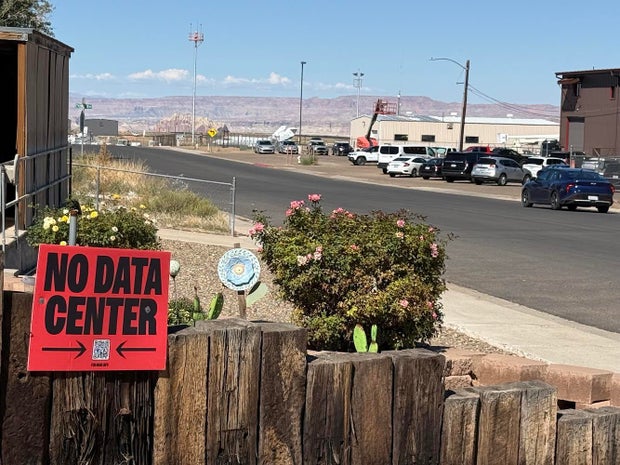
Doug Herrera resides in a house his father built in Page, Arizona. The legacy of his father, who died from cancer, adds a layer of concern for Herrera about environmental impacts. As a proposed $10 billion data center looms, he worries about its effects on local health. He stated, “I’m a patriot, but I’m highly against the data center,” sitting near a sign in his yard that reads “No Data Centers.”
Page is a scenic area known for its desert landscapes and red-rock formations. Although the City Council approved the land sale for a data center, additional zoning and approvals are necessary. Concerned residents have mobilized, signing petitions to oppose the project due to potential health risks.
The rapid growth of data centers has become a contentious issue in communities like Page, influencing discussions in the midterm elections. Candidates in Arizona’s 1st Congressional District, along with the state attorney general, are split on the development of new centers. A Page developer acquired 500 acres for the project, intensifying the debate. Emerging research on potential health impacts from data centers is fueling political and public opposition.
Data centers, essential for powering AI technologies, are extensive and resource-intensive. Large facilities require vast amounts of electricity and utilize backup generators, leading to air pollution linked with health issues such as heart conditions and respiratory disease. Studies project nearly 1,300 annual deaths due to emissions by 2030, with significant public health costs anticipated by 2028.
These centers also contribute to noise pollution from generators and cooling systems, reaching harmful decibel levels. Light pollution from operations can increase chronic disease risks, and data centers form ‘heat islands’ – localized hotspots from high energy demands.
Alison Steele of the Environmental Health Project warns that current policy decisions dwarf available research, creating future risks. Conversely, the Data Center Coalition argues that impact is minimal, citing regulations that minimize emissions and environmental effects.
Political Impact
Data centers have become a contentious political issue, dividing candidates and straining party alliances. President Trump supports them for economic growth, but a recent poll indicates two-thirds of Americans oppose new centers. This resistance is prominent in states that supported Trump in the 2024 elections.
The concentration of new data centers in traditionally conservative states affects the political landscape. Lee Hannah, a political scientist, notes that support for data centers in rural areas creates significant political risk for incumbents who previously endorsed such developments without facing organized opposition.
Arizona voters are predominantly against large data center expansion, as evidenced by public polls. Such opposition poses strategic challenges for GOP candidates like Jay Feely, while Democrat Amish Shah calls for a construction pause. The competitive House race might impact party control in upcoming elections.
Economic Concerns
Economic incentives have spurred rapid data center growth, as seen in Ohio with substantial tax breaks for companies like Meta and Google. This prompted resident protests over environmental and health concerns, particularly regarding air pollution and resource consumption.
Former Sen. Sherrod Brown criticizes his Republican opponent for supporting these developments, while supporters underscore the potential for job creation. Yet, Ohio polls reveal widespread public skepticism over local benefits and environmental impacts.
Data centers contribute significantly to air and water pollution, raising community alarm. Professor Shaolei Ren highlights the pollution risks of backup power, affecting health downwind from such facilities.
In Page, political consequences are evident as residents ousted their mayor following approval of the land sale, suggesting potential midterm repercussions. Local residents, like Jan Boehme, remain opposed to the data center, expressing concerns about noise and deterioration of quality of life.
KFF Health News reports extensively on health topics, providing deep insight and is part of KFF’s broader health policy and journalism efforts.
 Mayor Mamdani’s Policing Reform Plans
 Gen Z Voter Shifts and Their Impact on the 2026 Midterm Elections
 Disappearance of US Senate Candidate Raises Questions
 DOJ Rule Change Reduces Appeal Time for Immigrants Facing Deportation
 Hakeem Jeffries’ Bid for House Speaker Faces Progressive Hurdles
 Ohio Judge Dismisses Defamation Lawsuit by Rep. Max Miller