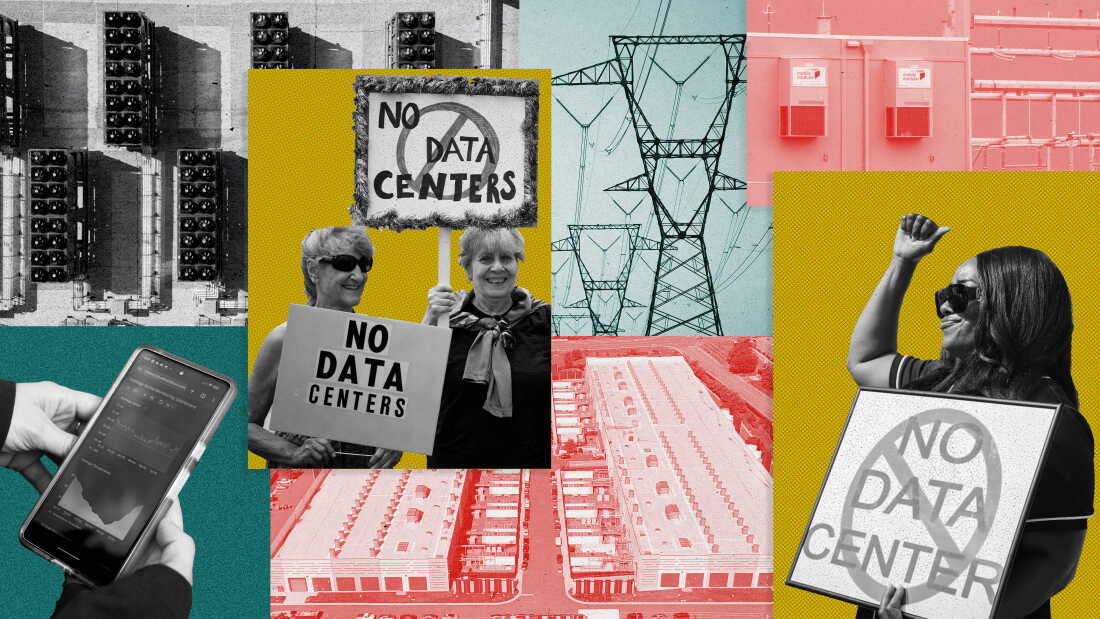
Strikingly fast, the debate over data centers is creating deep divisions within American communities, crossing political lines and forging unusual alliances. In city halls and county commission chambers nationwide, citizens challenge their local representatives.
Distrust Sparks Movements
Data centers have disrupted traditional politics, notes Darrell West of the Brookings Institution. Concerns extend beyond local disruptions and touch on fears that artificial intelligence might threaten jobs or humanity itself. According to West, ordinary people across the country, whether Republicans or Democrats, are part of a grassroots movement expressing worry over the loss of control over technology.
NPR journalists traveled to key locations affected by data centers, interviewing activists, political figures, developers, and residents. While data centers have economically benefited some areas through lowered land taxes and job creation, secretive agreements, including nondisclosure agreements (NDAs) signed by elected officials, have increased suspicions. The Vantage VA2 data center in Sterling, Virginia, powered by gas turbines, is a source of noise complaints.
Political Landscape Shifts
“A recent poll by The Economist and YouGov shows nearly two-thirds of Americans oppose new data center construction in their communities.”
This opposition is driven by combined concerns, says Chris Borick of Lehigh University, creating non-traditional alliances. Those in power face growing scrutiny as citizens urge them to reconsider their stances. Borick observes that politicians have had to adapt quickly to these shifting perceptions.
Parties Divided
In Loudoun County, Virginia, data centers strain relations between Democratic officials. Juli Briskman, opposed to further data center development, plans to run against Phyllis Randall, who favors them for the tax revenue they generate. Randall did not respond to NPR’s request for comments.
Briskman’s long-standing opposition found resonance with residents like Kasey Hatch, who designed a dashboard to monitor noise levels around the Vantage data center. Hatch, despite differing politically from her Republican cousin, found common ground against data centers.
Community Unrest and Economic Influence
Across the U.S., citizens work together against data centers, regardless of political affiliation. The Data Center Opposition Report indicates active involvement from 640,000 people, with a surge in grassroots groups recently.
Data centers previously heralded economic prosperity, with Loudoun County witnessing $1.2 billion in property tax revenue in fiscal year 2026, comprising around 39% of the county’s budget. This revenue reduced property and vehicle tax rates.
Concerns Over Resources
Despite financial benefits, data centers demand substantial electricity and water, vital resources in regions facing growth or drought. Shifting tides see state and local governments reassessing the impact of data centers, restricting developments, or expecting developers to demonstrate community benefits.
Virginia Governor Abigail Spanberger recently enacted an order limiting data center development, reflecting a broader trend nationwide.
Secrecy Breeds Discontent
An early lack of transparency is blamed for current opposition, says Dan Diorio from the Data Center Coalition. NDAs signed by officials exacerbate suspicions, as evidenced by studies showing NDAs prevalent in Virginia localities.
In Bessemer, Alabama, secrecy led to voter distrust, affecting the local mayor’s reelection bid. Similar scenarios unfolded in Wisconsin, where community organized against a massive hyperscale data center proposal. Persistent citizen activism led to the project’s cancellation.
The Virginia Case Study
In Loudoun County, the board recently paused further data center applications, yet existing projects continue. Meanwhile, neighboring Frederick County in Maryland erects signs against data centers, leading them to reassess future developments.
Construction on a vast data center campus in Frederick County encroaches upon rural landscapes, raising local concerns. Vocal opposition, such as Steve Black’s nonprofit initiatives, reflects a demand for transparency and accountability.
Political Activism Emerges
Kathy Cramer, a professor at University of Wisconsin-Madison, researches data centers as focal points for broader societal discontent. Political actions are taking shape among citizens, transcending partisan boundaries.
For Steve Black, dedication to opposing data center expansion signifies the convergence of community activism and political engagement, as he supports candidates from various parties who align with his opposition to unchecked development.
 Senate Democrats Block Data Center Bill Over Efficiency Concerns
  Future Cities: Ambitious Projects Aiming for Innovation and Sustainability
  High-Profile Hearing and AI Developments: Key Political Moves
  Key Events in Today’s Discussions Involving Jack Smith and President Trump
  Jack Smith Faces Scrutiny Amid Investigations into Trump
  White House to Promote AI Benefits Amidst Security Concerns