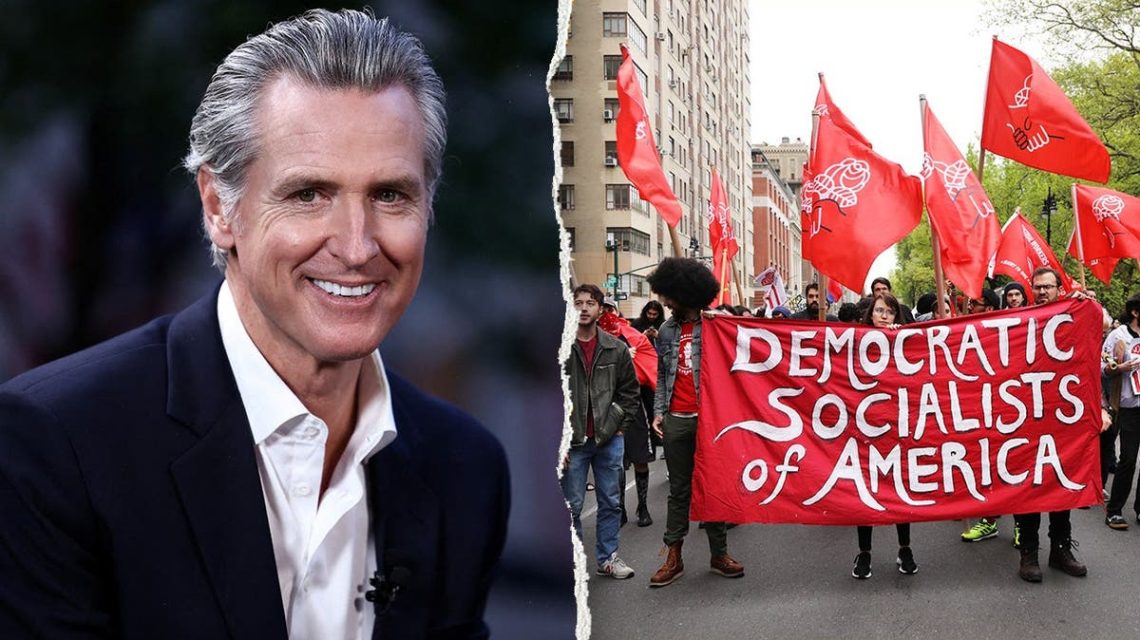
The Democratic Socialists of America (DSA) supported California’s Proposition 40 leading up to the November midterms. This measure aimed to impose a one-time 5% tax on billionaires in the state. Although early election results suggest its likely defeat, this support sparked broader discussions on socialism’s redistributive goals and the potential for capital flight.
Richard Stern, an economics expert at Advancing American Freedom (AAF), commented on the belief that such taxes are efforts to transfer wealth from creators to the state. The DSA’s stance on Proposition 40 also clashed with prominent Democratic figures, including Governor Gavin Newsom, who opposed the measure.
“In their mind, every tax they do is some attempt to get money from people who create wealth and move it to the state.” – Richard Stern
The proposal targeted assets like businesses, securities, art, and intellectual property, excluding certain pensions, real estate, and retirement accounts. It was designed to apply retroactively to billionaires residing in California as of January 1, 2026, to prevent them from evading the tax by relocating.
The DSA presented materials encouraging support, arguing that California has sufficient funds for quality schools and healthcare by taxing the wealthy. They claimed the policy could address a projected $100 billion shortfall in federal funding for Medi-Cal, covering low-income individuals, seniors, and people with disabilities. The revenue would allocate 90% to healthcare and 10% to education, food assistance, and tax administration.
The DSA referred to Proposition 40 as a scaled-up version of a progressive tax. The tax would target 250 of the wealthiest Californians, collectively owning $2 trillion in wealth, claiming minimal impact on these individuals due to their average wealth growth rates of 7-8% annually.
Despite the DSA’s position, experts like Stern argue that the policy misinterprets wealth, viewing billionaires as sitting on excessive cash reserves instead of assets like factories and machinery.
“They have no idea that we’re talking about a trillion-dollar company, we’re talking about a trillion dollars’ worth of factories and warehouses and delivery trucks and machinery.” – Richard Stern
Governor Newsom opposed Proposition 40, citing concerns about its impact on California’s competitive standing. He indicated that significant opposition from various groups, such as firefighters, teachers, and Planned Parenthood, highlighted its limitations.
Newsom advocated for Proposition 42, which proposed prohibiting new state taxes on personal property and limiting retroactive taxes. He acknowledged that a national-level tax could alter his stance on a billionaire tax.
Stern mentioned that a federal tax could still lead to challenges, comparing it to international dynamics and reflecting President Reagan’s views on ideological barriers.
“You can more easily leave California, but you could give up American citizenship and move abroad.” – Richard Stern
Finally, the debate over Proposition 40 emphasized its implications for businesses, with Stern warning about the potential shift of control from business founders to political figures.
“We’re taking the means of production out of the hands of people that built those businesses, that manage those businesses, and giving them to politicians to run them.” – Richard Stern
The discourse on wealth redistribution continues as economic and political landscapes evolve. Leo Briceno, a politics reporter at Fox News Digital, contributed to this report.
 Mayor Mamdani’s Policing Reform Plans
 Gen Z Voter Shifts and Their Impact on the 2026 Midterm Elections
 Disappearance of US Senate Candidate Raises Questions
 DOJ Rule Change Reduces Appeal Time for Immigrants Facing Deportation
 Hakeem Jeffries’ Bid for House Speaker Faces Progressive Hurdles
 Ohio Judge Dismisses Defamation Lawsuit by Rep. Max Miller