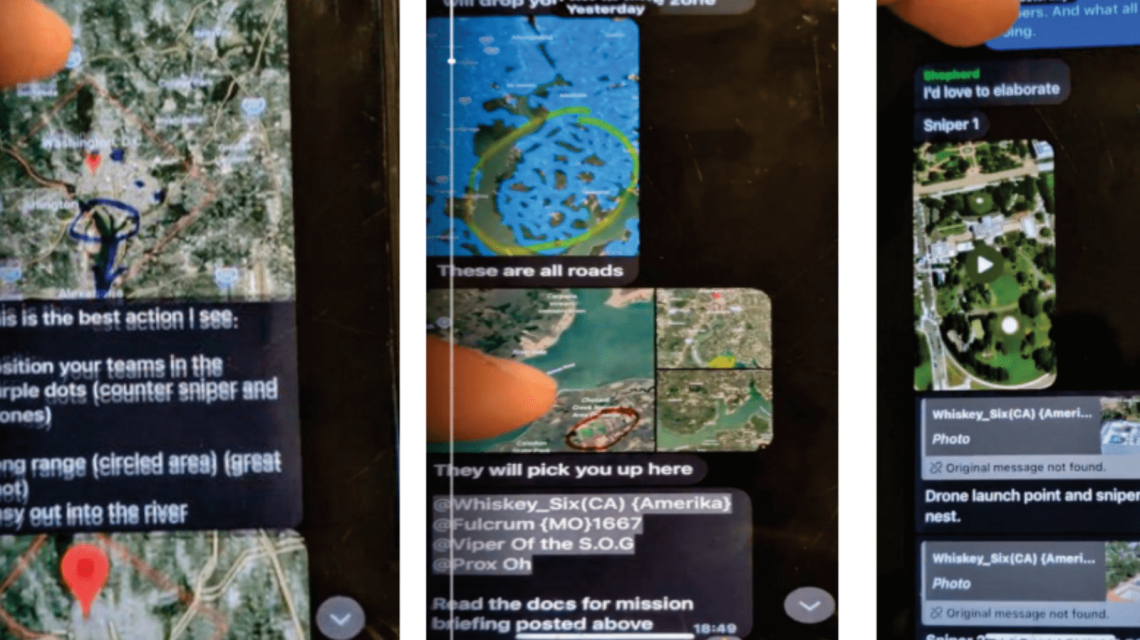
Recently unsealed court documents reveal a detailed outline of how investigators believe a group of men plotted a coordinated assault on a UFC event at the White House. The alleged scheme involved drones, snipers, and crowd manipulation. The affidavits against five suspects, examined by Newsweek, comprise maps with operational positions, screenshots of encrypted chats, and photographs of weapons and tactical gear.
Attack Planning Strategy
The prosecutors present this as a multiphase attack plan targeting politicians and other ‘high-value targets’ at the Washington, D.C. event. One map seems to show intended sniper and drone positions around the White House, with instructions for members to place teams at marked spots and notes on an ‘easy exit’ into a nearby river.
The group allegedly intended to create a diversion on the north side of the White House using drones loaded with explosives over the UFC arena, prompting evacuations toward gunmen waiting with rifles. According to Tycen Proper’s affidavit, a 19-year-old suspect facing charges including conspiracy against the United States, targeted individuals included senators and representatives from Tennessee and West Virginia.
Group Ideology and Engagement
Proper and four other suspects, Bryan Omar Roa, Michael Alan Thomas, Daniel Eskridge, and Abraham Alvarez, communicated online in a group identifying as ex-military and Christian. Proper’s mother disclosed this to the FBI, citing the group’s ultra-religious beliefs and anti-government views focusing on issues like government corruption.
Agents interviewed Proper on June 11, with Eskridge, known online as ‘Fulcrum,’ arrested on June 13 in Missouri. Alvarez, the purported leader known as ‘Shepherd,’ was detained on June 14 in Nebraska. Roa and Thomas were apprehended in California.
Investigation Insights
Devices owned by Proper provided significant information about the conspiracy. His family alerted authorities due to concerns over his behavior and weapons accumulation. He connected online through platforms like TikTok and then encrypted services such as Signal and SimpleX. Approximately 19 members formed the primary chat, with smaller groups focused on specific roles.
The group shared equipment images and discussed escape routes. Proper identified suspects Roa and Thomas, with social media investigation revealing Roa’s participation in tactical shooting exercises, deemed part of their guerrilla warfare training.
Evidence and Potential Penalties
New evidence from the suspects’ devices includes annotated maps and screenshots discussing reconnaissance and mission-planning. Various images highlight strategic sniper and drone launch positions. Photographs show rifles, ammunition, and tactical gear seized during the probe.
Images from the UFC Freedom 250 event, where President Trump attended, augment the significance of these planning documents. The five accused face multiple federal charges, with prosecutors ascribing distinct roles in the planned attack. Charges include conspiracy, attempted murder, and firearm-related offenses, carrying possible life sentences under federal law for several individuals if convicted.