Iran is reportedly reviewing new proposals from the United States aimed at ending the ongoing conflict. Pakistan’s Army Chief Field Marshal Asim Munir is expected to visit Tehran to facilitate talks. According to Nour News, Foreign Ministry spokesman Esmaeil Baqaei stated that Iran is examining the American views based on its own 14-point framework proposal. This framework includes demands for ending the war, releasing frozen Iranian assets, and stopping actions against Iranian commercial vessels. Additionally, Iranian lawmaker Fada Hossein Maleki mentioned a new message from the U.S. being delivered by Pakistan.
Pakistan’s Army Chief Asim Munir is set to continue his nation’s mediation efforts between Iran and the U.S. during his visit to Tehran. This visit comes amid ongoing diplomatic activities aimed at easing tensions and promoting negotiations. Pakistan has played a key role in mediating indirect talks between the two parties.
Brig. Gen. Ahmad Vahidi has emerged as a significant figure in Iran’s negotiations with the U.S. Vahidi, linked to attacks both domestically and internationally, heads Iran’s paramilitary Revolutionary Guard. Experts assert he is central to shaping Iran’s negotiation stance. His influence stems from his direct ties with Iran’s Supreme Leader Ayatollah Mojtaba Khamenei, who remains in hiding after being injured in a strike. Vahidi leads the Revolutionary Guard and is considered powerful within Iran’s military landscape.
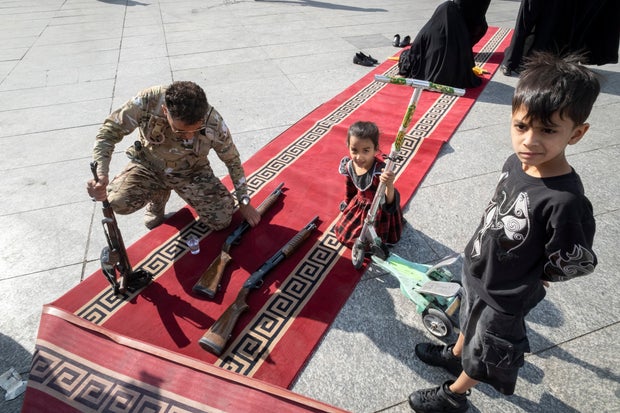
Members of the Iranian Revolutionary Guard are actively displaying military capabilities in Tehran, including handling assault rifles and showcasing military hardware. This public display aligns with a period of increased defiance amid threats from U.S. President Donald Trump, who has warned of potential renewed attacks if negotiations fail. Such measures are perceived as assurance to hard-liners and a means to suppress potential protests. Ali Mofidi, a resident, emphasized the necessity for public training due to the wartime situation.
Iran’s Persian Gulf Strait Authority released details about its claimed maritime control in the Strait of Hormuz. Tehran has mandated that ships transiting this area must coordinate with Iranian authorities. This announcement is part of Iran’s ongoing response to the U.S. blockade of its ports, with threats to attack ships that do not comply.
President Trump has expressed willingness to wait for Iran’s response in negotiations, labeling any delay as a means to prevent further conflict. He emphasized the importance of achieving favorable outcomes to save lives. Notably, Trump praised the Iranian negotiators for their reasonableness.
A Republican senator expressed opposition to the Senate’s attempt to limit Trump’s war powers in the Iran conflict. The senator argued against limitations, underscoring the need for assurances regarding Iran’s nuclear capabilities before ending the conflict.
The U.N. Food and Agriculture Organization warned that the blockage of the Strait of Hormuz could lead to a global food price crisis. With significant portions of global oil and fertilizer supplies affected, farmers face potential shortages in the coming growing season.
U.S. forces searched an Iranian-flagged tanker suspected of violating the blockade of Iranian ports, later redirecting the vessel. The enforcement of the blockade involves ensuring compliance by multiple commercial ships.
Oil prices dropped dramatically following President Trump’s comments about nearing a deal with Iran. This reflects market optimism about potential resolution and reduction in Middle Eastern tensions.
Iran jailed a former national soccer team goalkeeper after he criticized Iran’s former leader, showcasing the regime’s sensitivity to dissent and control over public expression. His wife condemned this action as a reflection of the oppressive environment.
The Iranian parliament speaker warned of possible escalation in the ongoing war, urging national readiness to counter attacks and enhance economic resilience. He acknowledged economic challenges but reinforced the power of Iran’s armed forces during the ceasefire.
President Trump remarked on Israeli Prime Minister Netanyahu’s alignment with the U.S. stance on Iran, emphasizing his authority to influence Israeli actions and decisions. Trump highlighted a preference for minimal loss of life.
Tensions escalate as Israel’s army chief announced heightened alert status due to increasing threats from Iran. This follows exchanges of threats between Iran and the U.S., with potential implications for regional stability.
Reports from Lebanon indicate a high number of casualties from Israeli attacks. This ongoing violence follows initial strikes that led to significant conflict escalation in the region.
Italy protested after videos emerged showing Israeli officials mocking detained activists. Italian government responses included summoning the ambassador and demanding apologies for the degrading treatment of activists.
Amid the blockage, Iran reported coordinated passage of commercial vessels through the Strait of Hormuz. This continued movement underscores strategic interests in maintaining influence over crucial maritime routes.
Iran’s media disputed claims about U.S. intentions to position former President Mahmoud Ahmadinejad as a post-war leader. The report emphasized contradictions and inaccuracies concerning his role and status.
A statement attributed to Iran’s Supreme Leader praised the nation’s resistance against global military forces despite his absence following injuries sustained during a conflict-related strike.
The Israeli military reportedly reacted with surprise to President Trump’s remarks about imminent decisions on Iran strikes. This highlights the complexities of international military coordination.
Pakistan continues diplomatic efforts with Tehran to broker peace amid rising tensions. The efforts reflect regional dynamics influencing conflict resolution strategies.
A South Korean tanker successfully transited the Strait of Hormuz, marking significant diplomatic coordination for safe passage amid conflict-related risks.
Iran’s Revolutionary Guard warned of expanded warfare if U.S. and Israeli aggression repeats, threatening retaliation beyond regional limits and underscoring its commitment to defense.
China and Russia condemned U.S.-Israeli attacks, urging comprehensive ceasefire and promoting negotiations as essential steps. Leaders emphasized cooperation and diplomatic efforts to resolve conflict.
Iran refuted U.S. claims regarding a missile facility near a bombed school, insisting on accountability for civilian casualties and labeling the strike as a war crime.
The Senate advanced a resolution to limit President Trump’s war powers in Iran, marking a critical legislative move in regulating executive military decisions.
Trump shared insights into his decision to halt Iran strikes, emphasizing diplomatic efforts and ongoing negotiations, while allowing limited time for talks to continue.
 Trump Administration’s Approach to Illegal Alien Deportations
  New Jersey Voter Fraud Prompts Renewed Push for SAVE Act
  Concerns Over Changes to Voter-Registration Form for Americans Abroad
  Trump’s 2024 Campaign Targets Young Men Through Cryptocurrency
  Trump’s White House Visitor Center Proposal Gains Bipartisan Support
  State Department Simplifies Passport Process with Online Applications