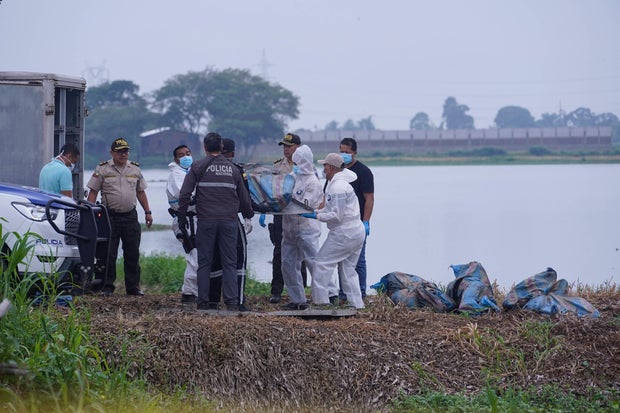
On July 29, 2026, authorities in Ecuador discovered seven charred bodies in a house in the southern part of the country, an area currently under a state of emergency due to rising violence. Ecuador, once considered one of South America’s safest countries, has transformed into a center for cocaine trafficking. This change is attributed to gangs with connections to Mexican and Colombian cartels.
Police reported that the bodies, found on Tuesday, were inside a rural house in La Troncal, part of the Canar province. Two of the victims were bound with wire, and a burnt-out vehicle was located outside. The victims, aged between 21 and 30, likely fell victim to gang-related turf wars. The crime scene included painted messages like “land of Wolves” and “the Wolves are active.”
Los Lobos, or “The Wolves,” is a prominent drug trafficking and extortion gang in Ecuador, associated with international cartels. The United States designated Los Lobos as a terrorist organization in September of last year. Only last month, eight bodies in plastic bags were uncovered in another drug-trafficking hotspot, suggesting Los Lobos targeted the victims in their conflict with the rival Los Choneros gang.
Around June 2026, forensic teams had to remove bodies found along a road near Babahoyo. Authorities detained a former mayor of a mining town on Tuesday, who allegedly finances Los Lobos. Ecuador acts as a significant transit point, with about 70% of cocaine produced in Colombia and Peru flowing through its borders.
With a record high of over 9,200 violent deaths last year, Ecuador faces a multitude of crimes like drug trafficking, extortion, kidnapping, and illegal gold mining. The recent surge in violence coincides with a U.S.-supported military crackdown on organized crime in the country. Earlier in the year, American forces collaborated with Ecuadorian troops to dismantle a suspected criminal hub used by a narco-terrorist group along the coast.
Gang violence persists, compounded by the recapture of Adolfo Macías, the leader of Los Choneros, in June 2025. Macías escaped from a maximum-security prison in 2024 but was extradited to the United States in July 2025, facing numerous charges related to drug trafficking and firearms.
 Rabbi and Jewish Leaders Criticize Adam Brody for ‘Genocide’ Comment
  Flydubai’s Emergency Landing Highlights Cockpit Security
  Former Israeli PM Naftali Bennett Commends Passengers and Crew for In-Flight Heroism
  Diplomatic Complexities Unfold at U.S. National Archives Visit
  Russia’s Nuclear Threats Amid Tensions with the UK
  Future Cities: Ambitious Projects Aiming for Innovation and Sustainability