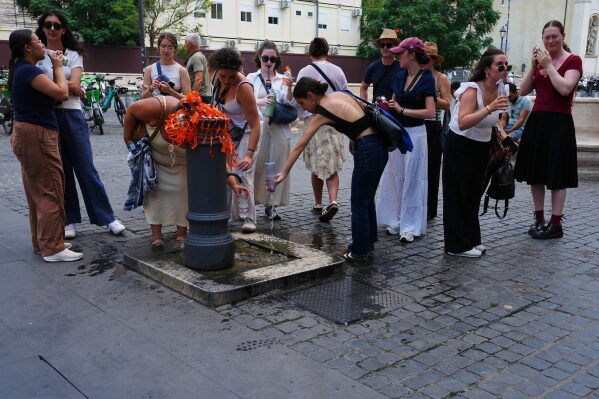
Europe is experiencing an early heat wave, affecting millions as temperatures soar. Experts attribute this to a phenomenon known as a heat dome.
Understanding Heat Domes
Heat domes are high-pressure systems that can linger for several days, trapping intense heat and humidity. Mireia Ginesta, a research associate at the Climate Litigation Lab at the Smith School of Enterprise and the Environment, explains that these domes occur due to a northward bulge in the jet stream. This bulge creates the weather conditions we experience.
“A high-pressure system means the air is sinking. As the air descends to lower altitudes, it compresses. As a result, the pressure and temperature increase,” Ginesta notes.
Impact of Heat Domes on Heat Waves
The bulges in the jet stream lead to heat waves. Jennifer Francis, a climate scientist at the Woodwell Climate Research Center, states, “The heat dome reflects what the jet stream is doing. We feel the heat wave at the surface.”
Current Conditions in Europe
This week, Europe is facing extreme temperatures as a heat wave spreads across France, Italy, Spain, and the UK. Millions are affected.
Francis comments on Europe’s struggle, saying, “In Europe, they’re not used to this. These severe heat waves have emerged in the last decade or two, causing many fatalities because people lack cooling means.”
France, the hardest hit, faces challenges due to a lack of air conditioning. The national weather service issued a red heat wave alert across half the country. Tragically, around 40 drownings occurred as people sought relief. Temperatures may reach 104 degrees Fahrenheit (40 degrees Celsius), potentially breaking June records. Liz Bentley, chief executive of the Royal Meteorological Society and a professor at the University of Reading, emphasizes, “We will see June temperature records completely shattered.”
Climate Change and Heat Domes
Experts believe climate change contributes to more frequent heat domes. This impacts nations globally.
“We’re warming the globe, shifting the temperature range any location experiences,” Francis says. “As this range shifts, extreme temperatures become more likely.”
Liz Bentley adds, “Climate change increases the frequency, intensity, and persistence of heat waves. They last longer now.”
Staying Safe in Extreme Heat
People in affected areas should stay hydrated, avoid daytime exercise, find shade, and cool off in bodies of water if possible. In France, measures like canceling trains, concerts, and sports events, and restricting public alcohol consumption, are in place.
Francis warns of nighttime heat, saying, “If your body doesn’t cool off at night, it accumulates heat, which can affect health. Cooling off at night is crucial.”
 Atlantic Ends September Without a Hurricane for First Time Since 1994
  Bobcat Sightings and Conservation Efforts in Illinois
  2026 El Niño: A Historical Comparison and Future Projections
  U.S. Records Warmest September in History
  Swiss Glaciers Show Effects of Ice Loss Amid Global Warming
  Climate-Resistant Rock Glaciers: Hidden Water Resources