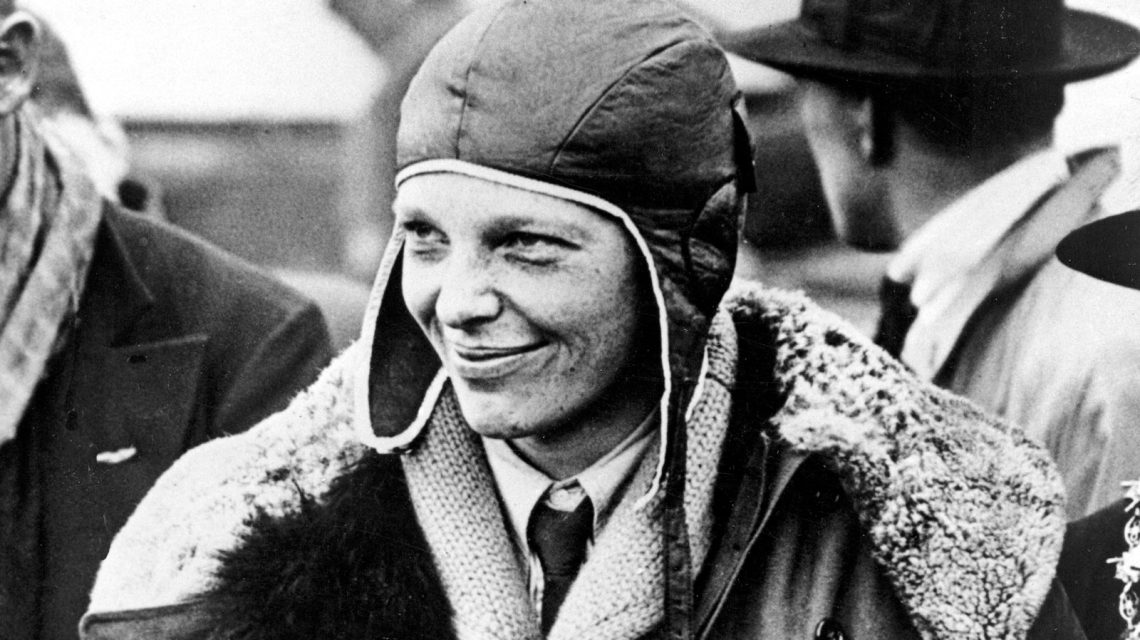
Researchers have arrived on Nikumaroro, a remote Pacific island, to explore a potential site related to Amelia Earhart’s disappearance. A 17-member team supported by Purdue University is investigating a submerged object suspected to be part of Earhart’s Lockheed Electra 10E aircraft.
Expedition Details
The object, called the “Taraia Object,” was identified in satellite images and resembles the shape of an aircraft fuselage and tail. The team traveled 830 nautical miles across the South Pacific to study the object using advanced techniques like sonar and magnetometers. Their goal is to confirm if it is indeed part of Earhart’s plane from her final flight in July 1937.
Researchers have cleared paths on the island to access the lagoon area, encountering coconut crabs along the way. They are examining the site to look for artifacts, while maritime archaeologists assess underwater conditions.
“This case has taken a long time,” noted ALI Executive Director Dr. Richard Pettigrew. “Everything indicates it could be part of Earhart’s aircraft.”
Amelia Earhart’s Flight Path
Earhart vanished on July 2, 1937, while attempting a world circumnavigation around the equator. She began her journey in Oakland, California, and traveled through multiple regions, including the Caribbean, Africa, and Asia.
On her way to refuel at Howland Island, Earhart faced a challenging 2,550-mile ocean flight. Despite assistance from the U.S. Coast Guard cutter Itasca, communication issues persisted. Earhart’s last known location was near Howland Island before all contact was lost.
Nikumaroro Island and the Castaway Theory
Nikumaroro, previously Gardner Island, is a coral atoll part of Kiribati’s Phoenix Islands. Uninhabited and remote, it poses logistic challenges for researchers.
The island has long attracted interest because of evidence suggesting Earhart and Noonan may have landed there. Remains found in 1940 have not been conclusively linked to them.
Current efforts focus on the Taraia Object, initially noticed in 2020. Researchers plan to use magnetometers and sonar to reveal what lies beneath the sediment. Purdue University supports this mission, recognizing Earhart’s connection to their institution as a former aviation adviser.
Challenges from Nikumaroro’s Wildlife
Nikumaroro is home to giant coconut crabs, which are known for their scavenging nature. While their presence raises questions about the fate of Earhart and Noonan’s remains, no conclusive evidence supports these concerns.
Bones discovered on the island in 1940 remain a point of debate among researchers, some suggesting they may belong to Earhart, but identification remains uncertain.
Radio Transmissions and Continuing Theories
Earhart’s final radio transmissions are critical to understanding her disappearance. On July 2, 1937, near Howland Island, Earhart struggled with communication. Her final transmission provided a navigational line but not a precise location, prompting extensive but futile Navy and Coast Guard searches.
While traditional theories claim a crash near Howland Island, the Nikumaroro theory offers a different scenario of an emergency landing. The Taraia Object’s analysis may provide insights into Earhart’s fate and address ongoing debates.
 Search for Noah’s Ark Advances with Completion of 3D Model
  Combining Comedy and Research for Community Engagement
  Ancient Anglo-Saxon Coin Discovered in Scotland
  Hurricane Isaias Wreaks Havoc Across Southern U.S.
  Concerns Over Russia’s Biological Weapons Program
  Monitoring Volcanic Activity at Kīlauea: Trail Closures and Hazards