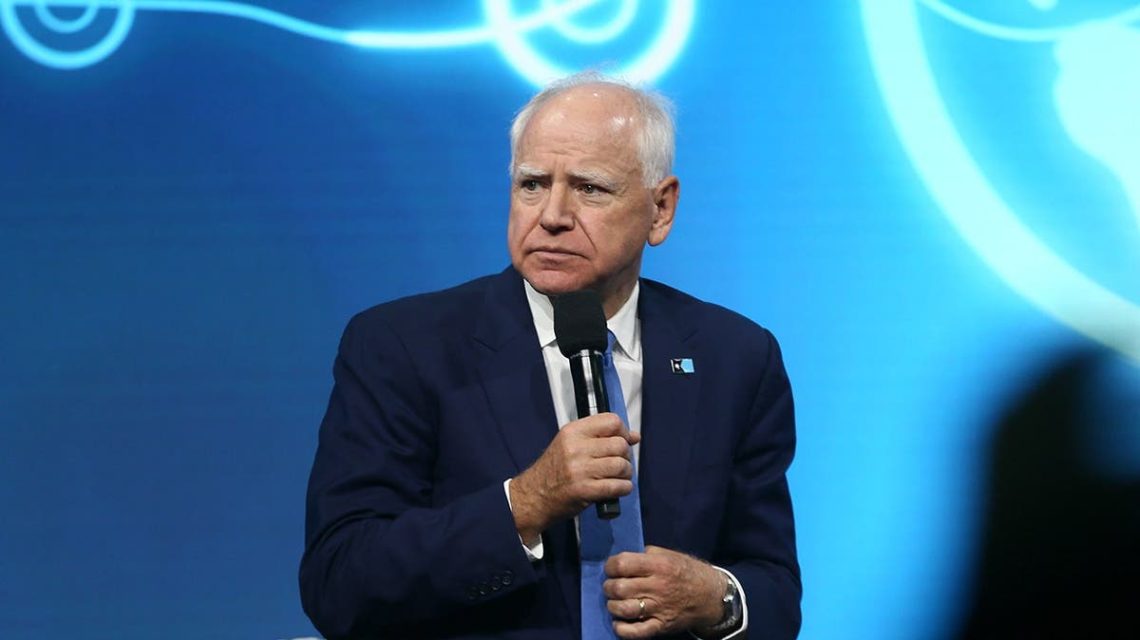
Minnesota Governor Tim Walz issued a cautionary statement to his party, warning of consequences if Democrats fail to implement significant structural changes after winning elections. In a conversation with David Sirota, founder of ‘The Lever,’ Walz addressed concerns about the Democratic Party’s tendency to make ambitious promises without delivering tangible outcomes.
Walz expressed agreement with the notion that the party struggles to follow through on its commitments. He emphasized that winning elections should not be about accumulating political power but rather about effecting real improvements in people’s lives. He criticized the slow pace of achieving meaningful change and cited structural barriers as a contributing factor.
Walz said, “Look, I’m friends with Joe Manchin, but the desire to hold on to the filibuster at all costs has real impacts on people’s lives.” He argued that maintaining the filibuster serves only to hinder essential legislation, inadvertently benefiting Republicans.
Former Senator Joe Manchin has consistently defended the filibuster, even voting against changes to Senate rules that would have facilitated passing key Democratic initiatives. In 2022, he and then-Senator Kyrsten Sinema opposed changing the 60-vote threshold required for most legislative actions, despite pressure from Democratic colleagues.
Governor Walz, who served as a Democratic vice presidential nominee in 2024, spoke of the potential dangers of inadequate structural reforms. He warned that failing to address issues like income inequality could lead to public backlash. Highlighting challenges in education and housing affordability, he cautioned that unresolved problems could contribute to electoral dissatisfaction.
Walz predicted that Democrats would regain control of Congress and the presidency by 2028, raising concerns about future political dynamics.
Further commentary from Lindsey Drath, CEO of the Forward Party, suggested that abolishing the filibuster undermines bipartisan consensus. She argued that the two-party system restricts collaborative problem-solving and promotes power retention. Drath advocates for a ‘fulcrum strategy,’ where a small group of independents holds significant influence in Congress, compelling both parties to negotiate.
Walz reflected on his decision not to seek additional elected office. He acknowledged shortcomings during his tenure, particularly regarding fraud within Minnesota’s social services. While he admitted failing to address fraud promptly, he downplayed its significance relative to other governmental spending.
 Trump’s Alaska Visit Highlights GOP Concerns Over Midterms
  U.S. Exploration Program on Greenland Announced
  Ilhan Omar Investigation and Democratic Probes During Trump’s Second Term
  Pete Buttigieg Addresses Discontent Among Northwest Indiana Democrats
  Federal Judge Halts White House Ban on Journalists
  Potential Shift in Alaska’s Political Landscape with Democratic Governor Candidate