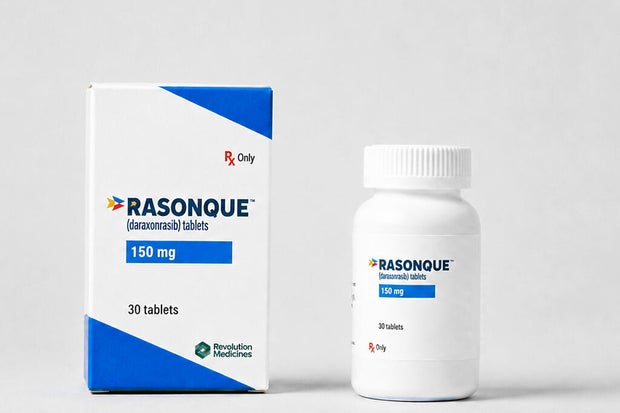
The Food and Drug Administration approved a new drug for advanced pancreatic cancer. The drug offers U.S. patients a more effective treatment for this deadly disease.
About the Drug
FDA officials granted expedited approval to a pill called daraxonrasib. This pill targets a mutated protein that fuels tumor growth in over 90% of pancreatic cancer cases. This approach had eluded drugmakers for decades. Revolution Medicines will sell the daily pills under the brand name Rasonque, costing about $39,800 for a month’s supply.
Study Results
A company-funded study included 500 patients whose cancer had stopped responding to previous treatment. Patients receiving daraxonrasib nearly doubled their survival time compared to those on chemotherapy, with side effects like skin rash and digestive issues reported.
Dr. Céline Gounder, a CBS News medical correspondent, highlights that most pancreatic cancer diagnoses occur late when the cancer has already spread. She explains that the pill blocks the RAS protein, known for driving most pancreatic cancers. Previously considered ‘undruggable,’ this breakthrough presents a viable treatment option.
Significance and Impact
Dr. Andrew Coveler of the Fred Hutch Cancer Center described the approval as highly anticipated. Although not a cure, this drug significantly improves treatment outcomes. Pancreatic cancer remains difficult to detect early, contributing to its status as one of the deadliest cancers. The American Cancer Society estimates 67,000 new cases will be diagnosed this year in the United States, with over 52,000 deaths. Its five-year survival rate stands at 13%.
Case Study
Former Sen. Ben Sasse shared his experience with the drug on ’60 Minutes.’ Diagnosed with stage-four pancreatic cancer last December, Sasse participated in the clinical trial for daraxonrasib. He reported a dramatic 76% reduction in tumor volume within four months, and significant relief from pain.
FDA’s Role
FDA regulators approved the drug six months ahead of their target date. Acting commissioner, Kyle Diamantas, emphasized their commitment to delivering cures quickly. Unlike other cancers with alternatives to chemotherapy, pancreatic cancer posed significant challenges until now.
Future Prospects
The drug targets KRAS mutations that normally regulate cell growth. These mutations are pivotal in pancreatic cancer but were considered ‘undruggable’ due to structural challenges. This innovation might lead to more treatments for various cancer types.
Dr. Pashtoon Kasi from City of Hope Orange County foresees many more trials examining this approach for other tumors. Revolution Medicines continues to study the technology for other cancers, including lung cancer.
 Understanding Inflammation: Myths and Facts
  Calm Parenting: Strategies to Manage Stress
  Trump’s Executive Order to Combat Mosquitoes and Ticks in D.C.
  Overcoming Weight Loss Challenges: Brain Health and GLP-1 Medications
  Supporting Children’s Mental Health at Home: Practical Steps for Parents
  Abdul El-Sayed’s Strategy to Attract Health-Conscious Voters in Michigan