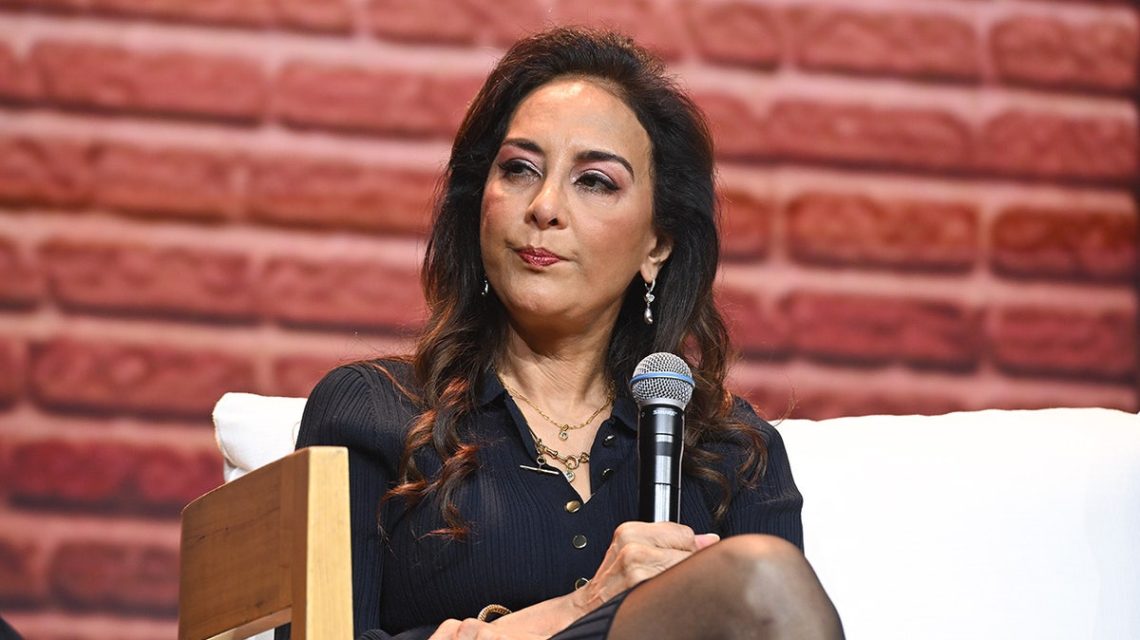
EXCLUSIVE: The federal government seeks to shut down reparations programs in the U.S., accusing state and local officials of “virtue signaling” and seeking “votes.” This measure has been characterized as an attempt to align with constitutional principles respecting individual merit rather than collective identity, according to Assistant Attorney General Harmeet K. Dhillon of the Department of Justice’s Civil Rights Division.
Dhillon communicated to Fox News Digital that the reparations program does not align with constitutional requirements of strict scrutiny due to racial classifications involved in distributing government benefits. She noted that while the intentions may be viewed positively, the program faces scrutiny because it involves specific racial classifications.
“Our philosophy here at this Department of Justice, consistent with recent Supreme Court precedent, is that all Americans are entitled to be judged on their own merits,” Dhillon stated.
The DOJ has joined a class-action lawsuit challenging Evanston, Illinois’s “Local Reparations Restorative Housing Program.” The program, which aims to provide public benefits based on race and ancestry, is under scrutiny. The DOJ argues this initiative violates the Equal Protection Clause of the Fourteenth Amendment and the Fair Housing Act due to its race-based distribution of housing-related financial assistance.
This program, approved in 2019 and launched in 2021, provides eligible Black residents or their direct descendants with $25,000 grants. These funds support home purchases, mortgage assistance, property repairs, or can be received as direct cash payments. Applicant eligibility criteria include being Black and residing in Evanston as adults between 1919 and 1969, a period marked by documented systemic housing discrimination.
While proponents view Evanston’s initiative as addressing generational economic disparities, the federal government argues that it lacks narrow tailoring due to reliance solely on race as a qualifying factor without requiring evidence of personal harm from city policies.
The lawsuit initiated by Judicial Watch on behalf of six non-Black descendants of Evanston residents in May 2024 claimed unconstitutional exclusion from the program. U.S. District Judge John F. Kness denied Evanston’s request to dismiss the case, allowing it to proceed. Concurrently, the DOJ opened a civil rights investigation into the program.
To date, Evanston has allocated over $7 million from a $20 million fund derived from local recreational marijuana sales tax. The city’s Reparations Committee recently announced additional $25,000 payments to 44 residents.
In response to the DOJ involvement, the City of Evanston issued a brief statement affirming its position on the legality of the program while refraining from commenting on ongoing litigation.
Reports indicate that other cities and states are exploring reparations initiatives, including Illinois. Assistant AG Dhillon targets similar programs, citing Asheville, North Carolina’s reparations effort as an example.
The U.S. Department of Justice expressed readiness to investigate Asheville’s reparations proposal, revealing broader challenges within the national reparations discourse.
Reporter Joshua Q. Nelson covers cultural trends, education, and public policy, focusing on reparations developments across the U.S.
 Andy Burnham’s Approach to Address UK’s Economic Stagnation
  Midterms 2026: Key Insights and Voter Perspectives
  Trump’s Influence on Executive Power and the Response
  George Clooney Observes Democratic Figures Ahead of 2028 Election
  Sen. Cotton Opposes Permanent Daylight Saving Time
  Steve Hilton’s Latino Outreach and Gubernatorial Ambitions