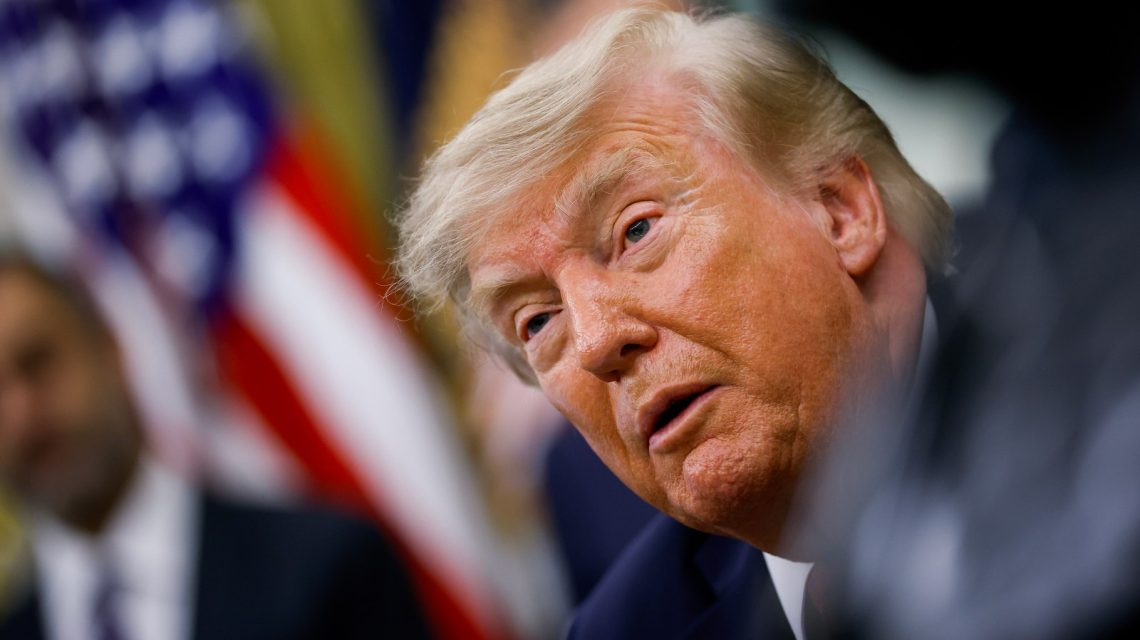
A federal judge halted the Trump administration’s effort to limit birthright citizenship. The recent ruling prevents the White House from denying citizenship to children whom the Supreme Court has identified as Americans at birth.
U.S. District Judge Deborah Boardman, appointed by President Joe Biden, declared the new executive order inconsistent with a Supreme Court decision. This decision stated that children born in the U.S. to parents who are unlawfully or temporarily in the country are protected by the Fourteenth Amendment’s Citizenship Clause.
“The Supreme Court has spoken: Children in the certified class are ‘citizens at birth,'” Boardman wrote, emphasizing that the President must adhere to established law.
Boardman offered a preliminary injunction against sections of the order. This ruling stops federal agencies, including the State Department, Department of Homeland Security (DHS), and Social Security Administration (SSA), from applying the new policy to affected children during ongoing legal proceedings.
Juana, a representative of We Are CASA and a participant in the lawsuit, expressed relief, noting that the decision keeps her baby and many other children protected. She vowed to continue advocating with other immigrant families against such policies.
Trump’s Efforts to End Birthright Citizenship
This decision marks another chapter in efforts to limit birthright citizenship via executive action. During his presidency, Trump argued birthright citizenship invited illegal immigration and proposed ending it through executive means. Although he floated these plans, they were never enacted before his term ended in 2021.
Upon returning to office in 2025, Trump issued Executive Order 14160, aiming to deny citizenship to certain children born in the U.S. to parents lacking permanent legal status. This triggered lawsuits nationwide, including the Maryland case led by CASA and the Asylum Seeker Advocacy Project.
The administration claimed the 2026 order targeted specific children categories. However, Boardman concluded the plaintiffs could likely prove the policy unconstitutional as per the certified class. The Supreme Court’s recent ruling in Trump v. Barbara already established these children’s constitutional citizenship.
The injunction doesn’t strike down the executive order nationwide or stop implementation guidance. Yet, it maintains current citizenship status for children in the lawsuit, likely leading to another appeal that could reach the Supreme Court.
Supreme Court’s Recent Ruling
Boardman’s decision hinges on the Supreme Court’s ruling in Trump v. Barbara. This ruling addressed Trump’s 2025 executive order, which sought to deny citizenship to children born in the U.S. with unlawfully present parents.
According to Boardman, the Supreme Court declared that such children are protected by the Fourteenth Amendment, being “citizens at birth.” The court determined these children do not fall within the recognized historical exceptions to birthright citizenship in U.S. law.
Boardman noted this conclusion effectively answered the central question for children in the Maryland lawsuit. She emphasized no executive order can override a Supreme Court ruling.
Understanding the Constitution
The core of the dispute lies in the Fourteenth Amendment, ratified in 1868. Its Citizenship Clause confirms: “All persons born or naturalized in the United States, and subject to the jurisdiction thereof, are citizens of the United States and of the State wherein they reside.”
Boardman’s opinion referenced over a century of Supreme Court interpretation of this clause. She highlighted the Supreme Court’s reliance on the 1898 United States v. Wong Kim Ark case, affirming most born on U.S. soil are citizens, regardless of parental immigration status.
Exceptions to this birthright principle are rare, including children of foreign diplomats.
Next Steps
The injunction’s immediate effect maintains citizenship status for children involved in the lawsuit while proceedings continue. Federal agencies must not enforce the 2026 executive order against these children or deny their citizenship.
Although not every aspect of the executive order was blocked, the administration can issue implementation guidance. The expected Justice Department appeal will likely test the administration’s birthright citizenship policies and could return to the Supreme Court.
For now, Boardman made it clear that lower courts, including the President, must follow the Supreme Court’s recent rulings.
 Activists Push for Nationwide Ban on Child Marriage in the U.S.
  Democratic Hopes and Historical Warnings in 2026 Senate Race
  Republicans Face Challenges Amidst Cost of Living Concerns
  A Different Kind of Fall for Congress This Year
  Cornel West and Sean Hannity Discuss Differences on Podcast
  Trump Unveils AI-Powered America.gov Platform