
Imagine facing a $62 million fine from the federal government for improving your own land. This was the reality for Wyoming landowner David Hamilton. He bought a neglected farm near Worland and began restoring an irrigation ditch used by local farmers for nearly a century. He removed abandoned vehicles and debris left by previous owners. He rebuilt the ditch’s banks and channel, spending significant amounts to enhance the farm’s productivity and environmental state.
Sadly, these efforts caught the attention of the Environmental Protection Agency (EPA) and the Army Corps of Engineers, who claimed Hamilton needed a permit under Section 404 of the Clean Water Act. Obtaining this permit is challenging, often requiring over two years and significant costs before a decision is made. Hamilton believed he was exempt from these requirements, as Congress included provisions in the Clean Water Act exempting “normal farming, silviculture, and ranching activities” from permits. These exemptions were intended to spare ordinary agricultural practices from federal permitting requirements for activities impacting navigable waters.
Hamilton’s restoration of the irrigation ditch seemed to align with Congress’s protection for normal farming activities. However, due to judicial decisions over decades, the scope of exemptions has narrowed. The Clean Water Act, enacted in 1972, aimed to safeguard waters from pollution. Section 404 regulates discharges into federally regulated waters. Quickly, farmers warned the broad phrasing risked including ordinary agricultural activity, leading Congress to enact Section 404(f) in 1977, exempting routine farming activities from permitting needs. Despite clear intentions, many courts didn’t treat the law that way.
A key example is the U.S. v. Akers case, where a California farmer’s activities were classified under federal permits, using the Clean Water Act’s recapture provision. This provision was meant to cover genuine water conversions to new uses, but courts have increasingly used it to reduce farmers’ exemptions and expand federal oversight of land management. Consequently, the recapture clause often overshadows the exemptions.
Similar cases in Wisconsin, Louisiana, and elsewhere have continually limited exemptions and increased federal authority over land management. This led to Congress’s statutory protections being less effective in practice. Fortunately, Congress can still address this issue. Recently, Sen. Cynthia Lummis (R-Wyo.) proposed the Farmers and Ranchers Relief Act to restore the original intent of the Section 404(f) exemption. The bill clarifies Congress’s stance that normal farming and forestry activities should remain outside federal regulation and directs courts to interpret exemptions favorably.
This change would help reverse years of judicial erosion and restore the protections Congress intended decades ago. When there’s uncertainty about federal permission for routine agricultural activities, the benefit should favor landowners, not bureaucratic entities.
This bill also highlights broader reform efforts. As Congress explores modernizing America’s permitting system, they should find ways to remove barriers imposing high costs but offering minimal public benefits. Restoring the Section 404(f) exemption represents a crucial step in that direction. No farmer, rancher, or landowner should face substantial penalties over activities Congress intended to exempt from federal rules.
Lummis’s legislation aims to revive these protections and ensure courts apply exemptions meaningfully, rather than eroding them. Congress established the Section 404(f) exemption to ensure ordinary farming activities didn’t need federal permission. Nearly 50 years later, Lummis’s bill provides a chance to reaffirm that promise, which Congress should embrace.
Damien Schiff serves as a senior attorney within Pacific Legal Foundation’s Environment and Natural Resources practice. John Nagle operates as a federal policy manager at the Foundation.
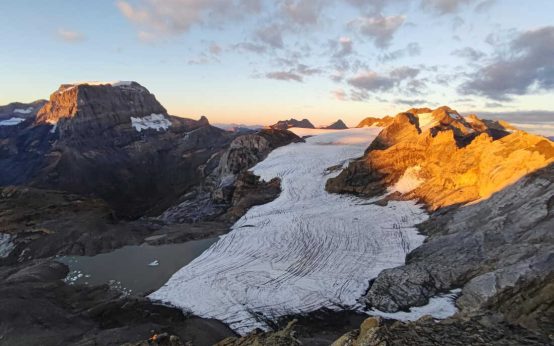 Swiss Glaciers Show Effects of Ice Loss Amid Global Warming
  Climate-Resistant Rock Glaciers: Hidden Water Resources
  Senators Reach Bipartisan Agreement on Permitting Reform
  Experts Warn of Critical Period for the Colorado River
  Future Cities: Ambitious Projects Aiming for Innovation and Sustainability
  Supreme Court Case Suncor vs. Boulder: Implications for Accountability in Climate Change